
Main Courses
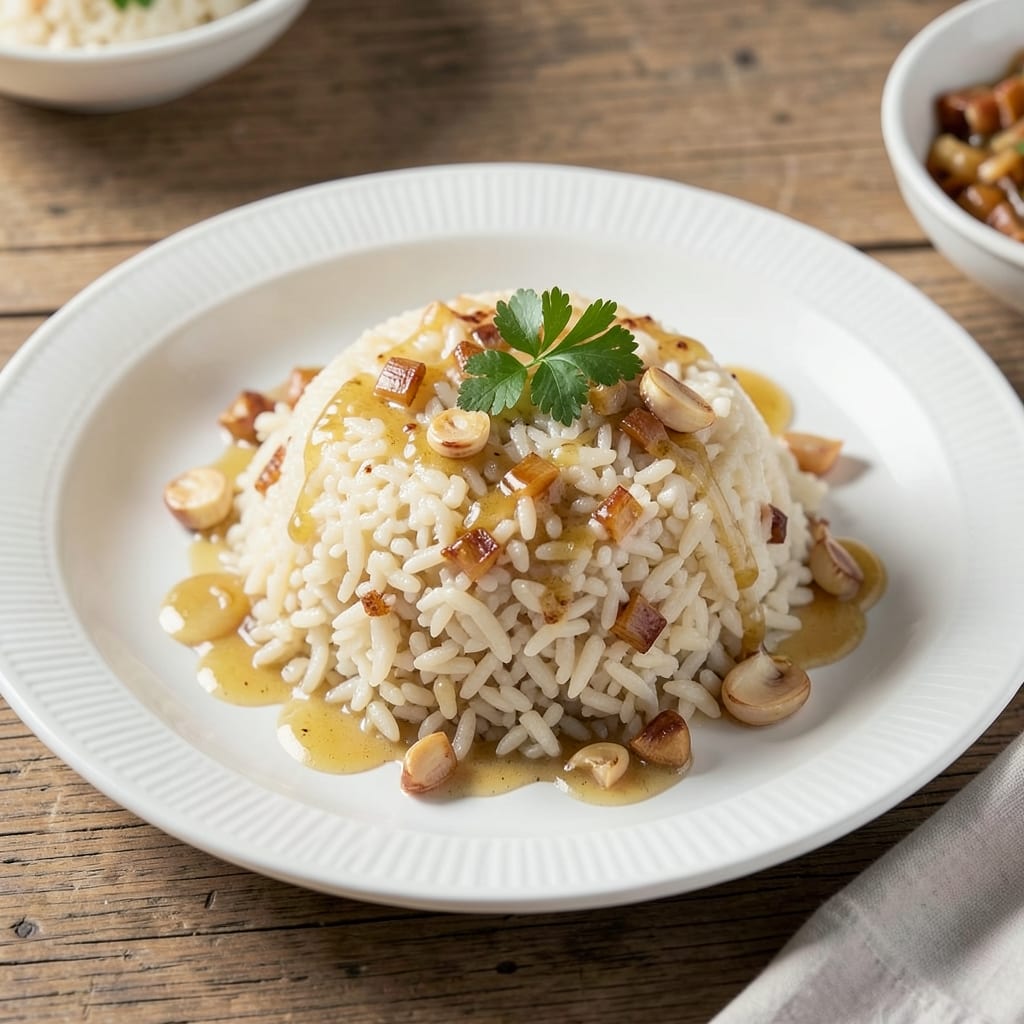
This Aborio rice recipe delivers the creamy, al dente texture that makes risotto unforgettable—with a crispy garlic crunch that elevates every bite. ✨ The secret lies in slow toasting the rice with butter and aromatics, then gradually incorporating warm broth to develop that signature velvety consistency. I’ve perfected this technique over years of testing, ensuring no grain goes uncooked and every mouthful is rich with flavor.
The process begins with gently toasting the rice until golden, then deglazing with white wine to infuse depth. As the rice absorbs the broth, you’ll stir at precise intervals—never letting it dry out—to achieve that luxurious, creamy finish. The final touch? A sprinkle of toasted garlic and Parmesan for a textural contrast that keeps every bite exciting. This method transforms simple ingredients into a restaurant-worthy dish.
What sets this recipe apart is its balance: creamy yet never mushy, rich without being heavy, and perfectly al dente. The garlic crunch adds a satisfying bite that cuts through the creaminess, while Parmesan brings a salty, umami finish. Whether you’re making classic risotto or experimenting with mushrooms or tomatoes, this technique ensures success every time.
Ready in about 30 minutes, this recipe is ideal for weeknight dinners or impressing guests. The key is patience—slow cooking builds layers of flavor that shortcuts can’t replicate. Once you master it, you’ll never buy risotto mix again. Let’s get started on creating your perfect plate.
Ingredients for aborio rice
The perfect Arborio rice recipe starts with these core ingredients—each playing a precise role in building creamy, al dente perfection.
| Ingredient | Amount | Notes |
|---|---|---|
| Aborio Rice 🌾 | 1 ½ cups | Unrinsed, high-quality Arborio |
| Unsalted Butter 🧈 | ½ cup | Cold, cut into small pieces |
| Shallots 🧅 | 2 whole | Minced, or substitute 3 tbsp onion |
| Garlic Cloves 🧄 | 4 cloves | Thinly sliced, for toasting |
| Dry White Wine 🍷 | ½ cup | Bold, like Pinot Grigio |
| Vegetable Broth 💧 | 4 cups | Warm, homemade preferred |
| Parmesan Cheese 🧀 | ¾ cup | Freshly grated, aged |
| Salt 🧂 | 1 ½ tsp | Diamond Crystal preferred |
| Black Pepper 🌶️ | ½ tsp | Freshly cracked |
| Fresh Parsley 🌿 | ¼ cup | Chopped, for garnish |
The rice is non-negotiable—Aborio or Carnaroli from a specialty store like Whole Foods or Balducci's delivers that signature starchy texture. Look for grains that feel heavy in your hand (high starch = creamy risotto). Butter matters too: European-style, like Plugrá, has higher fat content for richer flavor. Shallots add sweetness without overpowering—substitute onion if needed, but reduce to 2 tbsp minced. The garlic? Thin slices toast beautifully for that crispy crunch.
No white wine? Substitute extra broth with a splash of lemon juice for brightness. Homemade broth is ideal, but low-sodium store-bought works in a pinch. The Parmesan should be aged 24+ months—you can taste the difference. Freshly cracked pepper and Diamond Crystal salt (which dissolves slower) are worth the investment. For the parsley, flat-leaf variety has more flavor than curly, but use what you have—it's mostly for color.
Store leftover risotto in an airtight container with a thin layer of butter on top to prevent drying. It reheats beautifully—just add a splash of broth and warm through. The garlic crunch diminishes after 2 days, so enjoy within 48 hours for best texture. Double the recipe? Risotto freezes well for 3 months—portion before freezing for easy reheating.
Why You'll Love This Recipe
- Foolproof Basics: I swear by this recipe because it’s the kind of dish that doesn’t demand perfection—just a few minutes of attention. Toast the shallots and garlic in butter until they’re golden, then toss in the Aborio rice and a splash of white wine. The grains cook themselves while you handle the rest of dinner. That’s what I call stress-free.
- Buttery Wine Magic: That first bite of creamy, wine-kissed Aborio rice? It’s the kind of flavor that makes you pause mid-fork. The butter melts into the grains, the white wine adds brightness, and the shallots caramelize into something dangerously addictive. No fancy techniques—just simple ingredients working their charm.
- Weeknight to Dinner Party: Honestly, this rice is my secret weapon for lazy Mondays and impressing guests. For weeknights, I make a big batch and pair it with whatever’s in the fridge. For company, I add a sprinkle of Parmesan and fresh parsley—suddenly, it’s restaurant-worthy. The same recipe, two totally different vibes.
- Leftovers That Don’t Suck: Between us, most rice turns into sad, dry mush after a day. Not this one. Aborio holds its shape, so reheated portions stay tender and still taste like they just came out of the pan. Plus, it’s cheap to make—just rice, butter, and pantry staples. That’s budget-friendly in the best way.
Step-by-step instructions for al dente Arborio rice
Here's how to transform simple ingredients into restaurant-quality Arborio rice with a toasted garlic crunch.
🍳 Step 1: Toast the Garlic and Shallots in Butter
Heat a heavy-bottomed pot over medium heat and add the 0.5 cup unsalted butter. Let it melt completely, then add the 2 whole shallots and 4 cloves garlic cloves sliced thinly. Cook for 3-4 minutes until the shallots soften and the garlic turns golden brown—this adds incredible depth of flavor.
Here's the thing—don't walk away. Garlic burns in seconds, and you want that nutty, toasted aroma. You'll know it's ready when you smell that irresistible garlic crunch. Remove the pan from heat temporarily while you prepare the rice, but keep the aromatics in the pot.
👨🍳 Step 2: Add Rice and Toast for 2 Minutes
Return the pot to medium heat and add the 1.5 cups unrinsed Arborio rice. Stir immediately to coat each grain with the buttery garlic mixture. Cook for exactly 2 minutes, stirring constantly, until the rice becomes translucent at the edges and develops a slight golden color.
This initial toasting step is crucial—it builds flavor and prevents the rice from becoming mushy. You'll see the rice grains start to separate slightly as they absorb the fat. If the butter starts to brown too quickly, reduce heat to medium-low to prevent burning.
🍷 Step 3: Deglaze with Wine and Add Broth
Pour in the 0.5 cup dry white wine and stir vigorously, scraping up all the browned bits from the bottom of the pot. Let it simmer for 1-2 minutes until completely evaporated. Then add 1 cup of warm vegetable broth, stirring just enough to combine.
This deglazing step captures all those flavorful browned bits that would otherwise stick to your pot. The wine should disappear completely before adding broth—if it doesn't, let it reduce further. The rice should be just barely covered by the liquid at this point.
⏰ Step 4: Simmer and Stir Until Al Dente
Bring the mixture to a gentle simmer over medium-low heat. Stir frequently for 18-20 minutes, adding ½ cup warm vegetable broth at a time whenever the liquid is nearly absorbed. The rice should be tender but still slightly firm to the bite—this is the al dente texture we're after.
Real talk: This is where most home cooks go wrong. Don't let the rice sit in liquid—it should be just barely covered at all times. You'll know it's done when the grains are tender but still have a slight resistance in the center. If you're unsure, taste a grain—it should be firm with a creamy interior.
🥘 Step 5: Finish with Parmesan and Rest
Once the rice reaches al dente doneness, remove it from heat. Stir in the 0.75 cup freshly grated Parmesan cheese, 1.5 tsp salt, and 0.5 tsp black pepper. Cover the pot with a clean kitchen towel and let it rest for 5 minutes—this allows the rice to finish cooking slightly and absorb any remaining liquid.
Uncover and fluff the rice gently with a fork, then stir in the 0.25 cup chopped fresh parsley. The rice should be creamy with distinct individual grains and that beautiful toasted garlic crunch you worked so hard to achieve. Serve immediately while still warm for the perfect texture.
Pro Tips For Making Aborio Rice
- TOAST THE RICE FIRST: I learned this the hard way—skipping the dry toast in butter makes the rice gummy instead of creamy. Cook the aborio in 2 tablespoons of melted butter over medium heat for 5 minutes, stirring constantly, until the grains look translucent and smell nutty. This step isn’t optional; it’s what turns good rice into great rice.
- MINCE SHALLOTS FINE: Don’t chop your shallots into big chunks—this recipe needs them nearly pulverized. After toasting the rice, add 2 tablespoons of finely minced shallots (almost paste-like) and cook for another 3 minutes. I used to leave them in larger pieces, and the flavor never integrated smoothly. Trust me, your future self will notice.
- USE COLD WINE: Pouring room-temperature white wine into the hot pan is a rookie move. Chill your wine first—it’ll reduce more evenly and won’t cook off too quickly. Start with ½ cup and let it bubble away completely before adding the stock. If you’re impatient and skip this, you’ll end up with a buttery, wine-less rice.
- STIR THE HELL OUT OF IT: This isn’t the time to half-ass the stirring. Once you add the stock (or broth), keep the rice moving constantly for the first 8 minutes—especially around the edges. I was skeptical until I tried it: the rice on the edges burns or sticks if you’re lazy. Your future self will thank you for the even, creamy texture.
Wine and beer pairings for this aborio rice
Classic Italian Whites
For this creamy Arborio rice, Italian whites are your best friends. A crisp Pinot Grigio from Friuli-Venezia Giulia—like the one used in the recipe—complements the garlic and Parmesan beautifully. Its bright acidity cuts through the richness, cleansing your palate between bites. If you prefer something with more body, try a Vermentino from Sardinia, which balances the dish's creaminess with citrus notes. 🍷
Crisp Lager Pairings
A chilled Peroni or Moretti lager works surprisingly well, especially if you're serving this risotto as a light lunch. The crisp, effervescent quality refreshes your mouth after each rich bite. For a craft option, look for a Belgian witbier—the coriander and orange peel notes add an unexpected but delightful contrast to the garlic and Parmesan.
Bold Red Alternatives
If you're serving this with heartier toppings like mushrooms or sausage, a medium-bodied red like Chianti or Sangiovese can work. The earthy tannins pair well with the umami flavors, though avoid heavy Cabernet Sauvignon, which can overpower the delicate rice texture. A Barbera from Piedmont offers a great balance of fruit and acidity.
Non-Alcoholic Options
For a refreshing non-alcoholic pairing, try a sparkling San Pellegrino Aranciata or Fever-Tree Blood Orange Soda. The citrus notes elevate the garlic and Parmesan flavors without competing. Alternatively, a chilled Italian mineral water like Acqua Panna with a slice of lemon adds a clean, crisp finish that highlights the dish's creamy texture.
Dessert Wine Finish
If you're serving this risotto as part of a multi-course meal, finish with a light Moscato d'Asti. Its sweet, fizzy profile contrasts nicely with the savory garlic crunch, creating a harmonious balance. Avoid heavy dessert wines like Port—they'll clash with the dish's delicate flavors.
Nutrition facts
Frequently asked questions
Why does this recipe use unrinsed Arborio rice?
The starch on unrinsed Arborio rice is what creates that signature creamy texture in risotto. When you rinse it, you wash away the starch that helps bind the dish together. The recipe relies on this natural starch to develop that velvety consistency as the rice absorbs the broth.
Can I substitute Arborio rice with another type?
While you can try Carnaroli or Vialone Nano rice (both excellent risotto varieties), regular long-grain rice won't work—they lack the necessary starch. For a quick fix, you could use short-grain Japanese rice, but the texture will be stickier and less creamy. The recipe is specifically designed for Arborio's unique properties.
What if my risotto turns out too dry or too wet?
If it's too dry, add 2-3 tablespoons warm broth at a time and stir gently until absorbed. If it's too wet, uncover the pot and cook on medium heat for 2-3 minutes, stirring constantly, to evaporate excess liquid. The key is maintaining a gentle simmer—never boiling, which can cause the rice to break apart.
How do I make this vegetarian?
This recipe is already vegetarian-friendly! Just ensure your broth is vegetable-based and skip any meat toppings. For extra richness, stir in 2 tablespoons nutritional yeast along with the Parmesan, or add sautéed mushrooms and spinach for depth. The garlic and butter provide plenty of savory flavor without animal products.
Can I make this ahead of time?
Fresh risotto is best served immediately, but you can prepare it ahead with a few adjustments. Cook the rice 1 minute less than directed, then refrigerate. When ready to serve, reheat with 1-2 tablespoons warm broth per cup of rice, stirring gently. The texture won't be as creamy, but it's still delicious. For the garlic crunch, toast fresh slices just before serving.