
Side Dishes
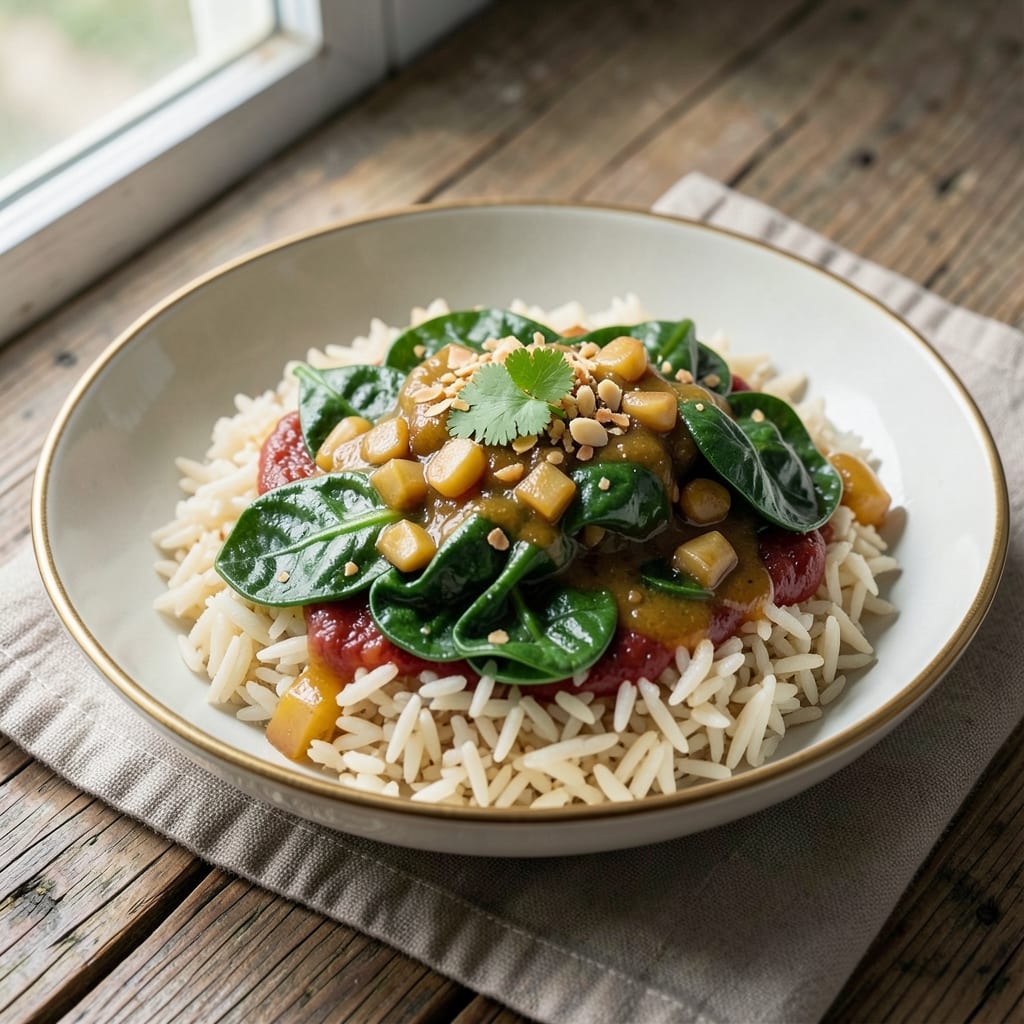
This African spinach and rice recipe brings the rich, nutty warmth of West African cuisine to your table with just one pot and simple ingredients. The harmony of peanut butter, tomatoes, and fragrant spices transforms humble spinach and rice into a flavor-packed dish that's both hearty and vegetarian-friendly. I developed this recipe after craving the bold, comforting flavors of home—where every bite carries the essence of African cooking traditions.
The secret lies in the peanut-tomato sauce, which simmers until thick and aromatic, coating each grain of rice and tender spinach leaf. Unlike many recipes that require multiple steps, this version comes together in under 45 minutes with minimal prep—perfect for weeknight dinners or meal prep. The blend of onions, garlic, ginger, and Scotch bonnet peppers creates layers of depth that balance the earthiness of spinach and the creaminess of peanut butter.
What you’ll end up with is a fragrant, one-pot meal where the rice absorbs the sauce, leaving each bite infused with smoky, slightly sweet, and tangy flavors. The spinach wilts into tender, flavorful strands that complement the nutty richness of the peanut base. This dish isn’t just a side—it’s a complete, satisfying meal that pairs beautifully with grilled fish, chicken, or even on its own for a filling vegetarian option.
Traditionally served at gatherings and family meals, this recipe honors West African culinary roots while adapting to modern kitchens. The slow-simmered sauce ensures deep flavor development, and the addition of optional proteins like beans or eggs makes it even more versatile. Ready to bring a taste of Africa to your kitchen? Let’s get started.
Ingredients for african spinach and rice
Simple yet transformative ingredients blend West African warmth with homey comfort for this one-pot masterpiece.
| Ingredient | Amount | Notes |
|---|---|---|
| Long-Grain White Rice 🍚 | 1 ½ cups | Uncooked, jasmine or basmati preferred |
| Fresh Spinach Leaves 🌿 | 10 oz | Baby spinach or chopped regular |
| Natural Peanut Butter 🥜 | ½ cup | Creamy, unsweetened variety |
| Tomato Paste 🍅 | ½ cup | San Marzano preferred for quality |
| Yellow Onions 🧅 | 1 whole | Medium, finely diced |
| Garlic Cloves 🧄 | 5 cloves | Fresh, minced |
| Fresh Ginger 🌿 | 1 tbsp | Grated, finely |
| Scotch Bonnet Peppers 🌶️ | 1 whole | Seeded, finely chopped (or habanero) |
| Vegetable Oil 🫒 | 2 tbsp | Light or canola preferred |
| Dried Thyme 🌿 | 1 tsp | Or 1 tbsp fresh thyme |
| Ground Cumin 🌿 | 1 tsp | Toasted for deeper flavor |
| Ground Black Pepper 🌶️ | ½ tsp | Freshly ground preferred |
| Salt 🧂 | 1 tsp | Diamond Crystal kosher salt |
| Water 💧 | 2 ½ cups | Filtered for best flavor |
| Lemon Juice 🍋 | 1 tbsp | Freshly squeezed |
The peanut butter and tomato paste form the flavor foundation, so quality matters here. For peanut butter, natural, unsweetened varieties from brands like Smucker's or Crazy Richard's deliver the richest flavor without additives. San Marzano tomato paste, available at Whole Foods or specialty Italian markets, offers superior sweetness and depth. Fresh spinach should be vibrant green with no wilt—organic baby spinach from the grocery store's refrigerated section works perfectly. The Scotch bonnet peppers are non-negotiable for authentic heat; if unavailable, habanero or even jalapeño can substitute at half the quantity. For ginger, freshly grated always outperforms powdered—look for firm, aromatic roots at the produce section.
No Scotch bonnet? Habanero or jalapeño at half the amount brings similar heat. Out of peanut butter? Smooth almond butter works in a pinch, though the flavor profile shifts slightly. Prefer milder heat? Omit the pepper entirely and add extra tomato paste for sweetness. The thyme can be swapped for dried oregano at the same amount, though fresh thyme adds a brighter note. For the rice, jasmine or basmati grains absorb the sauce beautifully, while long-grain white rice works as a neutral base. The vegetable oil should have a high smoke point—light olive oil or canola are ideal for sautéing without overpowering the dish's delicate flavors.
This dish tastes even better the next day as flavors meld. Store leftovers in an airtight container in the fridge for up to 5 days, or freeze portions for 3 months. The sauce thickens upon reheating, so add a splash of water or vegetable broth if needed. For meal prep, cook an extra batch—this reheats beautifully and makes for perfect lunches. The spinach wilts quickly during cooking, so add it late to preserve texture. If making ahead, cook the rice separately and combine with the sauce just before serving to maintain perfect texture.
Why You'll Love This Recipe
- One-Pot Magic: I swear by this trick—just toss everything into one pot, stir, and walk away. The rice cooks while the spinach wilts into that rich, peanutty sauce, no switching pans required.
- Peanut Butter Power: That smooth natural peanut butter isn’t just for sandwiches—it melts into the tomato paste and onions, creating this deep, nutty backbone that makes the whole dish ridiculously satisfying. (Yes, even on a Tuesday night.)
- Meal Prep MVP: Between us, this is my go-to for lunchboxes or leftovers. The rice stays fluffy for days, and the spinach sauce reheats like a dream—no soggy greens here.
- Budget-Friendly Feast: Spinach and rice are cheap staples, but the peanut butter and tomato paste elevate them into something special. Honestly, I’ve fed six people for under $10 with this—no guilt, just flavor.
Step-by-step instructions for African spinach and rice
Master this West African classic with rich peanut butter and tomato flavors perfectly balanced.
Prepare the Peanut-Tomato Base
Heat the 2 tablespoons vegetable oil in a heavy-bottomed pot over medium heat. Add the finely diced yellow onions and cook for 3-4 minutes until translucent and slightly golden. This foundational step develops sweetness that carries through the entire dish.
Add the minced garlic cloves and finely grated fresh ginger, cooking for 30 seconds until fragrant. Stir in the 0.5 cup tomato paste, spreading it evenly across the bottom of the pot. Cook for 2 minutes while stirring constantly to prevent burning. This creates a deep, concentrated flavor base that will bind all components together.
Build the Spiced Sauce
Reduce heat to medium-low and add the 0.5 cup natural peanut butter, stirring continuously for 3-4 minutes until completely melted and smooth. The peanut butter should incorporate seamlessly, creating a velvety texture. Add the 1 teaspoon ground cumin, 1 teaspoon dried thyme, 0.5 teaspoon ground black pepper, and 1 teaspoon salt, stirring well to distribute the spices evenly.
Here's where the heat comes in: add the finely chopped Scotch bonnet peppers (remove seeds if you prefer less heat) and cook for 1 minute while stirring. The sauce should begin to thicken slightly and develop a rich, aromatic depth. This is your flavor foundation - don't rush this step as proper development takes time.
Cook the Rice Separately
In a separate pot, combine the 1.5 cups long-grain white rice with 2.5 cups water. Bring to a boil, then reduce heat to low, cover tightly, and simmer for 15 minutes. The rice should absorb all the water and cook to a tender, separate grain consistency. Avoid lifting the lid during cooking to maintain even steaming.
While the rice cooks, prepare the spinach by washing thoroughly and draining well. This step is crucial - excess moisture will steam the spinach instead of wilt it properly. Keep both the rice and spinach ready for the next assembly step.
Wilt Spinach and Combine
Return the peanut-tomato mixture to medium heat and add the 10 oz fresh spinach leaves in batches, stirring continuously until completely wilted - about 2-3 minutes. The spinach should reduce to a vibrant green mass with no visible liquid remaining. This ensures the perfect texture without making the dish soggy.
Add the cooked rice to the spinach mixture and gently fold together, coating each grain with the peanut-tomato sauce. Stir in the 1 tablespoon freshly squeezed lemon juice and cook for an additional 2 minutes to allow all flavors to meld completely. The lemon juice brightens the rich peanut and tomato flavors, creating the signature balance of this dish.
Rest and Serve
Remove from heat and let the dish rest for 5 minutes before serving. This resting period allows the flavors to fully integrate and the rice to absorb any remaining sauce. The final texture should be creamy from the peanut base, with tender spinach and perfectly cooked rice.
Serve immediately with a side of fried plantains or crusty bread to soak up the flavorful sauce. The dish should be aromatic with notes of peanut, tomato, and subtle heat from the Scotch bonnet, balanced by the bright lemon finish. Each bite should deliver a harmonious blend of textures and flavors that define West African cuisine.
Pro Tips For Making African Spinach And Rice
- SOFTEN THE ONIONS FIRST: I learned this the hard way—sautéing raw onions in peanut butter and tomato paste is a flavor disaster. Finely dice the onions and cook them in a dry pan for 5-7 minutes until translucent and just starting to caramelize before adding any other ingredients. This step builds depth that raw onions simply can’t match.
- USE PEANUT BUTTER LIKE A PASTE: Natural peanut butter is thick and clumpy, and stirring it straight into your sauce will leave you with a lumpy mess. Warm it gently in a small saucepan over low heat with a splash of water (about 1 tablespoon) until it’s smooth and liquid-like. Then whisk it into your sauce—it’ll blend seamlessly and add richness without breaking the texture.
- DON’T OVERCOOK THE SPINACH: Fresh spinach wilts fast, but in this dish, you want it bright and vibrant, not mushy. Add it to the peanut sauce only in the last 2-3 minutes of cooking, just until it’s wilted but still holds its shape. If you toss it in too early, you’ll end up with a sad, slimy pile—trust me, I’ve made that mistake.
- RICE WATER IS GOLD: Save the starchy water from rinsing your rice (about ½ cup) and use it to thin out your peanut sauce if it gets too thick. It adds a subtle creaminess and keeps the sauce from clinging like glue. Skip the extra water or milk—this is the shortcut that actually works.
Pro cooking tips for african spinach and rice
Peanut Butter Magic
The peanut butter isn't just an ingredient—it's the soul of this dish. I always use natural, unsweetened peanut butter (like Smucker's) because the oil separates slightly when heated, creating an incredible silky texture. If you're worried about graininess, stir vigorously on medium-low heat for 3-4 minutes until completely smooth. The key is patience—don't rush this step, or you'll end up with clumps. For extra richness, I sometimes add 1 tablespoon of peanut oil along with the peanut butter. 🥜
Tomato Paste Secrets
Never skip the 2-minute cooking of the tomato paste after adding it to the onions. This step develops a deep, caramelized flavor that forms the backbone of the sauce. I prefer San Marzano tomato paste for its sweetness, but any high-quality brand works. If you're short on time, you can substitute with ½ cup tomato sauce, but the flavor won't be as concentrated. For a smoky twist, add ½ teaspoon smoked paprika with the spices. 🍅
Spinach Timing
Adding spinach too early will turn it mushy, but waiting too long means it won't wilt properly. I add it in two batches, stirring constantly for 2-3 minutes total until completely collapsed. The spinach should look vibrant green but tender—almost like it's been massaged into the sauce. Pro tip: If your spinach is particularly watery, squeeze out excess moisture before adding it to the pot. This ensures the perfect texture without making the dish soggy. 🌿
Rice Perfection
Cooking the rice separately is non-negotiable for this recipe. The rice needs to absorb all the water and cook to a tender yet separate grain consistency. I use jasmine or basmati rice because they hold up well to the sauce. After cooking, let the rice sit covered for 5 minutes before mixing it with the spinach sauce. This resting period prevents the rice from turning mushy when combined with the wet ingredients. 🍚
Heat Control
The Scotch bonnet pepper is where this dish gets its signature kick, but don't let it overpower the other flavors. I remove the seeds and membranes for medium heat, but if you love spice, keep them in. For milder versions, substitute with habanero (half the amount) or even jalapeño (¼ amount). Always taste the sauce before adding the rice—adjust with lemon juice or salt as needed. The goal is a balance of peanut creaminess, tomato sweetness, and just enough heat. 🌶️
Lemon Finish
The 1 tablespoon of fresh lemon juice at the end is what ties everything together. It brightens the rich peanut and tomato flavors, cutting through the creaminess and adding a refreshing contrast. I always use freshly squeezed lemon juice—bottled just doesn't compare. Add it in the final 2 minutes of cooking to let the flavors meld. If you're serving this dish with protein like grilled chicken or fish, the lemon also helps balance any richness from those components. 🍋
Nutrition facts
Frequently asked questions
Can I substitute regular spinach for the fresh spinach leaves?
Yes, but with a few adjustments! Use 10 oz of regular spinach (not baby spinach) and chop it finely before adding. Since regular spinach has tougher stems, it's best to remove them first. Add the spinach in batches, stirring constantly for 2-3 minutes until fully wilted. The texture will be slightly different but still delicious.
How can I make this recipe without Scotch bonnet peppers?
For milder heat, use ½ a habanero pepper (remove seeds) or ¼ of a jalapeño. If you prefer no heat at all, omit the pepper completely and add ½ teaspoon more tomato paste for extra sweetness. The dish will still be flavorful, just without the signature kick.
Can I prepare this dish ahead of time for meal prep?
Cook the rice separately and store it in an airtight container. Prepare the peanut-tomato sauce (without spinach) and refrigerate for up to 3 days. When ready to eat, reheat the sauce and wilt fresh spinach directly in the pot. This keeps the spinach crisp and vibrant. For longer storage, freeze portions for up to 3 months.
What type of rice works best for this recipe?
Jasmine or basmati rice are ideal because they hold up well to the sauce and stay separate. If you prefer a different texture, long-grain white rice works too. Avoid short-grain or sticky rice varieties, as they can become too mushy when combined with the creamy peanut sauce.
Is this dish naturally gluten-free?
Yes! This recipe is naturally gluten-free as long as you use gluten-free peanut butter and verify that your tomato paste and spices are certified gluten-free. Always check labels, especially for spices, as some blends may contain anti-caking agents with gluten. The dish is also dairy-free and vegetarian-friendly.