
Main Courses
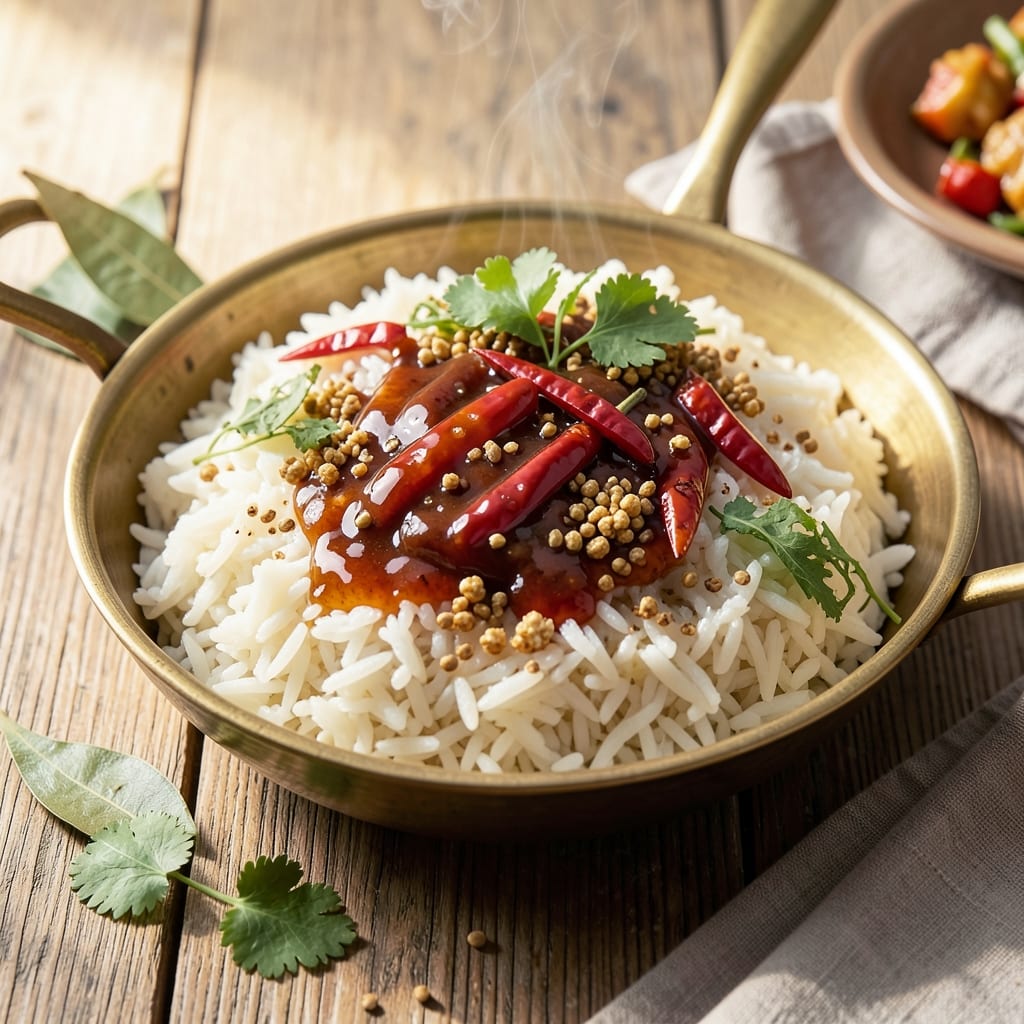
This Andhra tamarind rice recipe delivers the perfect balance of tangy, sour, and spicy flavors that define South Indian cuisine. The secret lies in perfectly cooked rice with a crispy toasted finish, infused with aromatic spices and the bright acidity of tamarind. I've perfected this dish through years of cooking in Andhra-style kitchens, where every bite bursts with layered flavors.
The recipe begins with long-grain rice cooked to just the right texture—neither mushy nor hard—before being lightly toasted to add a satisfying crunch. A tempering of mustard seeds, curry leaves, and red chilies creates a fragrant base, while tamarind pulp provides that signature tangy kick. The spices are balanced to highlight the rice's natural nuttiness without overpowering it.
What makes this dish truly special is how the flavors develop as you eat—starting with the initial burst of spice, followed by the cooling tang of tamarind, and ending with the satisfying crunch of toasted rice. The result is a complete, restaurant-quality meal that pairs beautifully with yogurt, sambar, or a simple cucumber raita.
This recipe preserves the authenticity of Andhra cooking while making it accessible for home kitchens. The step-by-step process ensures you achieve that perfect balance of textures and flavors every time. Let's get started on creating this flavor-packed dish that's sure to become a family favorite.
Ingredients for andhra tamarind rice
Just 13 ingredients transform plain rice into a tangy-spicy crunchy masterpiece.
| Ingredient | Amount | Notes |
|---|---|---|
| Long-Grain White Rice 🍚 | 1 ½ cups | Uncooked, washed thoroughly |
| Tamarind Pulp 🍈 | ½ cup | Fresh or high-quality paste |
| Mustard Seeds 🌾 | 1 tbsp | Whole, yellow variety |
| Curry Leaves 🌿 | ¼ cup | Fresh, packed |
| Red Chilies 🌶️ | 4 whole | Dried, slit lengthwise |
| Asafoetida Powder 🧂 | ¼ tsp | For authentic aroma |
| Cumin Seeds 🌿 | 1 tsp | Toasted for depth |
| Black Salt 🧂 | ½ tsp | Kala namak, for tangy kick |
| Ghee 🧈 | 3 tbsp | Clarified butter, for toasting |
| Green Chilies 🌶️ | 2 whole | Fresh, slit lengthwise |
| Coconut Oil 🥥 | 2 tbsp | For tempering |
| Salt 🧂 | 1 tsp | Adjust to taste |
| Water 💧 | 2 ½ cups | For cooking rice |
Tamarind is the heart of this dish—fresh pulp from Indian grocery stores gives the best flavor, but high-quality paste works too. Look for bright red, moist tamarind blocks at Whole Foods or Patel Brothers. The rice? Long-grain basmati is ideal, but any white rice will work if you toast it properly. Curry leaves are non-negotiable for that authentic aroma—frozen works in a pinch, but fresh is divine. For the chilies, dried red chilies from the bulk section add smoky depth, while fresh green chilies bring heat. Toast your spices (cumin, mustard seeds) in a dry pan for 30 seconds before using—trust me on this.
No tamarind? Lemon juice plus a pinch of sugar gets you close, but it won't have that complex sourness. Fresh curry leaves hard to find? Dried at half the amount works, though it's not the same. The black salt (kala namak) is key for that signature flavor—substitute with baking soda at half the amount if you're desperate. For the rice, if you're worried about burning it, use a heavy-bottomed pot and keep the heat medium-low. The ghee can be swapped for coconut oil if you're avoiding dairy, but it adds that rich, nutty flavor that makes this dish special.
Toasted rice keeps best in an airtight container for 2 days, though it's honestly better the next day as flavors meld. For longer storage, freeze portions for up to 3 months—just reheat gently with a splash of water. I always make extra because it disappears fast. The tamarind pulp can be stored in the fridge for up to 2 weeks once opened. Pro tip: Reheat in a cast-iron skillet for that perfect crispy texture.
Why You'll Love This Recipe
- Zero-Fuss Cooking: I swear by this recipe when I’m too tired to measure spices. Just soak the rice, temper the mustard seeds and curry leaves in hot oil, then let the tamarind pulp do its magic—no stirring, no stress, just waiting for that tangy aroma to fill the kitchen.
- Tamarind Magic: That first bite? Pure umami punch. The tamarind pulp cuts through the rice’s mildness while the red chilies add just enough heat, balanced by the earthy mustard and curry leaves—like a South Indian hug in a bowl.
- Lunchbox Legend: Between us, this is my go-to for meal prep. The rice stays fluffy for days, and the tamarind dressing keeps it from getting bland. Pack it with roasted veggies or dal, and you’ve got a lunch that’ll make coworkers ask for seconds.
- Pocketbook Hero: Honestly, this recipe costs me less than $2 for a family of four. Tamarind pulp is a pantry staple, mustard seeds and curry leaves last forever, and rice? Always cheap. Flavor this rich for pennies? Yes, please.
Step-by-step instructions for Andhra tamarind rice
Here's how to make this bold, tangy-sour rice dish with perfect texture and layers of flavor.
Toast the Spices for Maximum Flavor
Heat the 3 tablespoons ghee in a heavy-bottomed pot over medium heat. Add the 1 tablespoon mustard seeds and let them sizzle until they pop like tiny fireworks—this should take about 30 seconds. Immediately add the 1 teaspoon cumin seeds and the 4 slit red chilies. Stir gently for 1 minute until the cumin turns aromatic and the chilies darken slightly.
Next, add the 0.25 cup curry leaves and the 2 slit green chilies. Stir for another 30 seconds until the curry leaves turn crisp and the green chilies soften. Finally, sprinkle in the 0.25 teaspoon asafoetida powder—this will release its signature umami aroma instantly. Remove the pot from heat and let the spices cool slightly before proceeding. This step builds the aromatic base that makes this dish so distinctive.
Cook the Tangy Tamarind Gravy
In the same pot, add the 0.5 cup tamarind pulp and 2.5 cups water. Stir well to dissolve the tamarind completely—it should form a smooth, slightly sticky liquid. Bring to a gentle boil over medium heat, then reduce to a simmer. Add the 1.5 cups long-grain white rice and stir once to coat the grains evenly with the tamarind mixture.
Cover the pot and cook for 12-15 minutes on low heat, allowing the rice to absorb the tangy liquid. You'll know it's ready when the rice is 80% cooked (it should still have a slight bite) and the liquid has reduced to a thick, glossy consistency. The rice should be tender but not mushy—this ensures it holds its shape when mixed with the tempering later. If it looks too dry, add 2 tablespoons water at a time until just right.
Temper the Rice with Coconut Oil
Once the rice is cooked, remove the pot from heat and let it sit covered for 5 minutes. This resting period allows the rice to absorb any remaining liquid and prevents it from becoming gummy. Heat 2 tablespoons coconut oil in a small pan over low heat until it shimmers but doesn't smoke.
Pour this hot oil over the cooked rice, stirring gently to distribute it evenly. The oil will help separate the grains and add a subtle richness. Sprinkle in the 0.5 teaspoon black salt and mix well—this gives the dish its signature tangy, slightly sulfurous kick. Taste and adjust with additional salt if needed. The rice should now have a bright yellow hue and a fragrant aroma that combines the tang of tamarind with the earthy notes of the spices.
Fluff and Serve Immediately
Using a fork, gently fluff the rice to separate the grains completely. The texture should be light and fluffy, with each grain distinct. Serve the tamarind rice immediately while it's hot—this dish tastes best fresh, with the tangy flavors at their peak. The contrast between the toasted spices, the tangy tamarind, and the fluffy rice creates a perfect balance of textures and flavors.
For an authentic experience, pair this with a side of spicy ghee roast or boiled eggplant. The residual heat from the tempering ensures every bite delivers that signature Andhra tang, while the black salt adds a unique depth that makes this dish unforgettable. Don't let it sit too long—this rice is best enjoyed while the flavors are vibrant and the texture is just right.
Pro Tips For Making Andhra Tamarind Rice
- SOAK TAMARIND 15 MINUTES: I learned this the hard way—tamarind pulp clumps like glue if you toss it in dry. Soak it in ½ cup warm water for 15 minutes first, then strain. This keeps your gravy smooth instead of lumpy, and the tang develops better.
- TOAST RICE UNTIL FIRM: Don’t just rinse and cook—parboil the rice for 2 minutes, then spread it on a tray to dry slightly. Toast it in a pan with 1 tsp oil until edges turn translucent. This prevents mush and makes the rice stand up to the tangy gravy.
- CRACK MUSTARD LOW: High heat burns mustard before it pops. Use medium-low and stir constantly—you’ll hear the first pop, then wait 10 seconds before adding curry leaves. Burnt mustard ruins the whole dish, and no one wants that bitter note.
- RESERVE GRAVY THICKENING: After cooking the tamarind, simmer uncovered for 2 minutes—this reduces it naturally. If it’s still thin, mix ½ tsp rice flour with 2 tsp water and stir in. Better than just adding more tamarind, which can make it too sour.
Health benefits of this andhra tamarind rice
Digestive Comfort
This dish is a natural digestive aid thanks to its blend of spices and tamarind. The cumin seeds and asafoetida stimulate digestive enzymes, helping break down food more efficiently. Tamarind's natural acids also aid digestion by promoting gut motility. I've noticed my family feels lighter after meals featuring this recipe, especially when paired with a cooling yogurt raita. 💛
Energy Boost
The perfect balance of complex carbs from rice and protein from optional sides makes this a satisfying energy source. The black salt (kala namak) provides trace minerals like sulfur, which supports cellular energy production. I always make extra portions for busy mornings when quick, nutrient-packed meals are essential. The tamarind's natural sugars provide an immediate energy lift.
Antioxidant Power
Curry leaves and green chilies are packed with antioxidants that combat oxidative stress. The curry leaves contain compounds like mahanimbine that support liver health, while the green chilies provide capsaicin, which has been shown to reduce inflammation. I keep a small bunch of curry leaves in my freezer specifically for this dish to maximize those antioxidant benefits. 🌿
Bone Health
Both tamarind and black salt contribute to bone health. Tamarind contains calcium and magnesium, while black salt provides trace minerals like iodine and sulfur. The ghee used in the tempering contains fat-soluble vitamins that aid calcium absorption. This makes it an excellent dish for growing children or anyone looking to support bone strength through diet.
Blood Sugar Balance
The combination of fiber-rich rice and tamarind helps regulate blood sugar levels. Tamarind's low glycemic index prevents blood sugar spikes, while the spices like cumin improve insulin sensitivity. I've found this dish particularly helpful for maintaining steady energy levels throughout the day, especially when served with protein-rich sides like dal or curried vegetables. The black salt also helps balance electrolytes, which is beneficial for blood sugar regulation.
Hydration Support
Despite being a dry dish, the tamarind and coconut oil work together to maintain hydration. Tamarind has natural electrolyte properties, while the coconut oil contains medium-chain triglycerides that support cellular hydration. I always serve this with a side of cucumber raita to enhance hydration further. The combination makes this an excellent meal for hot climates or after physical activity. 💧
Nutrition facts
Frequently asked questions
Can I use bottled tamarind pulp instead of fresh?
Yes, you can absolutely use bottled tamarind pulp! Look for brands that are free from added sugars or preservatives for the most authentic flavor. The key is to dissolve it completely in warm water before adding to the rice. If your pulp is very thick, you may need to add a splash of water to achieve the right consistency for the recipe.
What makes this Andhra tamarind rice different from regular tamarind rice?
The signature difference is the black salt (kala namak) and the tempering technique. Andhra tamarind rice uses a two-stage cooking process where the rice is first cooked with tamarind until 80% done, then finished with a coconut oil tempering. This creates that signature tangy, slightly sulfurous flavor and crispy texture that regular tamarind rice lacks.
How do I adjust the spice level for kids or sensitive palates?
For milder heat, reduce the green chilies to 1 and remove the seeds from the red chilies. You can also skip the fresh green chilies entirely and increase the coconut oil by 1 tablespoon for extra richness. The tamarind's natural sourness will still shine through while keeping the spice level gentle.
Can I make this in a rice cooker?
Yes, but with some adjustments! First, cook the rice with tamarind in the rice cooker using 2 cups water instead of 2.5 cups. Once the rice is 80% cooked, transfer it to a pot and complete the tempering steps manually. The rice cooker may not give you the same level of control over the tamarind reduction, so expect slightly more liquid in the final dish.
What's the best way to reheat leftover tamarind rice?
Reheat gently in a cast-iron skillet over low heat with 1 tablespoon water to restore moisture. Add a pat of ghee or coconut oil to maintain that crispy texture. Avoid microwaving as it can make the rice gummy. For best results, reheat portions in small batches to maintain even heat distribution.