
Main Courses
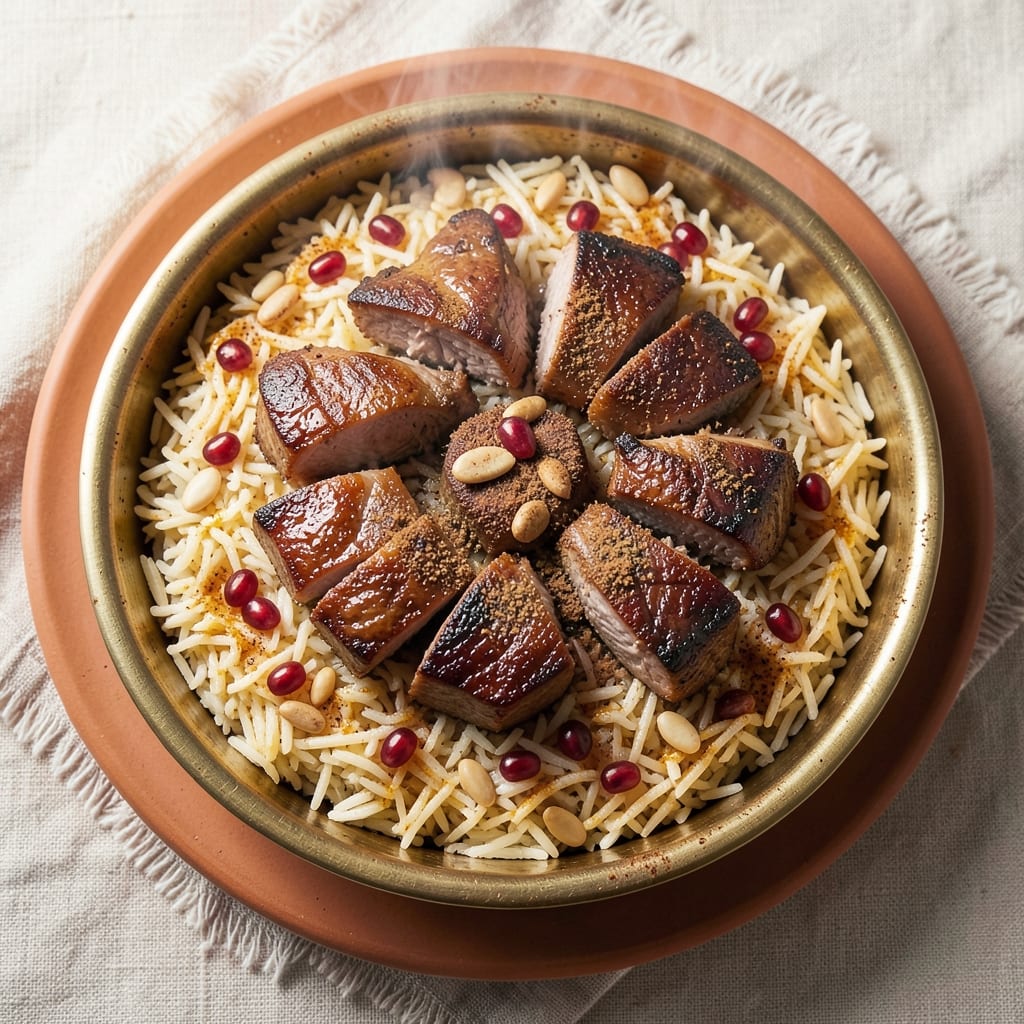
Arabic-style rice with lamb meat transforms a simple meal into a fragrant, spice-infused experience that transports you to the heart of Middle Eastern cuisine. The secret lies in marinating the lamb with warm spices like cumin and cinnamon, then slow-roasting it until tender and caramelized. This dish isn't just about flavor—it's about technique, from toasting the rice in rich lamb fat to infusing it with saffron threads that turn the grains golden and aromatic.
The lamb, marinated overnight in a blend of garlic, lemon, and aromatic spices, develops deep, complex flavors that pair perfectly with the fragrant basmati rice. Cooking the lamb low and slow ensures it stays juicy, while the rice absorbs the rich, spiced broth for a dish that's both comforting and elegant. Every bite delivers layers of savory, sweet, and earthy notes that make this a standout main course.
What makes this recipe truly perfect is the balance—tender lamb, fluffy saffron rice, and a garnish of toasted nuts or fresh herbs that add texture and brightness. The dish serves as a centerpiece for gatherings, its aroma filling the kitchen long before it's served. It's the kind of meal that feels special without requiring hours in the kitchen.
Whether you're preparing for a family dinner or a festive celebration, this Arabic-style rice with lamb meat delivers restaurant-quality results at home. The combination of slow-cooked lamb and fragrant rice creates a dish that's both hearty and refined, perfect for those who appreciate bold flavors and traditional techniques.
Ingredients for arabic style rice with lamb meat
Six aromatic spices, tender lamb, and golden saffron rice create this Middle Eastern masterpiece.
| Ingredient | Amount | Notes |
|---|---|---|
| Lamb Shoulder 🥩 | 2 ½ lb | Bone-in for flavor, cut into 2-inch chunks |
| Basmati Rice 🌾 | 2 cups | Long-grain, uncooked, premium quality |
| Saffron Threads 🌼 | ¼ tsp | High-quality, culinary grade |
| Ground Cumin 🌿 | 1 ½ tbsp | Toasted for deeper aroma |
| Ground Coriander 🌿 | 1 tbsp | Freshly ground preferred |
| Ground Cinnamon 🌿 | ½ tsp | Sweet, not cassia |
| Garlic Cloves 🧄 | 6 cloves | Peeled, smashed for marinade |
| Lemon Juice 🍋 | ¼ cup | Freshly squeezed, no pulp |
| Extra-Virgin Olive Oil 🫒 | ½ cup | High-quality, fruity |
| Fresh Rosemary 🌿 | ¼ cup | Chopped, stems removed |
| Fresh Thyme 🌿 | ¼ cup | Leaves only, finely chopped |
| Chicken or Lamb Broth 💧 | 3 cups | Low-sodium, homemade preferred |
| Unsalted Butter 🧈 | 4 tbsp | Cold, cubed for toasting rice |
| Pistachios 🥜 | ¼ cup | Shelled, toasted for garnish |
| Diamond Crystal Kosher Salt 🧂 | 1 ½ tsp | For seasoning and rice |
The lamb should be the star here. Bone-in cuts like shoulder stay juicier and develop deeper flavor during slow cooking. Middle Eastern markets often carry pre-cut lamb for this dish, but any butcher can trim it for you. Look for pieces with good marbling—they'll stay moist. If you can't find bone-in, bone-in lamb shanks work too, but trim excess fat. The spices? Penzeys or Spicewalla for quality, but the grocery store's cumin and coriander are fine if they're fresh. Quick test: if your cumin smells like dust, toss it. Toast your whole spices for 2 minutes in a dry pan before grinding—game-changer for aroma.
No saffron? Turmeric at one-tenth the amount gives color, but you'll miss the floral notes. Fresh herbs wilt fast—buy them the day you cook. Short on pistachios? Toasted almonds or cashews work just as well. The broth is non-negotiable—homemade chicken or lamb stock has more depth than canned. If you must use canned, Lowry or Pacific Foods are solid choices. The lemon juice should be freshly squeezed—bottled just doesn't cut it. And trust me on the butter for toasting rice—full-fat, cold cubes create that signature nutty flavor.
This dish tastes even better the next day. Store lamb and rice separately in airtight containers for 3-4 days. For longer storage, freeze portions for up to 3 months. I always make extra rice—it reheats perfectly for lunches. The saffron rice keeps its golden color best if you cover it tightly with plastic wrap pressed directly on the surface. Garnish with fresh herbs right before serving—they add that restaurant-quality touch.
Why You'll Love This Recipe
- One-Pot Magic: I swear by this—just brown the lamb, toss in the spices (cumin and coriander are chef’s kiss), then layer the rice on top. No separate pots, no fuss, and the saffron steeps right into the broth while everything cooks. My lazy Sundays just got an upgrade.
- Lamb So Tender: That slow-cooked lamb shoulder falls apart with zero effort. The spices seep into every bite, and the rice? Absolutely fragrant from the saffron—like a golden hug in every mouthful. Honestly, my picky eaters ask for seconds without me even asking.
- Weeknight to Dinner Party: Same recipe, different vibes. Serve it with flatbread for a quick family meal or plate it with roasted veggies for guests. The lamb’s rich flavor and rice’s aroma make it feel special, even when it’s just me and a busy weeknight.
- Leftovers That Don’t Suck: Between us, most leftovers are sad. Not this. The lamb stays juicy, the rice stays fluffy, and reheating? Just add a splash of water and a minute in the microwave. Budget-friendly, too—one lamb shoulder feeds my family for days. Win.
Step-by-step instructions for Arabic-style rice with lamb
This fragrant, spice-infused dish delivers restaurant-quality results with simple techniques.
Marinate and Sear the Lamb Shoulder
In a large bowl, combine the 2.5 lb lamb shoulder, 0.5 cup extra-virgin olive oil, 1.5 tbsp ground cumin, 1 tbsp ground coriander, 0.5 tsp ground cinnamon, 6 smashed garlic cloves, 0.25 cup fresh rosemary, 0.25 cup fresh thyme, 0.25 cup lemon juice, and 1 tsp diamond crystal kosher salt. Mix thoroughly until the lamb is evenly coated and the marinade penetrates the meat. Cover and refrigerate for at least 4 hours (overnight is ideal) to develop deep, complex flavors.
Remove the lamb from the fridge and let it sit at room temperature for 30 minutes before cooking. Heat a large Dutch oven over medium-high heat and add 2 tbsp olive oil. Sear the lamb on all sides until deeply browned—about 8-10 minutes total. This step creates a flavorful crust that locks in juices during cooking. Transfer the seared lamb to a plate and set aside.
Toast the Rice and Build the Spiced Base
In the same Dutch oven, add the remaining 2 tbsp olive oil and swirl to coat the bottom. Add the 2 cups basmati rice and toast over medium heat for 3-4 minutes, stirring constantly, until the grains turn translucent at the edges and you can smell their nutty aroma. This step prevents mushy rice and enhances its natural flavor.
Reduce heat to medium-low and sprinkle the rice with the remaining 0.5 tsp diamond crystal kosher salt. Stir for 30 seconds to distribute evenly. Add the 0.25 tsp saffron threads and pour in the 3 cups chicken or lamb broth. Bring to a gentle simmer, then immediately reduce heat to low and cover tightly with a lid. Let the rice cook undisturbed for 15 minutes—this steaming phase allows the grains to absorb liquid evenly.
Layer and Braise the Lamb with Rice
After the initial 15 minutes, carefully arrange the seared lamb shoulder on top of the partially cooked rice. The lamb's juices will infuse the rice as it braises. Pour any accumulated marinade from the bowl over the lamb. Cover the pot again and transfer to a 325°F preheated oven for 1.5 hours. This low-and-slow cooking ensures tender lamb and perfectly fluffy rice.
About 30 minutes into the oven time, check the rice for doneness by pressing a grain between your fingers—it should be tender but still slightly firm. If needed, add 2-3 tablespoons of hot broth to the pot and continue cooking. The lamb is done when it reaches an internal temperature of 195°F (use a meat thermometer) and the rice is fully tender with a slight bite.
Rest and Garnish for Presentation
Remove the lamb from the oven and transfer it to a cutting board. Tent loosely with foil and let it rest for 20 minutes—this crucial step allows the juices to redistribute throughout the meat. Meanwhile, gently fluff the rice with a fork, being careful not to break the grains. Stir in the 4 tbsp cold unsalted butter, which will melt into the rice and create a luxurious texture.
To serve, slice the lamb into ½-inch thick pieces against the grain. Spoon the fragrant rice onto plates, top with lamb slices, and garnish with 0.25 cup toasted pistachios for crunch and visual appeal. The combination of saffron-infused rice, tender lamb, and aromatic spices creates a dish that's as beautiful as it is delicious.
Pro Tips For Making Arabic Style Rice With Lamb Meat
- CRISP THE LAMB FIRST: I learned this the hard way—skipping the sear makes the lamb taste bland no matter how much spice you add. Get that shoulder screaming hot in a dry pan for 8-10 minutes, turning occasionally, until it’s deep brown in spots. The crust locks in flavor and prevents the meat from drying out later when it braises.
- SOAK THE RICE 20 MINUTES: Basmati rice expands more than you think, and dry-soaking prevents mush. Toss the rice in cold water for 20 minutes before cooking—yes, even if it’s "pre-washed." This step guarantees grains that stay separate and fluffy, especially when layered with the lamb’s rich sauce.
- STEAM THE SAFFRON: Crush those saffron threads between your fingers first, then steep them in 2 tablespoons of warm water for 5 minutes. Straining the liquid later avoids bitter threads in your rice—no one wants to chew on a surprise. The color will bleed beautifully into the broth, too.
- COVER THE RICE TIGHTLY: After adding the rice to the lamb’s sauce, press a damp paper towel directly on the foil before sealing the pot. The towel prevents condensation from turning the rice soggy while keeping it moist. I’ve tried every trick, and this is the only one that works—no dry edges, no sticky bottom.
Regional styles of these flavors
Levantine Lamb and Rice
In Lebanon and Syria, this dish often features bone-in lamb shanks instead of shoulder, slow-cooked with allspice and cardamom for a warmer, slightly sweet profile. The rice is typically cooked in layers with the meat, using chicken broth infused with lemon peel and bay leaves for brightness. I’ve made this version with 1.5 lb lamb shanks and added 1 tsp ground allspice to the marinade for an extra layer of warmth. 🌿
Persian-Inspired Dastarkhwan
Persian cuisine elevates this dish with saffron-infused rice called chelo, where the rice is parboiled in salted water before being layered with lamb and cooked in a tagine. The key difference? Barberries (sour cherries) are often added to the rice for a tangy contrast. I’ve adapted this by adding 2 tbsp dried barberries to the rice before simmering. The lamb is typically spiced with sumac instead of cinnamon, giving it a bright, citrusy edge. 🍋
Yemeni Lamb and Rice
Yemen’s version, called mandi, features spiced lamb stewed with garlic, ginger, and fenugreek, served over yellow rice made with turmeric and saffron. The rice is often toasted in lamb fat before cooking, and the lamb is slow-cooked until fall-apart tender. For this adaptation, I’ve added 1 tsp ground fenugreek to the marinade and used turmeric alongside saffron for the rice. The dish is traditionally served with flatbread and a side of spicy tomato sauce. 🌶️
Gulf-Style Lamb Machboos
In the Gulf, particularly in Oman and UAE, this dish is called machboos and is often made with ground lamb instead of chunks. The rice is cooked in lamb broth with whole spices like cardamom pods and cloves, then topped with the lamb and finished under a domed lid to trap steam. For this version, I’ve used ground lamb (about 2 lbs) and added 3 cardamom pods and 2 cloves to the rice while simmering. The result is a deeply aromatic, almost dessert-like rice with a tender, spiced lamb topping. ✨
Egyptian Lamb and Rice
Egyptian koshari (though typically a lentil dish) influences this version with caramelized onions and tomato paste added to the rice for depth. The lamb is often marinated with coriander and cumin, then slow-cooked with garlic and lemon. For this adaptation, I’ve sautéed 1 cup finely diced onions in olive oil until golden before adding the rice, then stirred in 2 tbsp tomato paste with the broth. The lamb is cooked separately and served over the rice, garnished with parsley and lemon wedges. 🍅
Nutrition facts
Frequently asked questions
Can I substitute chicken or beef for the lamb?
While lamb is traditional, you can use chicken thighs (bone-in) or beef chuck for similar results. For chicken, reduce cooking time to 45 minutes and use 325°F oven temperature. Beef needs 2 hours at 300°F to tenderize. Adjust marinade time to 2 hours minimum for beef, as it's tougher. The rice preparation remains the same.
What's the secret to perfectly fluffy saffron rice?
The key is toasting the rice in lamb fat first (or olive oil) until translucent, then using hot broth and a tight lid. Don't peek while cooking! The saffron should steep in warm broth for 10 minutes before adding rice to maximize color and flavor. Stirring in cold butter at the end adds richness without making it mushy.
How do I make this dish ahead of time?
Cook the lamb and rice separately, then store in airtight containers for 3-4 days in the fridge. Reheat lamb in a skillet with a splash of broth, and rice in a pot with a damp towel over it. For freezing, portion lamb and rice separately for up to 3 months. The rice reheats best with a splash of water or broth to restore moisture.
Why did my lamb turn out dry?
Lamb often dries out when cooked too quickly or at high heat. Always use a meat thermometer—remove at 195°F internal temp. For extra moisture, add 2 tbsp broth to the pot during cooking if needed. Let it rest 20 minutes before slicing to retain juices. Bone-in cuts stay juicier than boneless.
Can I make this in an Instant Pot?
Yes! Sear lamb first, then toast rice in the pot. Add broth, saffron, and lamb. Cook on high pressure for 25 minutes, then natural release. Finish with butter and garnish. The Instant Pot version cooks faster but may need extra broth to prevent dryness. For best results, use the "sauté" function for searing and toasting.