
Main Courses
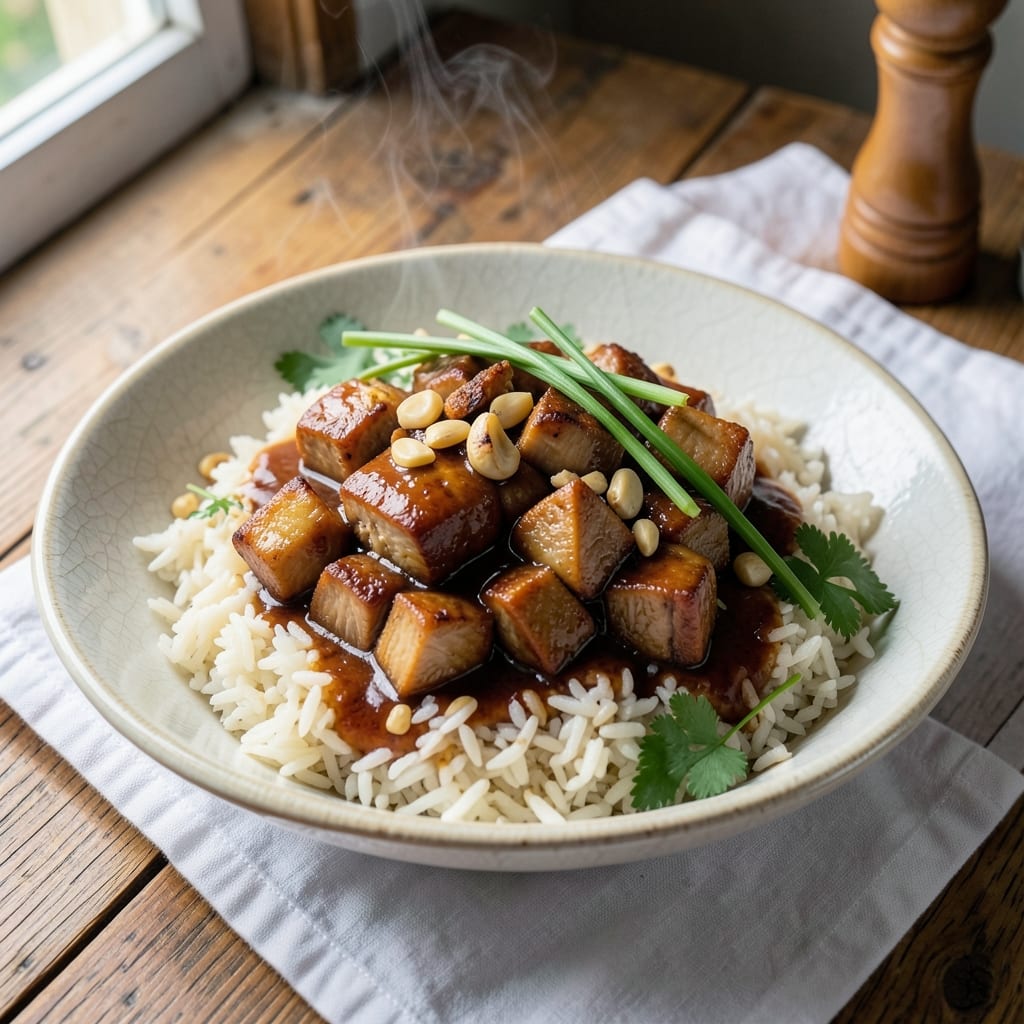
This Filipino adobo rice recipe transforms simple ingredients into a fragrant, vinegar-braised masterpiece that balances tangy, savory, and slightly sweet notes. The key lies in braising pork or chicken with soy sauce and vinegar until the meat is tender and the sauce reduces to a glossy, aromatic glaze. What sets this dish apart is the toasted grain crunch—achieved by lightly toasting the rice before cooking—adding texture that elevates every bite.
Traditional Filipino techniques are the foundation here: simmering the meat in its own juices with just enough liquid to create a rich, concentrated sauce. The vinegar cuts through the richness while preserving the meat's natural flavors, and the soy adds depth without overpowering. This method ensures tender protein and perfectly seasoned rice, all in one pot for minimal cleanup.
By the time you serve this dish, your kitchen will smell like a Filipino comfort food classic, with tender meat swimming in a glossy sauce and aromatic rice that's both fragrant and satisfyingly textured. The balance of flavors—tangy, salty, and umami—makes this a crowd-pleaser that's equally at home for weeknight dinners or special occasions.
Ready to master this dish? The process is straightforward: marinate the protein, braise until tender, and cook the rice in the flavorful liquid. Optional variations like adding coconut milk for richness or serving with atchara (pickled papaya) for extra tang can customize it to your taste. Let's get cooking!
Ingredients for adobo rice filipino
Simple ingredients that deliver bold Filipino flavors—tangy, savory, and perfectly balanced.
| Ingredient | Amount | Notes |
|---|---|---|
| Long-Grain White Rice 🍚 | 2 cups | Uncooked, jasmine or basmati preferred |
| Pork Shoulder 🥩 | 1 ½ lb | Bone-in, cut into 1-inch cubes |
| Canola Oil 🫒 | ¼ cup | For searing meat |
| White Vinegar 🍶 | ½ cup | Distilled preferred |
| Soy Sauce 🥄 | ½ cup | Filipino-style preferred |
| Garlic Cloves 🧄 | 8 cloves | Minced, fresh preferred |
| Fresh Ginger 🌿 | 2 tbsp | Grated, peeled |
| Bay Leaves 🍃 | 2 whole | Dried, crushed |
| Black Peppercorns 🌶️ | 1 tsp | Crushed, whole |
| Salt 🧂 | 1 ½ tsp | Kosher or sea salt |
| Sugar 🍚 | 1 tbsp | White granulated |
| Green Onions 🧅 | 3 whole | Sliced, for garnish |
The pork shoulder is the heart of this dish—bone-in cuts stay juicier during the long braise. Look for well-marbled pieces at Filipino markets or the meat section of Asian grocery stores like 99 Ranch or H Mart. If you can't find pork shoulder, chicken thighs work just as well, though they'll cook faster. The rice? Jasmine or basmati holds up best to the vinegar's acidity. Toast it lightly in the pot before adding liquid—this creates that signature crunch. For the vinegar, Filipino cane vinegar adds depth, but distilled works fine in a pinch.
No Filipino soy sauce? Regular soy sauce plus 1 tsp sugar gets you close. Fresh ginger and garlic are non-negotiable here—they're what make the sauce sing. If you're short on time, pasteurized ginger juice from the international aisle works, but fresh is always better. The bay leaves add subtle earthiness; if you don't have them, 1 tsp dried thyme is a decent swap. For the sugar, brown sugar adds caramel notes, but white keeps it classic. And that toasted rice? Don't skip it—it's what gives this dish its signature texture.
This dish tastes even better the next day as flavors meld. Store leftovers in the fridge for up to 4 days, covered with a splash of vinegar to keep the rice from drying. For longer storage, freeze portions for 3 months. The sauce thickens as it cools, so add a splash of water when reheating. Garnish with fresh green onions right before serving—they add a bright contrast to the rich, tangy sauce. Double the recipe? It's worth it—this feeds a crowd beautifully.
Why You'll Love This Recipe
- One-Pot Magic: I swear by this—just brown the pork shoulder, toss in the rice, and let the vinegar and soy sauce work their saucey magic. No separate pots, no fuss, just hands-off flavor building while you sip your coffee.
- Tangy-Savory Balance: That vinegar cut with soy sauce? It’s the secret weapon. The pork gets tender, the rice soaks up that umami depth, and the final sprinkle of salt makes every bite ridiculously satisfying.
- Lunchbox Hero: Between us, this is my go-to for meal prep. The rice stays fluffy (if you rinse it first), the pork shreds effortlessly, and it reheats like a dream—packed lunches never tasted this good.
- Budget Stretch: Pork shoulder is cheap, rice is cheap, and a splash of vinegar goes a long way. I’ve fed four grown adults with leftovers for days, and honestly? The taste doesn’t skimp on quality for the price.
Step-by-step instructions for adobo rice Filipino recipe
Transform simple ingredients into rich, tangy adobo rice with perfectly braised pork and fragrant grains.
Sear the Pork Shoulder for Maximum Flavor
Heat the 0.25 cup canola oil in a large pot or Dutch oven over medium-high heat until shimmering. Add the 1.5 lb pork shoulder cut into 1-inch cubes, working in batches if needed to avoid crowding. Sear for 4-5 minutes per side until deeply golden brown and crispy in spots.
This step creates the Maillard reaction that forms the deep, savory foundation of your adobo. Don't rush the searing—you'll know it's ready when the pork releases easily from the pan. Remove the pork and set aside, leaving all the browned bits in the pot. These flavorful bits will form the base of your sauce.
Build the Adobo Sauce with Aromatics
In the same pot, add the 8 cloves minced garlic and 2 tbsp grated fresh ginger, stirring constantly for 30 seconds until fragrant. Add the 2 crushed whole bay leaves, 1 tsp crushed black peppercorns, 1.5 tsp salt, and 1 tbsp sugar, stirring for another 30 seconds to toast the spices.
Pour in the 0.5 cup white vinegar and 0.5 cup soy sauce, scraping up all the browned bits from the bottom of the pot. Bring to a gentle simmer over medium heat, then return the pork to the pot. Reduce heat to low and let it simmer uncovered for 20 minutes, stirring occasionally.
Cook the Rice with Adobo Infusion
Add the 2 cups long-grain white rice to the pot, stirring gently to distribute evenly. The rice should be submerged in the adobo liquid—if not, add ½ cup water. Bring to a gentle boil, then reduce heat to low, cover the pot, and let it cook for 15 minutes without disturbing it.
After 15 minutes, uncover the pot and check the rice. If the liquid has mostly absorbed but the rice is still slightly underdone, add 2-3 tablespoons water and cover again for another 5 minutes. The rice should be tender with a slight crunch, and the pork should be fork-tender with crispy edges.
Rest and Garnish for Perfect Texture
Remove the pot from heat and let it rest, covered, for 10 minutes. This resting period allows the rice to finish steaming and the flavors to meld. Open the lid and fluff the rice gently with a fork, then sprinkle with the 3 sliced whole green onions for freshness.
Serve immediately, ensuring each portion has both rice and pork. The rice should have a delicate toasted crunch from the adobo cooking method, while the pork remains juicy with a crispy exterior. The sauce should coat every bite, balancing the tang of vinegar with the savory depth of soy sauce and pork.
Pro Tips For Making Adobo Rice Filipino
- Brown the Pork First: Skip the urge to dump everything in at once—sear the pork shoulder in batches with a splash of water until it’s deep golden. This locks in flavor and keeps the meat from turning into a mushy pile later. (Yes, it takes 10 minutes extra, but it makes the difference when you bite into tender, caramelized edges.) ---
- Use Equal Parts Vinegar: For every cup of soy sauce, add the same amount of white vinegar—no eyeballing. Too much vinegar and you’ve got a tangy mess; too little and the rice tastes flat. My shortcut? Measure both into the same measuring cup first. (Trust me, your taste buds will notice.) ---
- Parboil the Rice: Dump the rice in boiling water for 2 minutes before draining—this guarantees even cooking and prevents gummy grains later. I used to skip this, and half the rice would be undercooked while the other half turned to paste. (Not worth the stress.) ---
- Simmer, Don’t Boil: Once the pork and rice are in the pot, keep the heat at a low simmer—not a rolling boil. High heat turns the rice mushy and makes the pork release too much liquid at once. (Your future self will thank you when the rice stays fluffy and the sauce clings just right.)
Flavor customization for adobo rice filipino
Tangy to Sweet Balance
Adjust the vinegar-to-soy ratio to suit your taste. For extra tang, add 1 tbsp more vinegar and reduce soy by 1 tbsp. For a sweeter profile, increase sugar to 2 tbsp and add ½ cup coconut milk at the end for richness. I often test as I go—taste the sauce after 10 minutes of simmering to fine-tune.
Spice Level Boost
Add heat with 1 tsp ground black pepper or ½ tsp cayenne when building the sauce. For smoky depth, swap 1 bay leaf for ½ tsp smoked paprika. If you love chili, stir in 1 tbsp chopped siling labuyo (Filipino bird’s eye chili) during the final 5 minutes of cooking. 🌶️
Coconut Milk Twist
For a creamy version, stir in ½ cup coconut milk after the rice is cooked. This balances the acidity while adding a velvety texture. I recommend Thai Kitchen coconut milk for its neutral flavor. Simmer for 5 minutes to let the flavors meld before serving.
Herb Variations
Swap bay leaves for 1 tsp dried oregano or ½ tsp ground coriander for a Mediterranean touch. Fresh herbs like cilantro or Thai basil add brightness—stir in 2 tbsp chopped cilantro at the end for a fresh finish. Garnish with extra herbs for color and aroma.
Protein Swaps
Replace pork with chicken thighs for a lighter version (reduce cooking time by 15 minutes). For vegetarian adobo, use extra-firm tofu or mushrooms—simmer for 20 minutes longer to develop flavor. Shrimp cooks in 5 minutes and adds a seafood twist.
Texture Contrast
Add crunch with toasted sesame seeds or crushed peanuts before serving. For extra crunch, stir in 2 tbsp fried shallots at the end. These toppings cut through the richness and add visual appeal. 💫
Nutrition facts
Frequently asked questions
Can I use chicken instead of pork in this recipe?
Chicken thighs work beautifully and cook faster than pork—reduce simmering time by 15 minutes for tender results. For breasts, use 1 lb and increase cooking time to 25 minutes to prevent dryness. The sauce will still develop rich flavors, though pork's fat content creates a deeper, more concentrated adobo.
Why does my adobo rice turn out mushy?
Overcooking or adding too much liquid causes mushiness. Use 2 cups rice for 1.5 cups liquid (adjust with water only if needed). After 15 minutes of cooking, uncover and check—if liquid remains, cook uncovered for 5 more minutes to evaporate excess. For extra crunch, toast the rice in the pot for 2 minutes before adding liquid.
How do I make this dish less tangy?
Reduce vinegar to ¼ cup and add 1 tbsp sugar to balance acidity. For a milder flavor, increase soy sauce to ⅔ cup and simmer uncovered for 5 minutes to let alcohol evaporate. A splash of ½ cup coconut milk at the end also softens the tang while adding richness.
Can I prepare adobo rice ahead of time?
Yes! It tastes even better the next day as flavors meld. Store leftovers in the fridge for up to 4 days, covered with a splash of vinegar to preserve moisture. Reheat gently with 2 tbsp water to restore sauce consistency. For freezing, portion into airtight containers for 3 months—thaw overnight in the fridge before reheating.
What's the secret to the perfect toasted rice texture?
Toast the rice in the pot over medium heat for 2-3 minutes until fragrant before adding liquid. This step develops nutty flavors and prevents mushiness. Stir constantly to avoid burning, and add liquid only when you see golden spots on the grains. The rice should be submerged but not drowned in sauce.