
Main Courses
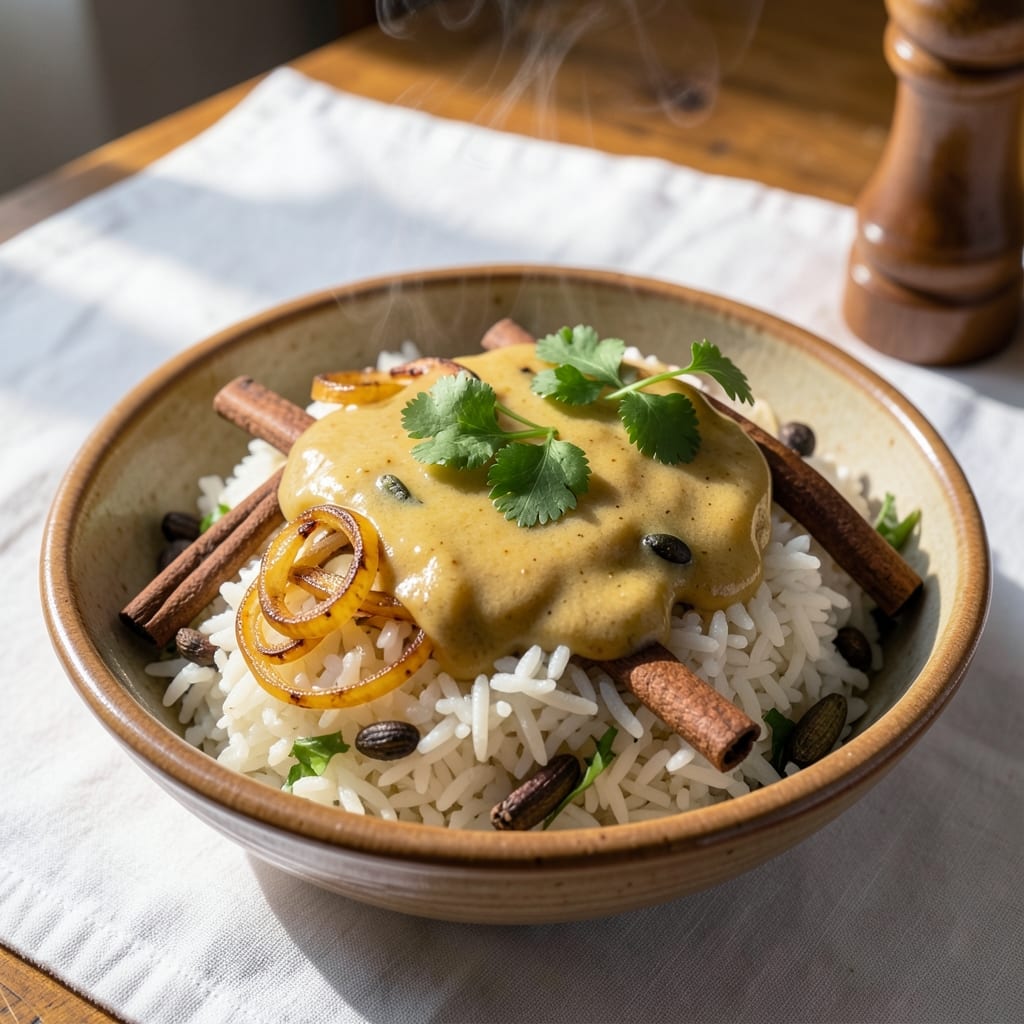
This Anglo-Indian coconut rice recipe transforms simple basmati into a fragrant, spice-infused pilaf with a toasted crunch that feels like a restaurant special. The secret lies in slow-toasting whole spices and fried onions until they release their deepest aromas, then simmering them in coconut milk until the rice absorbs their rich, nutty essence. I developed this after years of adapting Anglo-Indian flavors—where British colonial influences met South Asian spices—and it’s become a showstopper for any meal.
The dish begins with a tempering of cinnamon, cardamom, and cloves in ghee, creating layers of warmth that blend seamlessly with the coconut milk’s natural sweetness. Basmati rice, partially cooked in the spiced milk, finishes in a gentle simmer until each grain is tender yet distinct, with fried onions adding a satisfying crunch. The result is a dish that’s creamy, aromatic, and subtly sweet—perfect for pairing with mild curries or as a standalone vegetarian centerpiece.
What makes this recipe stand out is the balance of textures: the softness of the rice, the toasted crunch of the onions, and the velvety richness of the coconut. It’s a dish that feels both comforting and elegant, with spices that sing without overpowering. The process is straightforward—no fancy techniques, just patience and attention to layering flavors—but the payoff is a pilaf that tastes like it’s been simmering all day.
Serve it warm with a side of raita or a simple vegetable curry to complete the meal. The coconut rice holds up beautifully for leftovers, making it ideal for meal prep or entertaining. Here’s how to make it—step by step—for restaurant-quality results at home.
Ingredients for anglo indian coconut rice
Twelve ingredients transform basmati into a fragrant, restaurant-worthy pilaf with toasted crunch and velvety coconut richness.
| Ingredient | Amount | Notes |
|---|---|---|
| Basmati Rice 🍚 | 1 ½ cups | Long-grain, uncooked preferred |
| Coconut Milk 🥥 | 13 ½ oz | Full-fat canned variety |
| Ghee 🧈 | ½ cup | Clarified butter for rich flavor |
| Yellow Onions 🧅 | 1 ½ cups | Finely chopped, fried until golden |
| Cinnamon Sticks 🌿 | 2 whole | Lightly toasted for aroma |
| Green Cardamom Pods 🌿 | 8 whole | Lightly crushed before toasting |
| Cloves 🌶️ | 4 whole | Whole, lightly toasted |
| Salt 🧂 | 1 ½ tsp | Diamond Crystal preferred |
| Fresh Cilantro 🌿 | ¼ cup | Chopped for garnish |
| Lemon Juice 🍋 | 1 tbsp | Freshly squeezed |
| Cashew Nuts 🥜 | ¼ cup | Toasted for garnish |
| Vegetable Oil 🫒 | ¼ cup | For frying onions |
The spices are the soul of this dish. Whole spices like cardamom and cloves release their deepest aromas when lightly toasted in ghee—don't skip this step. For the best quality, buy whole spices from a South Asian grocery store like Patel Brothers or H-Mart, where they're often fresher than the pre-ground options. The ghee should be high-quality, like Gowardhan or Amul, for that authentic richness. If you can't find whole cardamom, crush the pods lightly to release the oils without turning into powder. The coconut milk must be full-fat—no light versions—for that creamy texture.
No cardamom? Substitute 1 tsp ground cardamom, but whole pods are ideal. Running out of cloves? Allspice berries work at half the quantity. The cashews can be swapped for toasted almonds or pistachios if needed, though cashews have the best texture. For the onions, yellow or red onions work best—white onions can taste bitter when fried. If you're short on time, pre-chop the onions and store them in the fridge until ready to fry. The basmati rice should be rinsed until the water runs clear to remove excess starch and prevent mushiness.
This dish tastes even better the next day as the flavors meld. Store leftovers in an airtight container in the fridge for up to 4 days. For longer storage, freeze portions for up to 3 months. The fried onions can be made ahead and stored separately, then added back just before serving to maintain their crispness. If you're prepping for a crowd, double the spices and coconut milk—the rice absorbs flavors beautifully even in larger batches. Garnish with fresh cilantro and toasted cashews right before serving for maximum freshness.
Why You'll Love This Recipe
- One-Pot Magic: I swear by this recipe when I’m too tired to deal with multiple pans. Just toast the onions in ghee until they’re golden, add the cinnamon and rice, then pour in the coconut milk—simmer, cover, and walk away. The rice absorbs all that creamy, spiced goodness right in the pot.
- Creamy Yet Crisp: That first bite? The ghee-kissed basmati has this perfect texture—slightly firm on the outside, meltingly tender inside—while the coconut milk adds a richness that feels luxurious. Honestly, it’s the kind of dish that makes me forget it’s "just rice."
- Lunchbox Hero: Between us, this is my go-to for meal prep. The flavors stay vibrant for days, and it reheats beautifully—whether I’m packing it for work or feeding my kids after soccer practice. (Yes, even on a Tuesday night.)
- Budget Luxury: Ghee feels fancy, but a little goes a long way, and coconut milk is cheaper than you’d think. I stretch this recipe to feed four for under $8, and it still tastes like I spent hours in the kitchen. Not the prettiest, but the taste makes up for it.
Step-by-step instructions for Anglo-indian coconut rice
Master this aromatic pilaf through precise technique and layered spices.
Toast the Spices and Fry the Onions
Heat the 0.25 cup vegetable oil in a heavy-bottomed pot over medium heat. Add the 2 whole cinnamon sticks, 8 whole green cardamom pods, and 4 whole cloves. Toast for 1-2 minutes until the spices release their fragrance and begin to darken slightly at the edges. This step unlocks the aromatic foundation of the dish.
Immediately add the 1.5 cups finely chopped yellow onions and cook for 8-10 minutes until they turn a deep golden brown. Stir frequently to prevent burning - you're aiming for caramelized onions that add sweet depth to the rice. Remove from heat and set aside, leaving the spices in the pot as they'll infuse the rice with flavor.
Sauté the Rice and Infuse with Ghee
Return the pot to medium heat and add 0.5 cup ghee. Let it melt completely, then add the 1.5 cups basmati rice. Stir continuously for 2-3 minutes until each grain is well-coated in the ghee and appears translucent at the edges. This step creates the signature nutty flavor and prevents the rice from sticking.
Add 1.5 teaspoons salt and stir for another 30 seconds to distribute evenly. The rice should sizzle gently - if it's sticking too much, reduce heat slightly but maintain constant motion. This is where the magic happens: the ghee coats each grain, creating that luxurious texture we're after.
Cook with Coconut Milk to Perfect Texture
Pour in the 13.5 oz full-fat coconut milk and bring to a gentle simmer over low heat. Stir once to distribute the milk evenly, then reduce heat to its lowest setting. Cover the pot with a tight-fitting lid and cook for 15 minutes without stirring. The rice needs undisturbed cooking to absorb the coconut milk evenly and develop its signature fluffy texture.
After 15 minutes, check the rice - it should be tender but still have a slight bite. If it's not quite done, continue cooking for another 5 minutes. The coconut milk should be completely absorbed, leaving you with a fragrant, moist pilaf. If any liquid remains, uncover and cook for 2-3 minutes to evaporate it completely.
Finish with Garnishes and Resting
Remove from heat and let the rice sit covered for 5 minutes. This resting period allows the steam to redistribute and the flavors to meld. While it rests, toast the 0.25 cup cashew nuts in a dry skillet over medium heat for 2-3 minutes until golden brown and fragrant. Chop the 0.25 cup fresh cilantro and squeeze in the 1 tablespoon lemon juice.
Gently fluff the rice with a fork, then fold in the toasted cashews and half of the chopped cilantro. Transfer to a serving dish and garnish with the remaining cilantro and a final drizzle of ghee. The lemon juice brightens the rich coconut flavors while the cashews add a satisfying crunch that complements the soft rice.
Pro Tips For Making Anglo Indian Coconut Rice
- Bloom the Onions First: Slice those yellow onions thin—like paper—and let them sit in a pinch of salt for 10 minutes before cooking. I learned this the hard way: skipping this step means they’ll turn mushy when you add the coconut milk later. Trust me, they’ll caramelize into golden perfection instead of disappearing into the sauce. ---
- Ghee, Not Oil: Use ghee instead of regular oil—it’s non-negotiable for that rich, nutty depth. But here’s the trick: heat it just until it shimmers (around 250°F/120°C), then add the onions. Too hot, and the ghee burns; too cool, and the onions steam instead of caramelizing. Find that sweet spot. ---
- Coconut Milk Strain: Unless you’re using ultra-creamy coconut milk, strain it through a fine-mesh sieve before adding it to the rice. The leftover pulp makes the dish look like a swamp—thick and gloopy. A quick strain gives you a silky texture that clings to every grain without turning it into porridge. ---
- Parboil Rice Separately: Cook the basmati rice almost done (about 80%) in plain water with a pinch of salt, then drain it. Toss it into the coconut milk-ghee mixture to finish cooking—this keeps the grains distinct and fluffy instead of turning into a single, sad clump. Sounds weird, but it works.
Wine and beer pairings for this dish
Creamy Coconut Wines
The rich, velvety texture of this coconut rice pairs beautifully with wines that have a similar creamy profile and complementary acidity. I love a Chardonnay from the Willamette Valley—specifically a 2021 Domaine Serene—with its bright citrus notes and subtle vanilla from oak aging. The wine's acidity cuts through the coconut's richness while its buttery finish mirrors the ghee in the rice. 🍷
Spiced White Wine
For a more aromatic pairing, try a Gewürztraminer from Alsace, like Trimbach Gewürztraminer. This wine's lychee and rose aromas complement the cardamom and cinnamon in the rice, while its slight sweetness balances the dish's subtle spice. Serve it slightly chilled to enhance its floral notes.
Crisp Beer Options
If you prefer beer, a Belgian Witbier like Stella Artois or Hoegaarden works wonderfully. The coriander and citrus notes in these beers refresh the palate between bites of coconut rice. For a stronger option, try a German Hefeweizen—its banana and clove flavors harmonize with the cardamom and coconut. 🍺
Light-Bodied Rosé
A Provence rosé with its crisp acidity and red fruit flavors provides a refreshing contrast to the coconut's richness. Look for a Whispering Angel or Château d'Esclans—both offer bright, clean profiles that won't overpower the dish. Serve it well-chilled to highlight its vibrant character.
Dessert Wine Finish
For a special occasion, finish the meal with a Moscato d'Asti from Italy. Its light sweetness and bubbles cleanse the palate while complementing the coconut rice's flavors. The effervescence also makes it feel like a celebratory treat after the main course. 🍇
Nutrition facts
Frequently asked questions about Anglo-indian coconut rice
Can I make this coconut rice without ghee?
Yes! For a vegetarian version, substitute ghee with unsalted butter or coconut oil. For vegan, use refined coconut oil or neutral oil like avocado oil. The flavor will be slightly different but still delicious. The key is to use enough fat to properly toast the rice and create that signature texture.
How do I adjust this recipe for a larger crowd?
Double all ingredients, including spices and coconut milk. Use a larger pot with a tight-fitting lid to maintain even cooking. The cooking time will increase slightly—monitor the rice after 20 minutes instead of 15 minutes. For extra flavor, add 1 extra cinnamon stick and 4 extra cardamom pods when scaling up.
Why is my coconut rice mushy instead of fluffy?
Mushy rice usually happens from overcooking or insufficient stirring during the ghee phase. Always rinse the basmati until the water runs clear to remove excess starch. Stir the rice constantly in ghee for 2-3 minutes to create a protective layer. If using a heavy pot, reduce heat slightly to prevent boiling over.
What's the best way to store leftovers?
Store in an airtight container in the fridge for up to 4 days. The flavors actually improve overnight! For longer storage, freeze portions for 3 months. Reheat gently on low heat with a splash of water or coconut milk to restore moisture. The fried onions can be stored separately to maintain crispness.
Can I substitute basmati rice with jasmine?
Jasmine rice will work, but basmati's long grains and nutty flavor are ideal for this dish. If using jasmine, reduce cooking time by 2-3 minutes and use 1/4 cup less coconut milk since jasmine absorbs liquid faster. The texture will be slightly stickier but still delicious. For best results, stick with basmati for that authentic Anglo-Indian touch.