
Salads
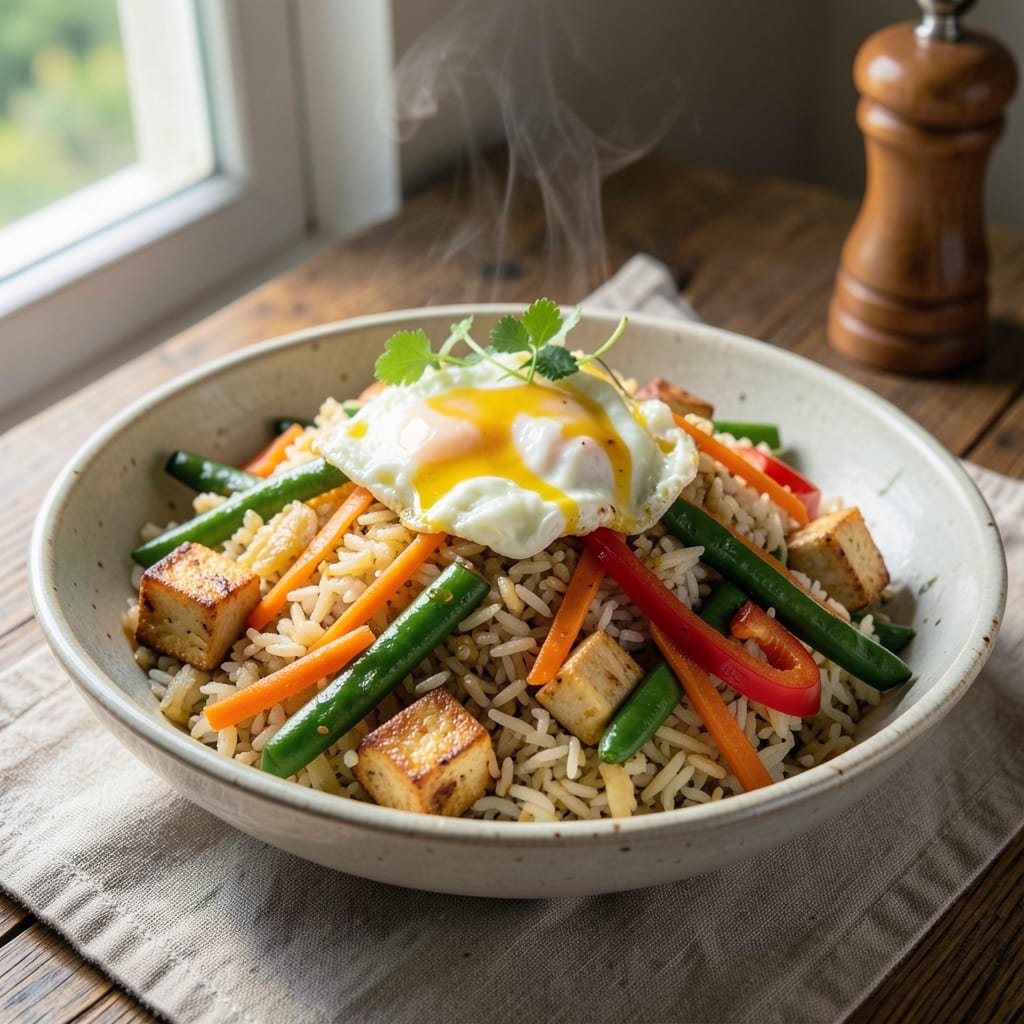
This Asian vegetable fried rice delivers bold, wok-tossed flavor in every bite—crisp vegetables, silky scrambled egg, and aromatic seasonings that transform simple ingredients into a restaurant-quality meal. The secret lies in high-heat stir-frying and proper rice texture, which creates that signature crunchy exterior while keeping the center tender. I've perfected this vegetarian version to ensure it's balanced, protein-rich, and packed with umami from traditional Asian seasonings.
What sets this recipe apart is the technique: day-old rice (or chilled freshly cooked rice) absorbs flavors better and achieves that perfect crisp-tender texture when stir-fried. We'll use a wok or large skillet to create those signature smoky edges, while a simple soy-ginger-garlic base builds depth without overpowering the fresh vegetables. The egg adds richness, and optional toppings like sesame seeds or green onions elevate it to restaurant-worthy quality.
By the time you're done, you'll have a vibrant, flavorful dish with perfectly cooked rice, wok-charred vegetables, and creamy scrambled egg all tossed together in a fragrant sauce. The aroma alone will have everyone at the table asking for seconds—this is the kind of meal that feels special without requiring hours in the kitchen. It's equally satisfying as a quick weeknight dinner or a make-ahead lunch for busy days.
The best part? This recipe scales effortlessly—double the ingredients for a crowd or halve it for a light solo meal. Whether you're serving it as a main dish or pairing it with miso soup, you'll achieve that authentic Asian fried rice experience with crispy edges and silky centers every time. Let's get cooking!
Ingredients for asian vegetable fried rice
These ingredients transform simple vegetables and rice into restaurant-quality wok-tossed fried rice.
| Ingredient | Amount | Notes |
|---|---|---|
| Day-Old Cooked White Rice 🍚 | 4 cups | Cold or chilled preferred |
| Large Eggs 🥚 | 4 whole | Room temperature for even cooking |
| Extra-Firm Tofu 🧇 | ½ lb | Pressed and cubed for texture |
| Carrots 🥕 | 1 ½ cups | Julienned or thinly sliced |
| Green Beans 🌱 | 1 cup | Trimmed and cut into 1-inch pieces |
| Red Bell Pepper 🌶️ | ½ cup | Diced into small pieces |
| Fresh Ginger 🌿 | 2 tsp | Finely grated, fresh preferred |
| Garlic Cloves 🧄 | 4 cloves | Minced for aromatic base |
| Low-Sodium Soy Sauce 🥢 | 3 tbsp | For umami depth |
| Sesame Oil 🫒 | 1 tbsp | Toasted for nutty aroma |
| Vegetable Oil 🫒 | 2 tbsp | High smoke point for wok-hei |
| White Pepper 🌶️ | ¼ tsp | Freshly cracked for warmth |
| Toasted Sesame Seeds 🥜 | 1 tbsp | For garnish and crunch |
| Green Onions 🧅 | 3 whole | Thinly sliced for freshness |
The rice is the foundation—day-old or chilled freshly cooked absorbs flavors best. Jasmine or basmati work perfectly, but avoid sticky varieties like sushi rice. For the tofu, extra-firm pressed gives the best texture; cube it into even pieces so they crisp uniformly. The vegetables should be prepped uniformly—julienne carrots, trim green beans, and dice the bell pepper into similar-sized pieces for even cooking. Fresh ginger and garlic are non-negotiable here; frozen or powdered won't deliver the same aromatic punch. Kirkland Signature or Annie Chun's low-sodium soy sauce are reliable choices for balanced umami without overpowering saltiness.
No fresh ginger? Substitute with 1 tsp ground ginger, but expect less complexity. Swap tofu for extra-firm tempeh if you prefer a nuttier texture, or use chickpeas for protein if you're avoiding soy. The sesame oil is critical for aroma—don't skimp on quality. If you can't find toasted, lightly toast regular sesame oil in a dry pan for 30 seconds before using. For the vegetables, frozen stir-fry mix works in a pinch, but fresh always tastes better. The white pepper adds subtle warmth without overpowering the dish's vibrant flavors.
Prep the rice and vegetables ahead of time to streamline cooking. Store the rice in an airtight container in the fridge for up to 3 days before using. The tofu can be pressed and cubed 1 day ahead and kept in the fridge. Once cooked, this fried rice reheats beautifully—just add a splash of water and stir-fry again. For make-ahead lunches, portion into containers and freeze for up to 3 months. The sesame seeds and green onions should be added fresh just before serving to maintain their crisp texture and bright flavor.
Why You'll Love This Recipe
- I swear by this trick: buy pre-cut green beans and shredded carrots from the store. Toss them in raw, no knife skills required—just stir-fry until tender. (Yes, even on a Tuesday night.)
- No-Chop Nightmare: I swear by this trick: buy pre-cut green beans and shredded carrots from the store. Toss them in raw, no knife skills required—just stir-fry until tender. (Yes, even on a Tuesday night.)
- Tofu Magic: That extra-firm tofu? Crispy edges, creamy center—it’s the star. Press it once, cube it, and let the wok do the work. Honestly, I’ve tried fancy tofu prep, but this is foolproof.
- Leftover Hero: Day-old rice is the secret weapon here. It absorbs the sauce like a dream, and the leftovers? Just reheat with a splash of water. My go-to for lunch boxes or lazy dinners.
Step-by-step instructions for wok-tossed vegetable fried rice
Master the perfect wok-hei technique to create restaurant-quality fried rice with crispy edges and tender vegetables.
Prepare and Press the Tofu for Maximum Texture
Begin by pressing the 0.5 lb extra-firm tofu to remove excess moisture, which is crucial for achieving a crispy exterior. Wrap the tofu in a clean kitchen towel or paper towels and place a heavy object like a cast-iron skillet on top for 15-20 minutes. This pressure will draw out water, allowing the tofu to develop a satisfying crunch when cooked.
Once pressed, cut the tofu into ½-inch cubes using a sharp chef's knife. The cubes should hold their shape without falling apart. Set aside on a plate and sprinkle lightly with 0.25 tsp white pepper—this subtle seasoning will enhance the tofu's flavor without overpowering the dish.
Prep All Vegetables for Even Cooking
Julienne the 1.5 cups carrots into thin matchsticks—this size ensures they cook quickly and evenly in the wok. Trim the 1 cup green beans and cut them into 1-inch pieces, removing any tough ends. Dice the 0.5 cup red bell pepper into small, even cubes to match the size of the other vegetables.
Finely grate the 2 tsp fresh ginger and mince the 4 cloves garlic into a paste using the flat side of your knife. Thinly slice the 3 whole green onions, separating the white and green parts for garnish. Keep all prepped vegetables in separate bowls until ready to use—this keeps them crisp and prevents premature wilting.
Scramble the Eggs to Perfect Silky Texture
Crack the 4 whole large eggs into a bowl and whisk vigorously until the yolks and whites are fully combined and the mixture is uniform in color. The eggs should be at room temperature for even cooking—this prevents them from curdling when they hit the hot wok.
Heat 1 tablespoon vegetable oil in a wok or large skillet over medium-high heat until shimmering. Pour in the egg mixture and let it sit undisturbed for 5-7 seconds before gently pushing the edges toward the center with a spatula. Continue folding the eggs until they reach a soft curd stage—just set but still slightly runny. Remove from the wok and set aside on a plate.
Build Layers of Flavor with the Aromatics
Increase the heat to high and add the remaining 1 tablespoon vegetable oil to the wok. Add the pressed tofu cubes and sear for 2-3 minutes until golden brown on all sides, stirring occasionally. Remove the tofu and set aside with the eggs.
In the same wok, add the grated ginger and minced garlic, cooking for 30 seconds until fragrant—this is where the foundation of flavor develops. Add the julienned carrots, green beans, and diced red bell pepper, stirring constantly for 2 minutes until the vegetables begin to soften but still retain a slight crunch. Pour in the 3 tablespoons low-sodium soy sauce and toss everything together.
Combine All Ingredients for Wok-Hei Perfection
Return the tofu and scrambled eggs to the wok, then add the 4 cups day-old cooked white rice, breaking up any clumps with your spatula. Stir-fry for 3-4 minutes on high heat, tossing continuously to create that signature wok-hei—smoky, crispy edges with tender centers. The rice should be hot throughout and slightly sticky from the residual starch.
Drizzle the 1 tablespoon sesame oil over the fried rice and toss one final time. Taste and adjust seasoning if needed—you may need an additional ½ teaspoon soy sauce or a pinch of white pepper. Garnish with 1 tablespoon toasted sesame seeds and the sliced green onions, reserving the white parts for garnish on top. Serve immediately while still sizzling hot.
Pro Tips For Making Asian Vegetable Fried Rice
- CRACK THE EGGS FIRST: Scramble the eggs in a separate pan until just set—soft curds, not rubbery—and then toss them into the wok last. I learned this the hard way after making my fried rice taste like a sad, overcooked omelet. The eggs should stay creamy, not dry, when they hit the rice.
- PREP TOFU LIKE A PRO: Press the extra-firm tofu for 20 minutes (no need to wrap it in a towel—just let it sit on a plate), then cube it and pan-fry until crispy before adding to the rice. Cold, soggy tofu ruins the texture, and skipping the frying makes it disappear into the dish. Worth the extra 5 minutes.
- STIR-FRY IN STAGES: Cook the carrots and green beans separately—carrots first on high heat for 2 minutes, then set aside—before adding the rice. Crowding the pan steams the veggies instead of searing them, and you’ll end up with mushy green beans. Work in batches if needed.
- USE DAY-OLD RICE, BUT NOT TOO OLD: Three-day-old rice turns to paste, but fresh day-old rice still has too much moisture. Spread it on a tray and microwave for 30 seconds to dry it out before stirring it into the wok. This guarantees crispy edges and prevents a soggy mess. (Yes, even if you’re impatient like me.)
Pro cooking tips for perfect results
Wok-Hei Technique
This is the secret to restaurant-quality fried rice—creating that signature smoky, crispy edge while keeping the center tender. Heat your wok or skillet over high heat until it's screaming hot before adding oil. I use a 14-inch carbon steel wok for even heat distribution. Once the oil shimmers, add your ingredients in small batches to avoid steaming them. Constant tossing with a wide spatula ensures everything gets that perfect caramelized crust. 🔥
Rice Texture Mastery
Day-old or chilled rice is non-negotiable—it absorbs flavors better and achieves that crisp-tender texture. Spread freshly cooked rice on a tray and refrigerate for 30 minutes if you're short on time. Break up any clumps with your fingers before adding to the wok. I like to use jasmine rice because it's slightly sticky but not gummy, giving the perfect bite. Never use warm rice straight from the pot—it'll turn mushy. ⚡
Egg Scramble Perfection
Room-temperature eggs scramble beautifully in the wok. Whisk them until completely smooth, then let them sit for 5-7 seconds before stirring—this creates those silky, custardy curds. I use a non-stick wok for the eggs to prevent sticking, then transfer them to a plate before adding the rest of the ingredients. The key is to remove them just before they're fully set—they'll continue cooking when everything comes together. 🥚
Tofu Pressing Hack
Pressing tofu properly makes all the difference. Wrap it in a towel and place a heavy object like a cast-iron skillet on top for 20 minutes. For extra crispiness, I pat the pressed tofu dry with paper towels before cubing. This removes surface moisture that would otherwise steam the tofu instead of browning it. The cubes should hold their shape—if they crumble, press them longer next time. 🧇
Vegetable Prep Tips
Uniform cuts mean even cooking. Julienne carrots into ¼-inch matchsticks and cut green beans into 1-inch pieces—anything larger will stay crunchy while softer veggies turn mushy. I like to prep all vegetables while the wok heats up, keeping them in separate bowls until ready to cook. For extra color, add ½ cup frozen peas in the last minute—they'll thaw and soften perfectly. 🥕
Flavor Layering
Build flavors in stages: first sear the tofu, then aromatics, then vegetables, then rice. This creates depth where each component gets its moment to shine. I like to finish with 1 tbsp toasted sesame oil and a sprinkle of white pepper—this adds nutty aroma and subtle warmth. Taste as you go and adjust with low-sodium soy sauce if needed. The sauce should coat the rice but not make it soggy. ✨
Nutrition facts
Frequently asked questions
Why does the recipe call for day-old rice?
Day-old rice absorbs flavors better and develops that perfect crisp-tender texture when stir-fried. Freshly cooked rice releases too much moisture, turning your fried rice mushy. If you don't have day-old rice, chill freshly cooked rice for 30 minutes before using.
Can I make this vegetarian fried rice without tofu?
Substitute tofu with ½ lb pressed tempeh for a nuttier flavor, or use ½ cup chickpeas for protein. For extra texture, try ½ cup mushrooms or ½ cup edamame. Just adjust cooking times—tempeh needs 3-4 minutes to crisp, while chickpeas only need 1-2 minutes in the wok.
What's the best way to get crispy tofu?
Press the tofu for 20 minutes with a heavy weight, then pat it completely dry with paper towels before cubing. Use high heat in the wok and cook the tofu until golden brown on all sides (2-3 minutes). For extra crispiness, add ½ tsp cornstarch to the tofu cubes before searing.
How do I prevent my fried rice from getting soggy?
Keep all ingredients separate until the final toss, and cook in batches if needed. Use high heat and stir-fry for only 3-4 minutes after adding the rice. Avoid overcrowding the wok—cook in two batches if necessary. The key is quick, high-heat cooking to maintain that perfect crisp-tender texture.
What vegetables can I add for extra nutrition?
Try adding ½ cup broccoli florets, ½ cup snap peas, or ½ cup corn kernels for extra nutrients. For heartier versions, include ½ cup shredded cabbage or ½ cup bell pepper strips. Just