
Side Dishes
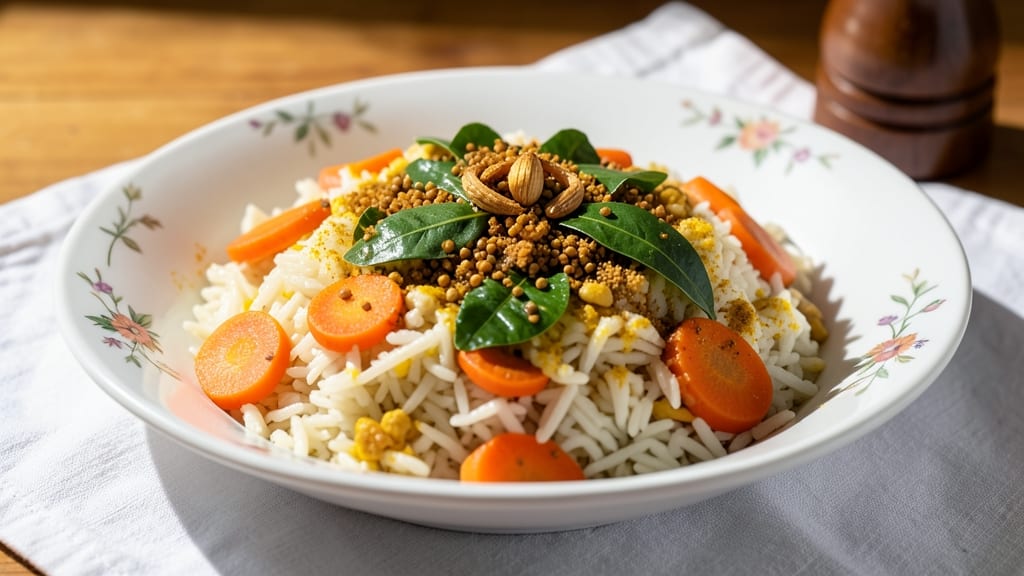
This South Indian carrot rice recipe brings vibrant flavors to your table with its signature blend of turmeric and cumin. 💛 The secret lies in the aromatic tempering of mustard seeds, curry leaves, and urad dal, which infuses the rice and carrots with deep, earthy notes that balance perfectly with the sweetness of grated carrots.
My grandmother's kitchen in Sicily taught me how spices transform simple ingredients into something extraordinary—and this dish proves it every time.
The recipe combines basmati rice with grated carrots, creating a dish that's both comforting and nutritious. The rice cooks tender while the carrots soften just enough to maintain a slight crunch, offering a delightful texture contrast.
This method ensures the carrots absorb the rich flavors of the tempered spices, resulting in a fragrant, golden dish that's as pleasing to the eye as it is to the palate.
What makes this recipe truly special is its versatility—it pairs beautifully with sambar, coconut chutney, or a simple raita for a complete meal.
Whether you're serving it at a family gathering or a quiet weeknight dinner, the warm, inviting aroma of the tempered spices will make every bite feel like a taste of home. The dish is simple yet deeply flavorful, perfect for those who appreciate the art of traditional cooking.
For an extra touch of authenticity, garnish with toasted peanuts or cashews, which add a delightful crunch and nutty depth. This recipe captures the essence of South Indian cuisine, where every ingredient plays a role in creating a harmonious and satisfying dish.
Let's bring this fragrant, flavorful carrot rice to your kitchen today.
Ingredients for carrot rice recipe south indian
Twelve ingredients transform into a fragrant South Indian carrot rice dish bursting with turmeric and cumin.
| Ingredient | Amount | Notes |
|---|---|---|
| Basmati Rice 🍚 | 1 cup | Uncooked, long-grain preferred |
| Carrots 🥕 | 2 cups | Grated, medium-sized preferred |
| Mustard Seeds 🌿 | 1 tbsp | Whole, yellow variety |
| Curry Leaves 🌿 | ¼ cup | Fresh, lightly crushed |
| Urad Dal 🌾 | 2 tbsp | Split, yellow variety |
| Turmeric Powder 🌶️ | ½ tsp | Freshly ground preferred |
| Cumin Seeds 🌿 | ½ tsp | Toasted for aroma |
| Green Chiles 🌶️ | 2 whole | Slit lengthwise, fresh |
| Asafoetida Powder 🌶️ | ⅛ tsp | Pinch for depth |
| Salt 🧂 | 1 tsp | Adjust to taste |
| Peanuts 🥜 | ¼ cup | Toasted, for garnish |
| Ghee 🧈 | 2 tbsp | Clarified butter |
| Water 💧 | 2 cups | For rice cooking |
The curry leaves are non-negotiable—they bring that unmistakable South Indian aroma. Look for fresh bundles at Indian grocery stores like Patel Brothers or Patel Brothers Spices, where they're often sold in small packages. If you can't find them, dried curry leaves work at half the amount, though fresh is ideal. The urad dal should be split and yellow—this gives the dish its signature earthy richness. Toast it lightly in a dry pan before adding to the tempering for deeper flavor. For the carrots, medium-sized ones work best—they grate evenly and hold their texture without turning mushy. Organic carrots from local markets often have better flavor than conventional store-bought ones.
No curry leaves? Dried leaves at half the amount will work, but the flavor won't be the same. Substituting asafoetida with garlic powder (½ tsp) adds a similar depth, though it's not identical. For the peanuts, store-bought roasted ones are fine, but toasting your own in ghee with a pinch of salt takes this dish to the next level. Cashews or almonds can replace peanuts if you prefer, though peanuts are traditional. The ghee is crucial—it carries the flavors beautifully. If you're avoiding dairy, use coconut oil instead, though the flavor will be slightly different. For the turmeric, fresh root is best, but powdered works in a pinch—just use slightly less since it's more concentrated.
Store the cooked carrot rice in an airtight container in the fridge for up to 4 days. It reheats beautifully—just add a splash of water and warm through. For longer storage, freeze portions for up to 3 months. The peanuts should be toasted fresh before serving, as they lose their crunch over time. This dish tastes even better the next day as the flavors meld together. Portion into individual containers for easy lunches—it's perfect for meal prep. If you make extra, pair it with sambar or coconut chutney for a complete meal.
Why You'll Love This Recipe
- I’ll be real: basmati rice and carrots stretch my grocery budget so far. Urad dal adds protein without breaking the bank, and a handful of curry leaves turns simple ingredients into something special. Plus, leftovers reheat like a dream—no mushy rice in sight.
- One-Pot Magic: I swear by this recipe when I’m too tired to scrub pots—just one vessel, a sprinkle of mustard seeds, and those curry leaves sizzling in ghee. The urad dal adds a creamy texture without extra bowls, and the carrots soften just enough to blend right in.
- Sweet-Savory Surprise: Honestly, the contrast is what makes this dish. The natural sweetness of the carrots plays off the umami depth of urad dal and the sharp crackle of mustard seeds—like a little flavor party in every bite. (Yes, even my picky husband asks for seconds.)
- Lunchbox Hero: Between us, this is my go-to for packed lunches. The rice stays fluffy for hours, and the carrots keep their bite—no soggy messes here. Toss in some roasted peanuts or a dollop of yogurt, and it’s a full meal that travels well.
Step-by-step instructions for South Indian carrot rice
Here's the authentic method for vibrant, fragrant carrot rice with perfect texture and balanced spices.
🍳 Step 1: Temper the Spices in Ghee
Heat the 2 tablespoons ghee in a heavy-bottomed pot over medium heat until it just begins to shimmer. Add the 0.5 teaspoon toasted cumin seeds and let them sizzle for 20-30 seconds until they release their aroma and begin to turn golden.
Next, add the 1 tablespoon mustard seeds and let them pop audibly. This is your signal to add the 0.25 cup curry leaves and 2 whole slit green chiles. Watch closely—the curry leaves will darken slightly, releasing their distinctive fragrance that's essential to South Indian cooking.
👨🍳 Step 2: Add Rice and Grated Carrots
Stir in the 1 cup basmati rice, coating each grain with the spice mixture. Cook for 1 minute, stirring constantly, until the rice turns translucent at the edges. This step ensures every grain absorbs the aromatic spices.
Add the 2 cups grated carrots, 0.5 teaspoon turmeric powder, 0.125 teaspoon asafoetida powder, and 1 teaspoon salt. Mix well to distribute the turmeric evenly—this prevents any one area from becoming too yellow. The carrots will begin to soften slightly as they cook in the spiced rice.
🍳 Step 3: Cook with Water and Urad Dal
Pour in the 2 cups water and bring to a rolling boil. Once boiling, add the 2 tablespoons urad dal. Reduce heat to low-medium and cover with a tight-fitting lid. Let it cook for 15 minutes without disturbing.
After 15 minutes, check the rice—it should be 80% cooked with a slight bite remaining. If the water has completely evaporated, add 2-3 tablespoons water and continue cooking. The urad dal will break down slightly, adding a subtle creaminess to the dish.
⏰ Step 4: Finish and Garnish
Once the rice is tender but still has a slight texture (this prevents mushiness), turn off the heat and let it sit covered for 5 minutes. This resting period allows the flavors to meld and the rice to absorb any remaining moisture.
Fluff the rice gently with a fork, then stir in the 0.25 cup toasted peanuts. The peanuts add a delightful crunch and nutty contrast to the soft rice. For serving, transfer to a platter and garnish with additional curry leaves if desired.
🍽️ Step 5: Serve with Complementary Dishes
Serve the carrot rice warm, ideally with yogurt-based raita, spicy sambar, or coconut chutney for a complete South Indian meal. The vibrant orange color and fragrant spices make this dish visually appealing while delivering a perfect balance of sweet carrots, earthy rice, and aromatic tempering.
Pro Tips For Making Carrot Rice Recipe South Indian
- SOAK URAD DAL FIRST: Skip the dry-roasting step—soak the split urad dal for 15 minutes before tempering. It softens faster, blends smoother, and prevents that bitter aftertaste you get when you rush the cooking. (Yes, even if you’re impatient like me.)
- CUT CARROTS SMALLER: Dice those carrots into ¼-inch pieces, not thick chunks. They cook evenly with the rice instead of turning mushy or staying crunchy. I learned this the hard way—no one likes a surprise carrot in every bite.
- TEMPER MUSTARD LOW: Add mustard seeds to warm oil, not smoking-hot. If you crank the heat too high, they’ll burn before the curry leaves even crackle. Start on medium, then turn it up—this is the thing that matters most for that nutty aroma.
- PARTIAL COOK RICE: Parboil the basmati rice for 3 minutes, then drain and mix it with the carrot-tempering. The rice absorbs flavors better and finishes cooking perfectly without turning gummy. (Your future self will thank you.)
Perfect pairings for this dish
South Indian Staples
This carrot rice pairs perfectly with sambar, a lentil-based vegetable stew that balances its sweetness with tangy, spicy depth. I always make a small batch of Kadala Sambar (black chickpea sambar) with tamarind and curry leaves—it cuts through the richness beautifully.
The acidity in sambar also helps cleanse your palate between bites of carrot rice. 💛
Cool Contrasts
For a refreshing contrast, serve with coconut chutney—its creamy, nutty flavor complements the earthy spices in the rice. I blend ½ cup coconut, 2 green chilies, 1 tsp cumin seeds, and juice of 1 lime for a quick version.
The coolness of the chutney balances the warm spices perfectly, especially during hot weather.
Creamy Complements
Add yogurt-based raita to round out the meal. Mix 1 cup yogurt with 1 tbsp roasted cumin powder, ½ tsp chaat masala, and 2 tbsp finely chopped cucumber.
The cooling effect of the yogurt contrasts wonderfully with the spiced rice, making each bite more satisfying. I often serve this with a sprinkle of fresh coriander.
Protein Pairings
For a heartier meal, pair with spiced dal like toor dal or moong dal. The mild, creamy texture of dal contrasts nicely with the slightly crunchy carrots in the rice.
I like to temper the dal with mustard seeds, asafoetida, and curry leaves—same as the rice—for a cohesive flavor profile. 🍽️
Beverage Suggestions
Serve with filter coffee or masala chai to complete the South Indian experience. The bold, spiced flavors of chai enhance the carrot rice's aromatic spices, while filter coffee provides a clean, crisp contrast. For a lighter option, nimbu pani (Indian lemonade) with mint and cumin seeds refreshes beautifully.
Garnish Upgrades
Before serving, sprinkle with toasted cashews or fried shallots for extra crunch. I also like adding fresh coriander leaves for a bright, herbaceous note. These garnishes elevate the dish visually and add layers of texture that keep every bite interesting.
The contrast between soft rice and crisp garnishes is what makes this dish so special. ✨
Nutrition facts
Frequently asked questions
Can I use regular rice instead of basmati?
While you can substitute basmati with long-grain white rice, the texture and aroma won't be the same. Basmati rice has a delicate, nutty flavor and separates beautifully, which is key for this dish. If you must use another variety, try jasmine rice—but expect a slightly stickier result. For the best experience, stick with basmati.
Why does my carrot rice turn mushy?
Overcooking or using too much water causes mushiness. The rice should be 80% cooked when you remove it from heat—it will finish cooking while resting. Also, avoid stirring after adding water, as this breaks the grains. If your rice is already mushy, try next time by reducing water by 2 tablespoons and checking earlier.
Can I make this dish without ghee?
Yes! Use coconut oil or vegetable oil instead—both work well. Ghee adds richness, but coconut oil gives a subtle sweetness that complements the carrots. Just toast your spices in oil for 30 seconds longer to enhance their aroma before adding the rice and carrots.
How can I make this dish less spicy?
Reduce or omit the green chilies entirely. For a milder version, use just 1 green chile (or none at all) and increase the peanuts to 0.35 cup for extra flavor without heat. The asafoetida and urad dal provide depth without spiciness—these are your secret weapons for keeping it mild but flavorful.
What's the best way to store leftovers?
Store in an airtight container in the fridge for up to 4 days. For longer storage, freeze portions for 3 months. When reheating, add 1-2 tablespoons water and cover with a damp paper towel to restore moisture. The peanuts will stay crunchy if stored separately and added fresh when serving.