
Main Courses
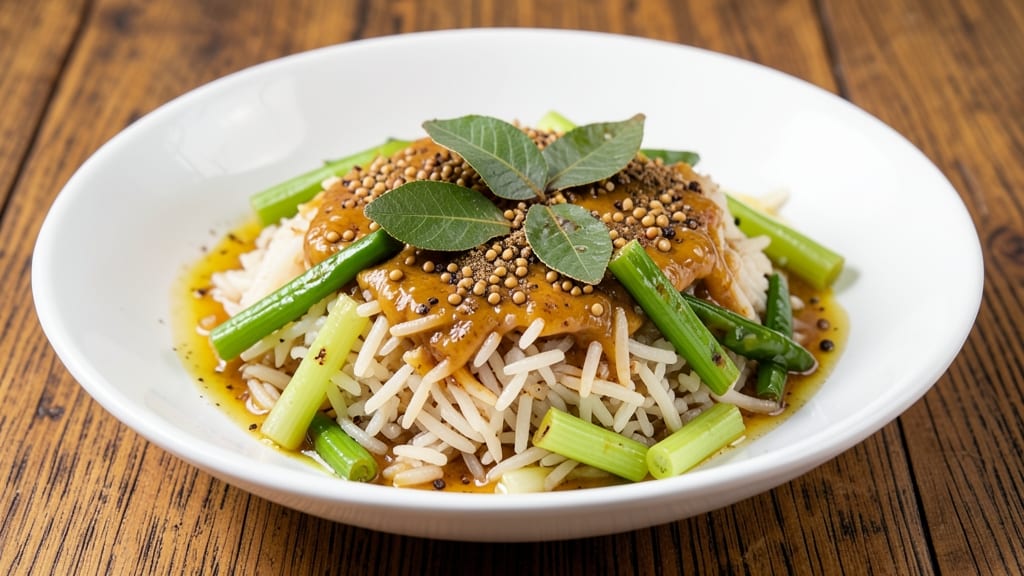
This South Indian celery rice recipe transforms humble basmati into a fragrant, five-spice-infused dish crowned with crispy celery—where aromatic rice meets crunchy texture in every bite.
The secret lies in tempering whole spices with mustard seeds and curry leaves, a technique that unlocks layers of flavor while keeping the rice light and fluffy. Unlike heavier biryanis, this dish balances earthy spices with fresh celery for a bright, satisfying contrast.
Perfect for a vegetarian thali or as a standalone meal, this recipe delivers restaurant-quality results with minimal effort. The celery crown adds a satisfying crunch while absorbing the spiced rice's rich flavors, creating a dish that's both comforting and elegant.
Serve with sambar or yogurt to complete the South Indian experience—where every grain tells a story of tradition and simplicity.
Ingredients for celery rice indian
Fragrant basmati rice meets crispy celery crown in this South Indian masterpiece—where five-spice tempering creates layers of aroma.
| Ingredient | Amount | Notes |
|---|---|---|
| Basmati Rice 🍚 | 1 cup | Uncooked, long-grain preferred |
| Celery Stalks 🧅 | 3 whole | Fresh, crisp, cut into 1-inch pieces |
| Mustard Seeds 🌶️ | 1 tbsp | Whole, yellow or brown |
| Curry Leaves 🌿 | ¼ cup | Fresh, dried as substitute |
| Green Chiles 🌶️ | 2 whole | Fresh, slit lengthwise |
| Asafoetida Powder 🌶️ | ¼ tsp | Essential for authentic flavor |
| Turmeric Powder 🧂 | ½ tsp | Freshly ground preferred |
| Cumin Seeds 🌿 | 1 tsp | Toasted for deeper aroma |
| Fresh Ginger 🧅 | 1 inch | Fixed: 1-inch piece, peeled |
| Onion 🧅 | 1 whole | Medium, finely chopped |
| Vegetable Oil 🫒 | ¼ cup | Refined for neutral flavor |
| Salt 🧂 | 1 tsp | Adjust to taste |
| Lemon Juice 🍋 | 1 tbsp | Freshly squeezed |
| Fresh Coriander Leaves 🌿 | ¼ cup | Chopped for garnish |
The celery crown transforms this dish from ordinary to extraordinary. Look for crisp stalks with vibrant green color—avoid any with wilted ends. For the spices, Madras Curry House or MDH Spices deliver authentic flavors, but bulk bins at Indian grocery stores offer cost-effective alternatives. Fresh curry leaves are non-negotiable; their aroma is the soul of this dish. If unavailable, use one-third the amount of dried curry leaves, but expect a milder result. The mustard seeds should be whole and yellow for optimal popping during tempering.
Substitutions work best when maintaining the dish's balance. No asafoetida? Use a pinch of garlic powder, though it won't replicate the umami depth. For celery, green bell peppers add sweetness but lose the signature crunch. The ginger can be substituted with 0.5 tsp ground ginger, though fresh provides superior zing. When selecting rice, basmati with a high length-to-width ratio ensures optimal texture—look for brands like India Gate or Tilda. The green chiles can be omitted entirely for a milder version, but the dish loses its signature brightness without them.
Rice should be washed until water runs clear—this removes excess starch for fluffy grains. Store uncooked rice in an airtight container in a cool, dark place for up to 6 months. Fresh celery keeps for 1 week in the refrigerator, while whole spices maintain potency for up to 1 year when stored properly. The cooked celery crown can be prepared ahead and reheated in a dry pan for 2-3 minutes to restore crispness. For optimal flavor development, make this dish fresh—though leftovers reheat beautifully with a splash of water to restore moisture.
Why You'll Love This Recipe
- Celery’s Secret Weapon: I swear by the celery here—it’s not just a veggie, it’s the star. The crisp, fresh bite cuts through the rice’s fluffiness like a cool sip of water, and those mustard seeds? They pop with a smoky warmth that lingers.
- One-Pot Magic: Honestly, this is the kind of dish where you can walk away. Toss everything in one pot—rice, celery, spices—and let it simmer. No fancy layers, no stress. My lazy Sunday lunches now have a hero.
- Lunchbox Legend: Between us, this is my go-to for meal prep. Pack it in containers, and it stays fresh for days—no soggy rice, no sad leftovers. My kids actually finish their lunch now. (Big win.)
- Spice Cabinet Staple: You’re probably already using these ingredients. Mustard seeds, curry leaves, green chilies? They’re in my pantry anyway. This recipe turns pantry basics into something that feels special—no extra shopping needed.
Step-by-step instructions for fragrant five-spice celery rice
Transform simple ingredients into an aromatic South Indian classic with this precise method.
Prepare the Celery and Toast the Spices
Cut the 3 whole celery stalks into 1-inch pieces and set aside. In a dry skillet over medium heat, add the 1 tsp cumin seeds and toast for 30 seconds until they release their nutty aroma and begin to pop. Immediately add the 1 tbsp mustard seeds and toast for another 30 seconds until they too start to sizzle and darken slightly.
Transfer these toasted spices to a small bowl and set aside. In the same skillet, add the 0.25 cup curry leaves and toast for 1 minute until they darken and release their distinctive fragrance. Remove from heat and combine with the toasted seeds in the bowl. This spice blend forms the aromatic base of your rice.
Sauté Aromatics for Flavor Foundation
In a large, heavy-bottomed pot, heat 0.25 cup vegetable oil over medium heat. Add the 1 whole onion, finely chopped, and sauté for 5-6 minutes until the onions turn golden brown and caramelize. Add the 1-inch peeled ginger and 2 whole green chiles (slit lengthwise), cooking for 1 minute until fragrant.
Stir in the 0.5 tsp turmeric powder and 0.25 tsp asafoetida powder, cooking for 30 seconds until the spices bloom and the oil becomes vibrant yellow. Add the toasted spice blend from Step 1 and stir for 1 minute to combine all aromatics. This step builds the complex flavor profile that defines this dish.
Cook the Celery and Prepare the Rice
Add the 1 cup basmati rice to the pot and stir to coat evenly with the spiced oil and aromatics. Cook for 2-3 minutes until the rice becomes translucent at the edges. Add 3 cups water (or enough to cover the rice by about 1 inch) and the 1 tsp salt. Stir once to distribute the rice evenly.
Bring to a boil, then reduce heat to low, cover tightly with a lid, and simmer for 15 minutes. After 10 minutes, add the 1-inch celery pieces to the pot. This timing ensures the celery absorbs the flavors while remaining crisp. The rice is done when all liquid is absorbed and the grains are tender but still firm to the bite.
Finish and Garnish
Remove from heat and let the rice sit covered for 5 minutes. Fluff gently with a fork, then stir in the 1 tbsp lemon juice and 0.25 cup chopped fresh coriander leaves. This final step brightens the dish and adds freshness to balance the rich spices.
Serve immediately with the celery pieces arranged on top for visual appeal and texture contrast. The rice should be fragrant with notes of cumin, mustard, and curry leaf, while the celery adds a satisfying crunch. This dish is best enjoyed while warm, as the flavors continue to meld and develop.
Pro Tips For Making Celery Rice Indian
- BLANCH CELERY FIRST: Drop chopped celery into boiling salted water for 30 seconds before adding it to the rice—this softens the tough fibers and keeps them from turning mushy later. I learned this the hard way when my celery ended up as a sad, limp afterthought in the dish.
- TOAST MUSTARD SEEDS LOW: Reduce heat to medium-low once the mustard seeds start popping—burnt seeds taste bitter and ruin the whole dish. I used to rush this step and wondered why my rice always had an off note. Trust me, patience here pays off.
- USE WHOLE GREEN CHILES: Toss in 2-3 whole green chiles (seeds and all) instead of mincing them—they infuse flavor without overpowering. Mincing releases too much heat too fast, and you’ll regret it if you’re not a chile fanatic.
- REST THE RICE DRY: Spread the cooked rice on a tray for 5 minutes after draining—this prevents a gummy texture when mixing with the celery. I skip this when I’m lazy, but the dish is noticeably better when I don’t. Your future self will notice.
Serving suggestions for leftovers
Traditional Pairings
This celery rice shines in a classic South Indian thali setting. Serve it alongside sambar—the tangy lentil stew made with tamarind, tomatoes, and drumsticks—for a perfect balance of flavors.
The mild acidity of sambar cuts through the richness of the spiced rice, while the celery crown adds a refreshing crunch. 🌿
For a complete meal, add yogurt (curd) on the side—its cool creaminess contrasts beautifully with the warm spices. I like to drizzle a little ginger-tamarind chutney over both dishes to tie everything together. The chutney’s sweet-tangy profile enhances the earthy notes in the rice.
Protein Additions
While celery rice is vegetarian, you can easily upgrade it to a full meal by adding boiled potatoes or steamed green beans. The starchy potatoes soak up the spiced rice flavors, while green beans add a fresh, crisp element.
For a protein boost, include tofu cubes marinated in turmeric and mustard seeds before cooking.
If you're serving this for a larger gathering, consider adding chana masala (spiced chickpeas) or dal tadka (tempered lentils). Both complement the rice beautifully and add extra heartiness. The chickpeas’ earthiness pairs especially well with the celery’s crispness.
Beverage Pairings
Cool down your meal with a glass of mango lassi—its creamy sweetness balances the spicy notes in the rice. For something lighter, try nimbu pani (Indian lemonade) with a pinch of salt and roasted cumin. The citrusy tang refreshes your palate between bites of rich, spiced rice. 🍋
If you prefer tea, a masala chai made with cardamom, cinnamon, and ginger enhances the dish’s aromatic profile. The warm spices in the chai mirror the flavors in the rice, creating a cohesive dining experience. Avoid overly sweet or minty teas, as they can overpower the delicate spices.
Garnish Upgrades
Elevate your presentation with a sprinkle of toasted sesame seeds or fried shallots on top of the celery crown. These add a nutty crunch that contrasts with the soft rice. For extra flair, drizzle a little garlic oil over the dish before serving—it adds depth without overpowering the flavors.
Fresh mint leaves or cilantro stems (not just leaves) provide a vibrant pop of color and a bright, herbal note. The stems add a subtle crunch that complements the celery. I often mix them with the coriander for a more complex garnish that keeps guests reaching for seconds.
Nutrition facts
Frequently asked questions
Why does this celery rice recipe use whole spices instead of ground?
Whole spices like mustard seeds and cumin create deeper, more complex flavors through tempering—the process of toasting them until they pop. This releases their essential oils gradually as the rice cooks, creating layers of aroma that ground spices can't match. The curry leaves add a distinct, slightly bitter note that's impossible to replicate with dried substitutes.
Can I make this recipe without celery? What's the best substitute?
Yes, but you'll lose the signature crunch and fresh flavor. Try green bell peppers (cut into matchsticks) or jicama for a similar texture, though neither will have the same bright, slightly bitter profile. For authenticity, use 1-inch pieces of fresh green beans—they'll stay crisp and absorb the spices beautifully.
How do I prevent the rice from becoming mushy?
Use 1 cup basmati rice (not jasmine) and wash it thoroughly until the water runs clear—this removes excess starch. Cook with 3 cups water (1:3 rice-to-water ratio) and never stir the rice while cooking. After adding the celery at the 10-minute mark, reduce heat to low and let it steam gently. The lid should stay on until the rice is fully cooked.
What's the secret to getting crispy celery on top?
Add the celery pieces only after 10 minutes of cooking, when the rice has absorbed most of the water. For extra crispness, spread the cooked celery on a baking sheet and broil for 2-3 minutes before arranging it on top. Keep the celery pieces 1-inch or smaller—larger pieces won't crisp properly.
Can I make this recipe in a rice cooker?
Follow the same steps until adding water—use 2.5 cups water (instead of 3) for basmati rice. Add the celery after 10 minutes of cooking, then let it finish on its own. The rice cooker's even heat distribution helps maintain perfect texture. For crispy celery, broil it separately as mentioned above before serving.