Main Courses
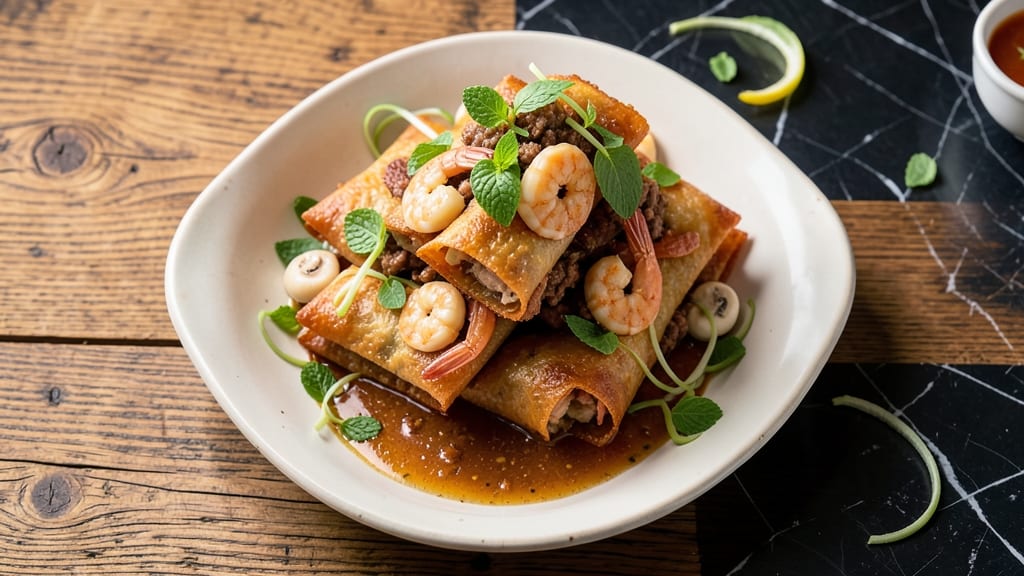
This cha gio recipe with rice paper delivers restaurant-quality Vietnamese spring rolls in just 20 minutes—crispy golden bites packed with savory pork, fresh herbs, and fragrant aromatics.
The secret lies in tightly rolling the filling and achieving that perfect wok-seared crunch without deep-frying, making it both authentic and approachable for home cooks.
With a simple yet flavorful filling of ground pork, shrimp, mushrooms, and aromatic herbs wrapped in delicate rice paper, these spring rolls are as satisfying as they are elegant.
Serve them with a tangy fish sauce dip or sweet chili sauce for the ultimate balance of textures and flavors—crispy outside, tender inside, and bursting with freshness in every bite.
Ingredients for cha gio recipe rice paper
Pantry staples meet fresh herbs and delicate rice paper for these authentic Vietnamese spring rolls.
| Ingredient | Amount | Notes |
|---|---|---|
| Ground Pork 🐖 | 1 lb | Finely ground, 80% lean preferred |
| Large Shrimp 🦐 | ½ lb | Peeled, deveined, chopped fine |
| White Mushrooms 🍄 | 4 oz | Finely chopped, stems removed |
| Rice Paper Wrappers 🍣 | 12 sheets | 6-inch size, store-bought or homemade |
| Fish Sauce 🥫 | 1 ½ tbsp | Red Boat preferred for authenticity |
| Soy Sauce 🥫 | 1 ½ tbsp | Light or all-purpose variety |
| Oyster Sauce 🍜 | 1 tbsp | Thick consistency preferred |
| Fresh Thai Basil 🌿 | ¼ cup | Chopped finely, stems included |
| Green Onions 🧅 | 3 whole | Thinly sliced, white and green parts |
| Garlic Cloves 🧄 | 3 cloves | Minced finely, aromatic |
| Fresh Mint Leaves 🌿 | ¼ cup | Finely chopped, bright flavor |
| Vegetable Oil 🫒 | ½ cup | High smoke point for wok-searing |
| Lime Juice 🍋 | 1 tbsp | Freshly squeezed, bright acidity |
| Salt 🧂 | ½ tsp | Diamond Crystal kosher preferred |
| Black Pepper 🌶️ | ¼ tsp | Freshly ground, subtle heat |
The quality of your pork and shrimp makes all the difference—look for fresh, never frozen ground pork at Whole Foods or your local Asian market for optimal flavor. Shrimp should be plump and translucent, not rubbery. The Red Boat fish sauce is worth the investment; it's the backbone of the filling's umami depth. For mushrooms, cremini or shiitake work beautifully if you want to elevate the texture. Fresh herbs are non-negotiable here—Thai basil and mint should be vibrant, not wilted. If you can't find Thai basil, regular basil with a pinch of mint works in a pinch.
No fish sauce? Soy sauce with a splash of Worcestershire gets you close, though the flavor won't be identical. Substituting shrimp for more pork? Use 10% less pork to balance moisture. The rice paper wrappers should be plump and pliable when soaked—if they're brittle, they won't roll properly. For the aromatic blend, toasted garlic (30 seconds in a dry pan) adds an extra layer of depth. Need to prep ahead? The filling keeps 2 days in the fridge, but the rice paper must be wrapped fresh for that perfect crunch.
Store rice paper in a cool, dry place—it dries out quickly once opened. The filling can be prepped a day ahead and refrigerated, but assemble the rolls within 2 hours of cooking for best texture. For extra crispiness, double-wrap the rolls in fresh rice paper before frying. These reheat poorly—make only what you'll eat fresh or freeze uncooked rolls for up to 1 month before frying.
Why You'll Love This Recipe
- No-Fuss Assembly: I swear by this recipe because it’s the kind of dish where you can prep the filling while chatting with someone—no last-minute scrambling. The shrimp and pork mix comes together in minutes, and those rice paper wrappers? They’re forgiving enough that even my uneven folding still tastes amazing.
- Umami Bomb: Fish sauce and mushrooms? That’s the secret weapon here. The filling has this deep, savory punch that makes every bite feel like a little flavor celebration, especially when you fry them up golden. Honestly, the first time I tasted it, I immediately doubled the recipe.
- Party in a Wrapper: These are my go-to for game day, potlucks, or when friends drop by unexpectedly. Serve them with peanut dipping sauce or a tangy nuoc cham, and suddenly you’re the hero of the spread. They’re light enough for summer but hearty enough to satisfy a crowd.
- Budget-Friendly Staple: Ground pork and shrimp stretch far, and mushrooms add bulk without breaking the bank. I make a big batch on Sundays, and they keep well in the fridge—perfect for quick lunches or a fast dinner when I’m too tired to cook. Leftovers? Rarely an issue.
Step-by-step instructions for cha gio with rice paper wrappers
Master the art of creating delicate, crispy cha gio with this precise method—every fold matters.
Prepare the Cha Gio Filling
In a large mixing bowl, combine the 1 lb ground pork and 0.5 lb chopped shrimp. Add the 4 oz finely chopped white mushrooms, 3 cloves minced garlic, 0.25 cup chopped Thai basil, 0.25 cup chopped mint leaves, 3 thinly sliced green onions, 1.5 tbsp fish sauce, 1.5 tbsp soy sauce, 1 tbsp oyster sauce, 0.5 tsp salt, and 0.25 tsp black pepper. Mix thoroughly with your hands until all ingredients are evenly distributed and the mixture holds together when pressed.
This step is where the flavors meld. The shrimp adds moisture while the mushrooms provide texture, but don't overmix or the filling will become dense. For best results, use freshly ground black pepper and high-quality fish sauce—they make all the difference in the final taste.
Assemble the Cha Gio
Fill a shallow bowl with warm water and set the 12 rice paper wrappers aside. Dip one wrapper at a time into the water for 3-5 seconds until pliable but not soggy. Lift it out and let excess water drip off, then place it on a flat surface.
Spoon 1 tablespoon of filling onto the wrapper's lower third. Fold the bottom corner up, then fold in the sides, and finally roll tightly into a neat cylinder. Place seam-side down on a plate covered with a damp paper towel to prevent drying. Repeat with remaining wrappers and filling, working quickly to maintain moisture.
Wok-Sear for Crispy Perfection
Heat 0.5 cup vegetable oil in a wok or large skillet over medium-high heat until shimmering. Add the assembled cha gio in a single layer, leaving space between each piece. Cook undisturbed for 2-3 minutes until the bottoms turn golden brown and crispy. Gently flip and cook another 2-3 minutes until evenly browned.
Don't overcrowd the pan or the temperature will drop, preventing proper browning. The oil should be hot enough to sizzle when the cha gio touches it. For extra crispiness, I like to add 1 tbsp lime juice to the oil before searing—it enhances the aroma and adds a subtle tang.
Serve with Dipping Sauce
Transfer the crispy cha gio to a serving platter and let rest for 2 minutes before serving. For an authentic touch, prepare a simple dipping sauce by mixing 1 tbsp lime juice, 1 tbsp fish sauce, and 1 tsp soy sauce. Serve immediately while the wrappers are still crisp and the filling is warm.
Each bite should deliver a perfect balance of textures—crispy wrapper, tender pork-shrimp filling, and fresh herbal notes. The lime juice in the sauce cuts through the richness, creating a harmonious finish. Serve with fresh herbs on the side for garnish and additional flavor.
Pro Tips For Making Cha Gio Recipe Rice Paper
- SOAK WRAPPERS JUST BEFORE WRAPPING: I learned this the hard way—dry rice paper cracks like glass when you try to fold it. Toss the wrapper in warm water for exactly 10 seconds before wrapping (longer = soggy, shorter = brittle). Keep the bowl of water nearby, not boiling, and work fast—these things lose their pliability in seconds.
- SALT THE SHRIMP FIRST: Fish sauce is salty enough, but shrimp absorbs flavor like a sponge. Toss peeled shrimp with ½ teaspoon salt and 1 teaspoon fish sauce before cooking—let them sit 10 minutes. This keeps your filling from tasting flat or needing extra seasoning later.
- COOK PORK IN BATCHES: I used to dump all the ground pork in one pan and wonder why it turned greasy and uneven. Split it into two portions: cook half until just browned (no need to fully cook), then mix with shrimp and mushrooms. The second batch will cook faster and stay juicier.
- USE COLD WRAPPERS FOR NEATER ROLLS: Hot hands = messy rolls. Rinse your hands under cold water between wraps, or better yet, dip them in ice water for 10 seconds. The shock tightens your grip and keeps the wrapper from sticking to your fingers mid-roll. (Yes, it sounds weird, but it works.)
Serving suggestions for this cha gio recipe rice paper
Classic Fish Sauce Dip
This tangy, umami-rich sauce is the soul of Vietnamese spring rolls. Mix 2 tbsp Red Boat fish sauce, 1 tbsp lime juice, 1 tsp sugar, ½ tsp black pepper, and 2 tbsp warm water in a small bowl.
Taste and adjust—you want it bright yet balanced, not overpowering. Serve in a small dipping bowl with fresh herbs on the side for garnish. 🥫
Sweet Chili Sauce Twist
For a sweeter contrast, blend ¼ cup sweet chili sauce (like Tiparoo brand) with 1 tsp lime juice and a pinch of chili flakes. This pairs beautifully with the savory filling while adding a fruity depth.
Thin with 1 tsp water if needed for dipping consistency. I love this version for kids or guests who prefer milder flavors.
Peanut-Lime Sauce
Creamy and nutty, this sauce elevates cha gio to next-level restaurant quality. Blend 3 tbsp smooth peanut butter, 1 tbsp soy sauce, 1 tbsp lime juice, 1 tsp honey, ½ tsp sriracha, and 2 tbsp warm water until smooth.
Drizzle over the rolls or serve on the side for dipping. The peanut butter adds richness that balances the crispy texture perfectly. 🥜
Fresh Herb Garnish
Before serving, scatter finely chopped Thai basil and mint leaves over the platter. The fresh herbs add a vibrant pop of color and a bright, aromatic finish. I also like to sprinkle toasted sesame seeds for extra crunch. This simple garnish makes the dish feel restaurant-worthy without extra effort.
Presentation Tips
Arrange the crispy cha gio on a large platter with the dipping sauces in small bowls at the center. Use a wooden serving board for rustic charm or a white ceramic platter for elegant presentation.
Add a sprig of fresh mint or basil as a decorative touch—it doubles as a garnish and keeps the herbs fresh for guests to grab.
Make-Ahead Serving
Assemble the rolls up to 2 hours ahead and refrigerate uncooked on a tray lined with parchment paper. When ready to serve, fry fresh for maximum crispiness. For a party, set out individual dipping sauce bowls and a platter of assembled (uncooked) rolls.
Guests can fry their own to order—this interactive approach is always a hit! ⏰
Nutrition facts
Frequently asked questions
Can I make cha gio with rice paper ahead of time?
Assemble the rolls up to 2 hours ahead and refrigerate uncooked on a tray lined with parchment paper. For best texture, fry fresh before serving. The filling itself keeps for 2 days in the fridge, but the rice paper loses crispiness when fried later. For parties, set out uncooked rolls with dipping sauces so guests can fry their own to order.
What's the secret to crispy cha gio without deep-frying?
The key is wok-searing in hot oil over medium-high heat for 2-3 minutes per side without overcrowding. Use enough oil to coat the bottom of the pan and maintain a sizzle. For extra crunch, add 1 tbsp lime juice to the oil before cooking—it enhances browning and adds brightness. Keep rolls in a single layer and avoid flipping too soon.
Can I substitute shrimp for chicken in the filling?
Yes, but adjust the texture for best results. Replace shrimp with 0.5 lb finely chopped chicken breast (or thigh for juiciness) and reduce the filling by 1 tbsp per roll since chicken is leaner. For extra moisture, add 1 tsp fish sauce to the mix. Chicken works well but lacks shrimp's natural sweetness—consider adding ½ tsp sugar to compensate.
Why did my rice paper wrappers tear while rolling?
Rice paper tears most often from over-soaking or drying out between dips. Soak each wrapper for only 3-5 seconds in warm water until pliable but not soggy. Work quickly and keep extra wrappers covered with a damp towel. If they feel stiff, dip them again briefly. For extra strength, use 2 wrappers per roll—double-wrap for larger portions.
What's the best way to reheat leftover cha gio?
Unfortunately, cha gio reheats poorly—the wrappers lose crispiness. For best results, store leftovers in an airtight container in the fridge for up to 2 days and eat cold or at room temperature. If reheating, use the oven at 350°F for 5-7 minutes on a wire rack to revive some crunch. Never microwave—it makes the wrappers soggy.