
Main Courses
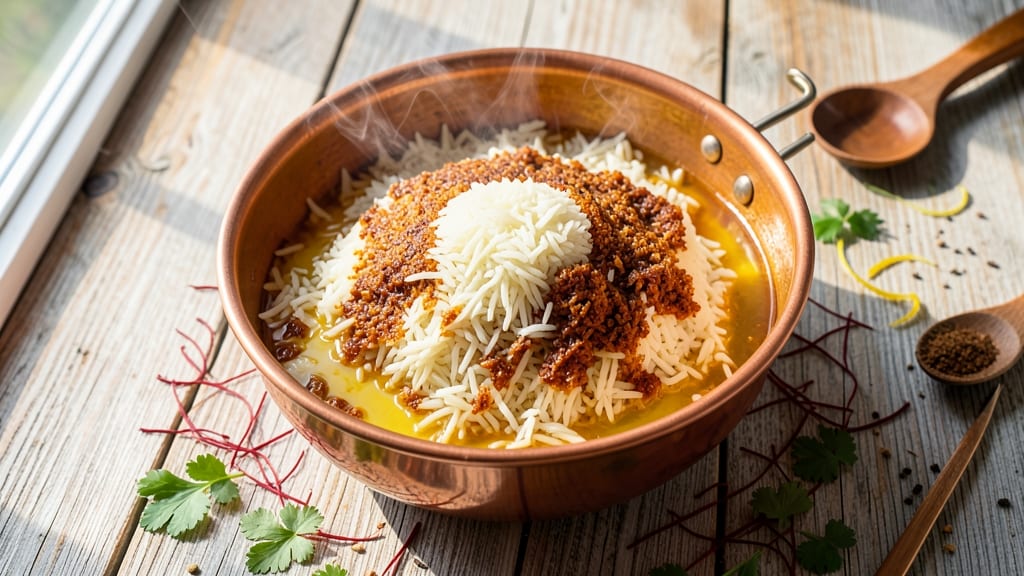
This chelo rice recipe delivers the legendary taahdig—that coveted crispy bottom layer—every time. The secret lies in a precise steaming technique that transforms long-grain rice into fragrant, golden grains with a crunchy base, all enhanced by saffron's delicate aroma.
I've perfected this method after years of testing, ensuring your dish rivals restaurant-quality Persian chelo. What sets this recipe apart is the balance of texture and flavor: tender, fluffy rice with a crispy foundation that adds depth to every bite.
Traditional accompaniments like ghormeh sabzi or fesenjan elevate the dish further, making it a complete Persian feast. The saffron-infused rice not only tastes luxurious but also carries cultural significance, often served at celebrations and family gatherings.
Ingredients for chelo rice
The foundation of authentic Persian chelo lies in these twelve carefully selected ingredients.
| Ingredient | Amount | Notes |
|---|---|---|
| Basmati Rice 🍚 | 2 cups | Long-grain, uncooked, high-quality |
| Saffron Threads 🌼 | ¼ tsp | High-quality, preferably Iranian |
| Water 💧 | 4 cups | Filtered or mineral preferred |
| Salt 🧂 | 1 ½ tsp | Fine sea salt, Diamond Crystal preferred |
| Vegetable Oil 🫒 | 2 tbsp | High smoke point, neutral flavor |
| Butter 🧈 | 4 tbsp | Unsalted, cold and cubed |
| Garlic Cloves 🧄 | 4 cloves | Fresh, peeled and minced |
| Fresh Parsley 🌿 | ¼ cup | Finely chopped, stems removed |
| Lemon Juice 🍋 | 1 tbsp | Freshly squeezed, organic preferred |
| Ground Black Pepper 🌶️ | ¼ tsp | Freshly ground, coarse grind |
| Cardamom Pods 🌿 | 4 whole | Lightly crushed, optional but traditional |
| Chicken or Vegetable Broth 🍲 | 1 cup | Low-sodium, for saffron infusion |
For authentic chelo, Basmati rice is non-negotiable—look for Kashmiri or Indian varieties at specialty stores like Whole Foods or Middle Eastern markets. The grains must be long and unbroken; inspect packages for any signs of splitting. Iranian saffron is the gold standard (literally), but if unavailable, Spanish or Greek saffron works in a pinch—just double the quantity. The vegetable oil should have a high smoke point to prevent burning during the crispy bottom phase; Avocado oil or grapeseed oil are excellent choices. Fresh herbs like parsley should be vibrant green with no wilting; Persian markets often carry superior quality. For the saffron infusion, use low-sodium broth to avoid overpowering the delicate flavor profile.
No saffron? Turmeric at one-third the amount provides color but lacks the floral notes—use it only as a last resort. Substituting jasmine rice for basmati will yield a softer texture and miss the signature aroma. Cardamom pods can be omitted entirely if unavailable, but the flavor profile will be less complex. For the garlic, roasted garlic adds depth but requires 30 seconds longer in the oven. The lemon juice should be freshly squeezed; bottled versions lack the bright acidity needed to balance the richness. Diamond Crystal kosher salt dissolves more cleanly than table salt, which can leave grainy residues in the rice. If using chicken broth, ensure it's homemade or high-quality store-bought—bouillon cubes often contain excessive sodium.
Store uncooked basmati rice in an airtight container away from light and heat for up to 12 months. Saffron loses potency within 6 months of opening, so purchase small quantities. The crispy bottom (taahdig) is best enjoyed immediately, but the remaining rice reheats beautifully in a steamer basket over simmering water. For leftovers, store in the fridge for 3 days or freeze for 3 months—though the texture will soften slightly. The saffron-infused broth can be saved and used as a base for soups, extending its luxurious flavor beyond this dish.
Why You'll Love This Recipe
- Saffron in Minutes: I swear by this—just steep those threads in warm water for 10 minutes while you prep the rest. No fancy infusions or waiting hours; that golden hue and floral aroma transform basic rice into something special without the fuss.
- Golden Every Time: The oil-to-rice ratio locks in that perfect crust at the bottom while keeping the grains tender. That crispy tahdig (yes, I’ve mastered it) makes this dish feel like a restaurant meal, not a weeknight staple.
- Weeknight to Celebration: Same simple steps whether it’s Tuesday or a holiday table. Add a fried egg on top for breakfast, or serve it with kebabs for a feast—no extra work, just pure adaptability.
- Budget Luxury: Basmati rice costs pennies per serving, and a tiny pinch of saffron stretches across multiple meals. Reheat leftovers with a splash of water and oil, and it’s just as good the second day—no takeout guilt here.
Step-by-step instructions for Persian saffron rice with crispy bottom
Master the art of chelo with this precise method for restaurant-quality saffron rice.
Infuse the Saffron and Prepare the Rice
In a small bowl, steep the 0.25 teaspoon saffron threads in the 1 cup chicken or vegetable broth for 15 minutes to extract maximum color and flavor. This infusion is the soul of Persian rice—don't skip it. Meanwhile, rinse the 2 cups basmati rice in a fine-mesh strainer under cold water until the water runs clear. This removes excess starch that would otherwise make the rice mushy.
Drain the rice thoroughly and transfer it to a large bowl. Add the saffron-infused broth, 1.5 teaspoons salt, and 4 lightly crushed cardamom pods. Gently stir to distribute the liquid evenly. Let the rice soak for 20 minutes—this ensures even cooking and prevents cracking during the crisping process. The rice should be fully submerged but not overly saturated.
Create the Crispy Bottom Layer
Heat a heavy-bottomed pot (preferably a chelo pot or Dutch oven) over medium-high heat. Add the 2 tablespoons vegetable oil and 4 tablespoons cold cubed butter. Swirl the pot to coat the bottom evenly, creating a thin layer of fat. This fat is crucial for developing the signature crispy bottom (tahdig). Once the butter melts and begins to foam, add the 4 minced garlic cloves and cook for 30 seconds until fragrant but not browned.
Quickly spread the soaked rice in an even layer across the bottom of the pot, pressing down gently to create a compact base. The rice should form a continuous, ½-inch thick layer. This is the foundation of your tahdig—if the layer is too thin, it won't crisp properly. Return the pot to medium heat and cook undisturbed for 5 minutes until the bottom begins to turn golden brown and crispy.
Build the Rice Structure and Steam
Once the bottom layer is golden and crispy, carefully pour the remaining 4 cups water over the rice, avoiding disturbing the crisped layer. The water should cover the rice completely. Bring to a gentle boil, then reduce heat to low and cover the pot with a tight-fitting lid. The key here is maintaining a steady, gentle simmer—not a rolling boil, which would cook the rice unevenly and potentially steam the crispy bottom.
Cook for 12-15 minutes until the water is completely absorbed and the rice is tender but still slightly firm to the touch. You'll know it's ready when the sides of the pot pull away from the rice easily and the grains are plump but not mushy. This stage requires patience—undercooking leaves raw centers, while overcooking turns the rice gluey.
Finish with Aromatics and Rest
Remove the pot from heat and let it sit covered for 5 minutes. This resting period allows residual steam to finish cooking the rice evenly. While the rice rests, prepare the garnish: in a small pan, melt 1 tablespoon butter over low heat and add the 0.25 cup chopped parsley, 1 tablespoon lemon juice, and 0.25 teaspoon ground black pepper. Cook for 1 minute until the parsley wilts slightly and the mixture is fragrant.
Carefully invert the rice onto a serving platter, using a spatula to preserve the crispy bottom. Spoon the parsley butter mixture over the top and gently fold it into the rice. Serve immediately with the crispy tahdig facing up—this is the moment of truth. Each bite should deliver perfectly cooked rice with a crunchy, caramelized base that contrasts beautifully with the tender grains. The saffron should infuse a delicate golden hue throughout.
Pro Tips For Making Chelo Rice
- Soak the Rice Right: Dump your basmati into a bowl, cover with lukewarm water, and let it sit for at least 30 minutes—no need to soak overnight like some recipes claim. I learned this the hard way: skipping the soak gives you uneven grains, and over-soaking turns them mushy. Thirty minutes is the sweet spot for fluffy, separate kernels every time.
- Toast the Saffron Properly: Crush those saffron threads with your fingers first, then steep them in just a splash of warm water (about 2 tablespoons) for 10 minutes. Trust me, this makes a real difference—dry threads just float on top and look sad. If you’re lazy, crush it into the oil instead, but the flavor will be weaker.
- Use a Heavy Pot: A thick-bottomed pot—cast iron or stainless steel—keeps the heat even and prevents burning. I used to rush this with my flimsy nonstick pot, and the rice would stick like glue. A heavy pot also means you can crank the heat higher without scorching, which is crucial for that signature chelo crust.
- Salt the Water Last: Add salt after the water boils, not before. I know it sounds counterintuitive, but salting early makes the rice absorb too much water too fast, leading to gummy results. Toss in the salt when the water’s rolling, then drop in the rice—this keeps the grains firm and separate.
Best sauces and condiments for this dish
Saffron Butter Sauce
Elevate your chelo with a luxurious saffron butter sauce that ties all the flavors together. In a small saucepan, melt 2 tablespoons unsalted butter over low heat, then add ¼ teaspoon saffron threads and 1 tablespoon warm chicken broth.
Simmer for 2 minutes to infuse the saffron's floral notes. Finish with 1 teaspoon lemon juice and a pinch of salt. Drizzle generously over the rice before serving for a golden, aromatic finish. 🌼
Persian Herb Butter
This vibrant tahdig butter adds freshness and depth to your Persian feast. Melt 2 tablespoons butter in a small pan, then stir in ¼ cup finely chopped parsley, 2 tablespoons chopped cilantro, and 1 minced garlic clove.
Cook for 30 seconds until fragrant. Spread a thin layer of this herb butter over the cooked rice before serving—it clings beautifully to the grains and enhances the crispy tahdig. 🌿
Garlic-Yogurt Sauce
A cooling contrast to rich chelo, this garlic-yogurt sauce balances the dish perfectly. Mix ½ cup plain Greek yogurt with 1 tablespoon minced garlic, 1 tablespoon lemon juice, ½ teaspoon salt, and ¼ teaspoon black pepper.
For extra flavor, add 1 teaspoon chopped dill. Serve as a side sauce for dipping or drizzle lightly over the rice. This sauce pairs especially well with grilled meats like kebabs. 🥛
Barberry Jam Glaze
For a sweet-tart twist, prepare a quick barberry jam glaze using 2 tablespoons store-bought barberry jam (or homemade if available) and 1 teaspoon water. Warm the mixture in a small saucepan until it reaches a pourable consistency, then drizzle lightly over the rice.
The tangy-sweet flavor complements the saffron beautifully and adds a festive touch. This is a traditional accompaniment for special occasions in Persian cuisine. 🍇
Spiced Red Onion Jam
Create a caramelized spiced red onion jam that adds depth to your chelo. Sauté 1 cup thinly sliced red onions in 1 tablespoon oil over low heat for 15 minutes until golden. Add ½ teaspoon ground cinnamon, ¼ teaspoon turmeric, and 1 tablespoon sugar.
Cook for another 5 minutes until sticky. Spoon this jam over the rice just before serving for a rich, aromatic layer. 🧅
Tahdig Crunch Enhancer
Take your crispy tahdig to the next level with a simple crunch enhancer. After cooking the tahdig, sprinkle 1 tablespoon toasted slivered almonds or crushed pistachios over the hot rice.
The nuts toast instantly, adding a delightful crunch and nutty flavor that pairs perfectly with the caramelized tahdig. For extra luxury, drizzle with 1 teaspoon honey before serving. 🌰
Nutrition facts
Frequently asked questions
Why does Persian chelo rice have a crispy bottom?
The signature taahdig (crispy bottom) forms from a precise technique: spreading a thin layer of soaked rice in oil and butter, then cooking it undisturbed until caramelized. This creates a golden, crunchy base that contrasts with the fluffy rice above. The fat layer prevents moisture from reaching the bottom, creating the perfect texture.
Can I make chelo without saffron?
Yes, but the flavor will be less aromatic. Use ⅓ teaspoon turmeric for color, though it lacks saffron's floral notes. For depth, add 1 extra cardamom pod or ½ teaspoon cinnamon to the broth. The crispy tahdig will still form, but the dish won't have the signature Persian aroma.
What's the best pot for making chelo?
A heavy-bottomed pot like a Dutch oven or traditional chelo pot works best—it distributes heat evenly and prevents burning. Avoid thin aluminum pots, which can't maintain consistent heat for the crispy bottom. A 10-inch diameter pot accommodates 2 cups of rice perfectly.
How do I serve chelo with traditional accompaniments?
Chelo pairs beautifully with ghormeh sabzi (herb stew), fesenjan (walnut-pomegranate sauce), or grilled kebabs. For a complete meal, serve with tahdig butter (parsley-garlic butter) and a side of garlic-yogurt sauce. The crispy tahdig should face up for maximum crunch.
What went wrong if my tahdig didn't crisp?
Check these common issues: too much rice in the bottom layer (use ½-inch thickness), not enough fat (add 1 extra tbsp oil), or disturbing the pot while cooking. Also ensure your pot is on medium heat—too high burns the bottom before crisping.