
Sauces & Condiments
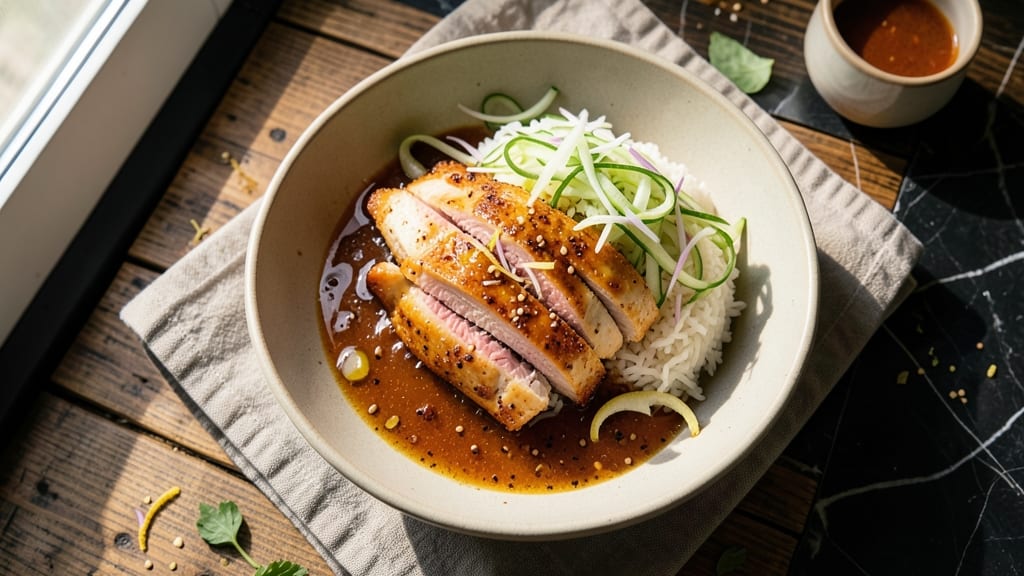
This chicken rice bowl sauce transforms ordinary rice bowls into restaurant-worthy meals with just a few simple ingredients. The secret lies in balancing fragrant five-spice with umami-rich soy and a touch of sweetness—creating a glaze that clings perfectly to chicken and rice.
I developed this recipe after years of testing, and it never fails to elevate any dish. What sets this sauce apart is its versatility—it works with grilled, baked, or pan-seared chicken, and keeps well in the fridge for up to a week.
The blend of garlic, ginger, and sesame oil adds depth, while a splash of rice vinegar brightens the flavor. No fancy techniques required, just a 10-minute prep and a few pantry staples.
Ingredients for chicken rice bowl sauce
Nine essential ingredients blend five-spice warmth with umami richness for a sauce that elevates chicken rice bowls effortlessly.
| Ingredient | Amount | Notes |
|---|---|---|
| Fragrant Five-Spice Powder 🌶️ | 1 ½ tbsp | Toasted whole spices preferred |
| Light Soy Sauce 🍶 | ½ cup | Kikkoman preferred for balance |
| Dark Soy Sauce 🍶 | ¼ cup | For rich depth and color |
| Rice Vinegar 🍶 | ¼ cup | Seasoned preferred for brightness |
| Sesame Oil 🫒 | 1 tbsp | Toasted, not flavored |
| Fresh Ginger 🌿 | 1 tbsp | Finely grated, peel removed |
| Garlic Cloves 🧄 | 4 cloves | Minced, not pre-minced jar |
| Honey 🍯 | 1 ½ tbsp | Wildflower preferred for complexity |
| Toasted Sesame Seeds 🌰 | 1 tbsp | For garnish and texture |
| Diamond Crystal Kosher Salt 🧂 | ½ tsp | Adjust to taste after blending |
The five-spice powder is the aromatic foundation—Whole Foods bulk section offers superior quality over pre-ground blends. For an even deeper flavor, toast the whole spices (star anise, cinnamon, fennel, cloves, and Szechuan peppercorns) in a dry pan for 2 minutes before grinding. Kikkoman soy sauces provide the perfect balance of saltiness and umami, while seasoned rice vinegar adds subtle sweetness and tang. The sesame oil should be toasted, not flavored—La Choy makes an excellent option and keeps for months in a cool, dark place.
No five-spice powder? Create your own blend with equal parts ground cinnamon, star anise, fennel seeds, cloves, and Szechuan peppercorns. Substitute honey with agave nectar for a vegan option, though honey adds subtle floral notes that agave can't replicate. Fresh ginger and garlic can be swapped for powdered versions at half the amount, but fresh yields superior depth. For a smoother sauce, strain through a fine-mesh sieve after blending—straining removes sesame seeds while keeping the oil's richness.
Store the sauce in an airtight glass jar in the refrigerator for up to 1 week, where flavors meld beautifully. For longer storage, freeze in ice cube trays—each cube makes one serving—and transfer to a freezer bag. The sauce thickens slightly when chilled, so stir before using. Garnish with toasted sesame seeds just before serving to maintain crispness and aroma.
Why You'll Love This Recipe
- Five-Ingredient Magic: I swear by this sauce—just five pantry staples, no fancy prep. That five-spice powder alone gives it this warm, earthy depth that cuts through the richness of chicken, and the dark soy adds that glossy, umami punch without extra effort.
- Umami Bomb: Between the light and dark soy combo, this sauce packs a flavor wallop. The rice vinegar brightens it up just enough to keep it from feeling heavy, while a single drizzle of sesame oil at the end? Pure satisfaction—nutty, aromatic, and impossible to resist.
- Lunchbox Hero: I make double batches on Sundays because it’s perfect for meal prep. Toss it with cold rice and shredded chicken for grab-and-go bowls, or drizzle it over noodles when you’re craving something quick. Honestly, it’s my go-to when I need to feed the family without stressing.
- Budget-Friendly Staple: This sauce costs pennies to make and stretches forever. The five-spice powder and soy sauces are cheap but transformative, and the vinegar and sesame oil elevate it without breaking the bank. Best part? Leftovers taste just as good the next day—if they even last that long.
Step-by-step instructions for chicken rice bowl sauce
This umami-rich glaze balances sweet, salty, and aromatic complexity—perfect for elevating any rice bowl.
Bloom the Five-Spice in Toasted Sesame Oil
Heat a small saucepan over medium-low heat and add the 1 tablespoon sesame oil. Once the oil shimmers gently, add the 1.5 tablespoons fragrant five-spice powder and stir continuously for 30 seconds. You'll notice the spices release their aromatic oils immediately—this is where the depth of flavor begins.
The five-spice should toast gently without burning. You're looking for a warm, earthy aroma with hints of cinnamon and star anise. If the mixture darkens too quickly, reduce the heat immediately. This step is critical—it develops the aromatic foundation that carries through the entire sauce.
Incorporate Aromatics and Vinegar
Add the 1 tablespoon finely grated fresh ginger and 4 minced garlic cloves to the pan, stirring for 1 minute until fragrant. The garlic should soften slightly but not brown. Immediately pour in the 0.25 cup rice vinegar and let it simmer for 2 minutes until reduced by half.
This reduction step intensifies the acidity and balances the richness that will come from the soy sauces. You'll see the mixture bubble gently—this is normal. If it reduces too quickly, reduce the heat slightly to prevent scorching. The vinegar's brightness will cut through the sweetness later, creating perfect harmony.
Build the Umami Base
Add the 0.5 cup light soy sauce and 0.25 cup dark soy sauce to the pan, stirring well to combine. Increase heat to medium-high and bring the mixture to a gentle boil. Reduce heat to medium-low and simmer uncovered for 5-6 minutes until the sauce thickens slightly and coats the back of a spoon.
The dark soy sauce will deepen the color while adding rich, caramelized notes. You're looking for a glossy, syrupy consistency—not completely dry, but thick enough to cling to rice and chicken. If it reduces too quickly, add 1 tablespoon water to maintain balance. This is where the sauce's signature umami depth develops.
Sweeten and Season
Remove the pan from heat and whisk in the 1.5 tablespoons honey until fully dissolved. Return to low heat and add the 0.5 teaspoon diamond crystal kosher salt, stirring constantly for 1 minute to fully integrate. Taste and adjust seasoning—you may need a touch more salt or honey to achieve perfect balance.
The honey should mellow the acidity while adding subtle floral complexity. At this stage, the sauce should taste simultaneously sweet, salty, and umami-rich with aromatic undertones. If it's too sharp, add a pinch more honey. If it's too sweet, add a splash of rice vinegar. This is where precision meets artistry.
Finish with Toasted Sesame Seeds
Remove the sauce from heat and stir in the 1 tablespoon toasted sesame seeds. Let the sauce sit for 5 minutes to allow the flavors to meld completely. The sesame seeds will add nutty texture and visual contrast, while their oils will infuse into the sauce for maximum flavor.
For best results, use the sauce immediately while still warm. The texture should be glossy with a slight sheen, and each spoonful should deliver layers of complexity. If storing, refrigerate in an airtight container for up to 5 days, though it's best used fresh. This sauce transforms simple rice bowls into restaurant-quality meals.
Pro Tips For Making Chicken Rice Bowl Sauce
- Bloom the Five-Spice: Toast the whole spices in the dry pan for 30 seconds first—just until you smell that warm, woody aroma. I used to skip this, and the sauce always tasted flat; now it’s the backbone of the flavor. (Yes, even if you’re impatient like me.)
- Balance the Soy Sauces: Use dark soy sauce only for color—about ½ teaspoon—then rely on light soy for depth. I learned this the hard way after making a sauce so dark it tasted like liquid licorice. Taste as you go.
- Whisk in Sesame Oil Last: Add the sesame oil after everything else is mixed and off the heat. A splash too early will mute the nutty aroma, and you’ll miss the punch it’s meant to bring. (Your future self will notice.)
- Acid First, Then Salt: Stir in the rice vinegar before the soy sauces—it brightens the whole sauce. Then add the soy. I was skeptical until I tried it; now it’s non-negotiable. (Does it look weird? Yes. Does it work? Every single time.)
Troubleshooting this dish
Over-Salted Sauce Fix
If your sauce ends up too salty, don’t panic—simply whisk in 1-2 tablespoons of warm water to dilute the sodium. For a more dramatic fix, add ½ cup grated apple or pineapple (the natural acidity balances salt while adding subtle sweetness).
If you prefer not to alter texture, serve the sauce over steamed jasmine rice or cucumber slices—their mild flavors help neutralize excess salt. 🧂
Too Thin Consistency
Thin sauce? Simmer uncovered for an extra 2-3 minutes to reduce naturally. If it’s still too runny, whisk in 1 teaspoon cornstarch mixed with 1 tablespoon cold water and cook for 1 minute until thickened.
Avoid over-reducing—you want a glossy, clingy sauce, not a paste. For a smoother finish, strain through a fine-mesh sieve after thickening. ✨
Spice Overpowering
If the five-spice flavor dominates, balance it with 1 teaspoon extra honey or 1 tablespoon rice vinegar. For a milder profile, add 1-2 tablespoons of coconut milk or neutral oil to mellow the heat.
If you prefer, reduce the five-spice to 1 teaspoon next time—it’s easy to overdo aromatic spices. 🌶️
Sauce Separates When Chilled
This happens when oils and liquids separate. To fix, gently reheat the sauce in a saucepan over low heat while stirring constantly until smooth. For prevention, whisk vigorously before storing and avoid adding too much sesame oil.
If separation persists, blend with an immersion blender for 10 seconds to re-emulsify. ⚡
Flat or Bland Taste
Revive lackluster flavor by adding ½ teaspoon fish sauce (for umami) or 1 teaspoon toasted sesame oil. A splash of lime juice brightens dullness, while a pinch of white pepper adds depth without heat.
If the sauce tastes one-dimensional, it likely needs more acidity—try 1 teaspoon extra rice vinegar. 💡
Preventing Future Issues
Always taste as you go—adjust seasonings in small increments (e.g., ¼ teaspoon at a time). Use a candy thermometer to monitor heat: keep it below 200°F to avoid scorching.
For consistency, measure ingredients by weight (grams) instead of volume. And remember: patience is key—let the sauce rest for 5 minutes after cooking to develop fully. 💪
Nutrition facts
Frequently asked questions
Can I make this sauce without five-spice powder?
Create your own blend using ½ teaspoon each of cinnamon, ground cloves, fennel seeds, and Szechuan peppercorns. For a milder profile, use just cinnamon and star anise. Toast the spices in a dry pan for 1-2 minutes before grinding to maximize flavor. The sauce will still have depth, though the complexity will differ slightly.
How long does this sauce keep in the fridge?
The sauce stays fresh for up to 5-7 days when stored in an airtight glass jar. The flavors actually develop more over time! For longer storage, freeze in 1-tablespoon portions—perfect for single servings. Thaw overnight in the fridge before using. Always stir before serving as it thickens when chilled.
What's the best way to use leftover sauce?
This versatile sauce works on grilled chicken, baked tofu, or even noodles. Drizzle over steamed rice bowls, ramen, or cold noodle salads for instant flavor. For a quick fix, mix with 1 tablespoon mayo and a pinch of sriracha to create a dipping sauce. The five-spice adds amazing depth to sandwiches too—try it on PB&J or chicken salad wraps.
Can I make this sauce vegan?
Yes! Swap the honey for agave nectar or maple syrup (use 1.5 tablespoons) and ensure your soy sauce is vegan-certified. For extra richness, add 1 tablespoon coconut aminos alongside the soy sauces. The sauce will still deliver that signature umami punch while being completely plant-based.
Why does my sauce look too thin?
Sauce consistency depends on reduction time. Simmer uncovered for an extra 2-3 minutes to thicken naturally. If it's still too runny, whisk 1 teaspoon cornstarch mixed with 1 tablespoon cold water and cook for 1 minute until glossy. Avoid over-reducing—you want a clingy, syrupy texture, not a paste. For a smoother finish, strain through a fine-mesh sieve after thickening.