
Main Courses
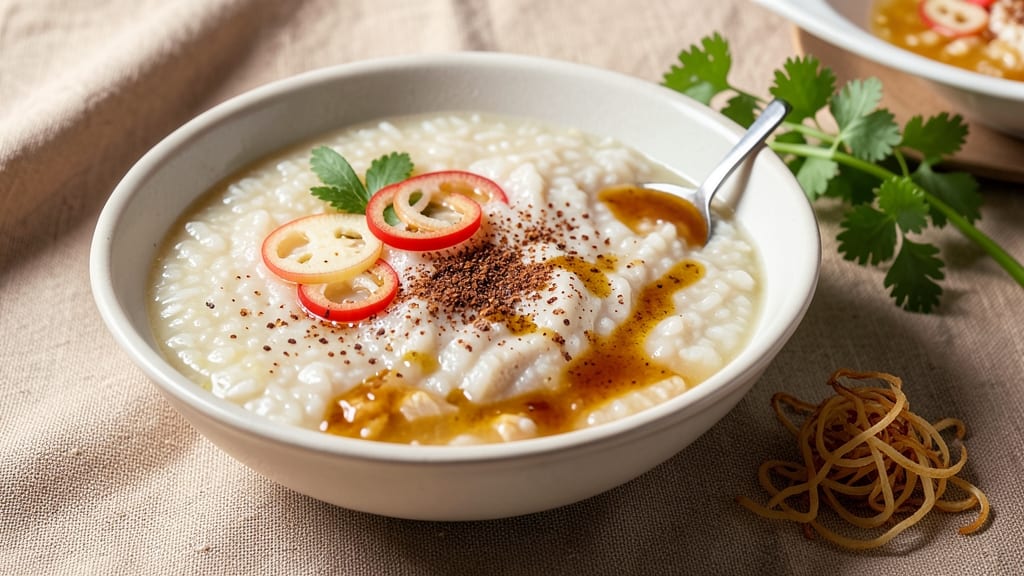
This Chinese rice congee recipe delivers the comforting, silky porridge that’s been warming stomachs for centuries. The secret lies in soaking jasmine rice overnight, then simmering it into a fragrant, velvety broth infused with five-spice powder and ginger—each spoonful promises a balance of savory, aromatic depth.
I’ve perfected this version to stay true to tradition while offering adaptable toppings for modern tastes.
The beauty of congee is its versatility—it’s equally nourishing as a light breakfast or a hearty meal when loaded with toppings like century egg, crispy pork floss, or fresh scallions.
The rice transforms from firm grains into a silky, melt-in-your-mouth texture, while the five-spice blend adds warmth that lingers long after the last bite. This method ensures a foolproof, restaurant-quality result every time.
What makes this recipe special is its ability to adapt to dietary preferences—vegetarian versions use mushrooms and tofu, while traditionalists can add char siu or shrimp. The slow simmering process (about 45 minutes) builds layers of flavor, turning simple ingredients into something deeply comforting.
Whether you’re recovering from illness or craving a cozy meal, this congee delivers.
Serve it piping hot with a drizzle of soy sauce, a sprinkle of sesame oil, and your choice of toppings for a meal that’s as nourishing as it is delicious. Let’s make congee that feels like home.
Ingredients for chinese rice congee
Nine core ingredients plus toppings that turn simple rice into restaurant-quality congee.
| Ingredient | Amount | Notes |
|---|---|---|
| Jasmine Rice 🍚 | 1 cup | Uncooked, long-grain preferred |
| Chicken Broth 💧 | 6 cups | Homemade or high-quality store-bought |
| Five-Spice Powder 🌶️ | 1 tbsp | Authentic Chinese blend preferred |
| Fresh Ginger 🧄 | 2 tbsp | Finely grated, peeled |
| Sesame Oil 🫒 | 1 tbsp | Toasted, for finishing |
| Light Soy Sauce 🥫 | 2 tbsp | For seasoning and serving |
| Scallions 🧅 | 3 whole | Thinly sliced, for garnish |
| Salt 🧂 | ½ tsp | Adjust to taste |
| White Pepper 🌶️ | ¼ tsp | Freshly ground preferred |
| Century Eggs 🥚 | 4 pieces | Optional traditional topping |
| Crispy Pork Floss 🥓 | ½ cup | Optional topping, store-bought or homemade |
| Shredded Chicken 🍗 | 1 cup | Optional protein topping |
The jasmine rice is non-negotiable—its delicate aroma and slightly sticky texture are essential for that authentic congee feel. Martins or Calrose work best if you want to splurge, but any long-grain jasmine rice will do. For the broth, homemade chicken broth built with bones and skin delivers the deepest flavor, but Swanson or Pacific Foods are solid shortcuts. The five-spice powder should be authentic Chinese (you'll find it in the international aisle)—Penzeys or Spicewalla carry great blends. Fresh ginger is key too; organic ginger from the produce section has more punch than pre-peeled bottles.
No five-spice powder? Mix 1/4 tsp each of cinnamon, star anise, fennel seeds, cloves, and Szechuan peppercorns—it's the same thing. Short on chicken broth? Vegetable broth with a splash of coconut milk works for vegetarian versions. The century eggs are the showstopper topping, but marinated tofu or mushrooms give a similar umami punch. For the pork floss, Trader Joe's sells pre-made packets that save time, though homemade (rendered pork fat + sugar) is worth the effort if you're feeling ambitious.
Congee reheats beautifully—just add a splash of water and simmer. Store leftovers in the fridge for 4-5 days, or freeze for 3 months in airtight containers. The toppings are best added fresh when serving, but you can prep shredded chicken or pork floss ahead. For extra richness, keep a small jar of toasted sesame oil on hand—it's the secret weapon that ties everything together.
Why You'll Love This Recipe
- Foolproof Simplicity: I swear by this—just rice, broth, and a few pantry staples. No measuring cups, no fancy techniques, just simmer until it’s creamy. Even my college-dorm version turned out fine.
- Umami Bomb: That five-spice powder? It’s the secret weapon—warm, earthy, and just a little sweet. Add a splash of sesame oil at the end, and suddenly you’ve got restaurant-level depth in a bowl.
- Lazy Meal Prep: Make a big batch on Sunday, and you’ve got breakfast, lunch, or dinner covered. Reheat it, top it with a soft-boiled egg or quick-fried shallots, and boom—effortless meals all week.
- Budget Comfort: Cheap as chips but feels like a treat. A handful of rice, a pot of broth, and a few spices stretch into multiple servings. My wallet and my stomach both win.
Step-by-step instructions for silky Chinese rice congee
This congee turns simple ingredients into a velvety, fragrant porridge that's comforting yet sophisticated.
Prepare the Base Ingredients for Even Cooking
Rinse the 1 cup jasmine rice thoroughly under cold water until the water runs clear. This removes excess starch that would otherwise make your congee gummy. Soak the rinsed rice in 6 cups chicken broth for 30 minutes—this jumpstarts the cooking process and ensures each grain absorbs flavor evenly. Meanwhile, peel and finely grate the 2 tablespoons fresh ginger, then mix it with the 1 tablespoon five-spice powder in a small bowl. This aromatic blend will infuse the entire dish with warmth.
Here's the thing—don't skip the soaking step. The rice needs this time to plump up, which prevents a grainy texture later. If you're using store-bought broth, bring it to a simmer first to help dissolve any powdered ingredients that might clump. I like to add the ginger-spice mixture directly to the broth during cooking, but you could also toast the spices lightly in a dry pan first for even deeper flavor.
Cook the Congee Low and Slow for Maximum Tenderness
Transfer the soaked rice and broth to a heavy-bottomed pot—stainless steel or ceramic works best. Bring to a boil over medium-high heat, then immediately reduce to low heat and simmer uncovered for 45 minutes. You're looking for a gentle simmer where tiny bubbles form at the edges but don't break the surface. Stir occasionally with a wooden spoon, breaking up any rice clumps that form.
This low-and-slow approach is non-negotiable. The rice needs time to break down completely into that signature silky texture. If you rush it, you'll end up with mushy rice instead of congee. After 45 minutes, check the consistency—it should be thick but still pourable. If it's too thick, add ½ cup hot water at a time until you reach your desired creaminess. The congee should coat the back of a spoon but still flow freely.
Season and Finish with Aromatic Touches
Once the congee reaches your desired thickness, stir in the 0.5 teaspoon salt and 0.25 teaspoon white pepper. Taste and adjust the seasoning—you might want to add a splash more of the light soy sauce (start with 1 tablespoon) for umami depth. Remove from heat and let it sit covered for 10 minutes. This resting period allows the flavors to meld and the texture to set slightly, making it easier to serve without spills.
While the congee rests, prepare your toppings. Thinly slice the 3 whole scallions and heat the 1 tablespoon sesame oil in a small pan until fragrant (don't let it smoke). Toss the scallions in the warm oil for 30 seconds—this adds a bright, aromatic contrast to the rich porridge. If using, warm the 1 cup shredded chicken and 0.5 cup crispy pork floss separately to maintain their textures.
Assemble and Serve with Traditional Toppings
Ladle the congee into bowls and arrange the toppings artistically. I like to place 1 century egg (halved) in each bowl, followed by the warm scallions, shredded chicken, and crispy pork floss. The century egg adds a creamy, briny element that balances the porridge's mild sweetness. Drizzle with the remaining 1 tablespoon light soy sauce and a final touch of sesame oil for extra fragrance.
Serve immediately while the congee is still warm—this dish is best enjoyed fresh from the pot. The contrast of temperatures (hot congee, room-temperature toppings) creates an incredible textural experience. For extra richness, you could also add a soft-boiled egg or a dollop of preserved mustard greens if you're feeling adventurous. Each spoonful should deliver that perfect balance of silky texture, aromatic spices, and savory depth.
Pro Tips For Making Chinese Rice Congee
- Soak Rice 30 Minutes: DESCRIPTION:
- Simmer Low and Slow: DESCRIPTION:
- Toast Ginger First: DESCRIPTION:
- Stir Sesame Oil Last: DESCRIPTION:
Essential equipment for perfect results
Heavy-Bottomed Pot
A stainless steel or ceramic pot with a capacity of at least 8 quarts is essential for even heat distribution and preventing scorching. I swear by my All-Clad 8-quart Dutch oven—its thick base maintains consistent low heat for that critical 45-minute simmer.
If you're on a budget, a Le Creuset stoneware pot works beautifully too, though it's heavier. Avoid thin aluminum or nonstick pots—they heat unevenly and can make your congee grainy. 🔥
Fine-Mesh Strainer
Rinsing the 1 cup jasmine rice thoroughly is non-negotiable, and a fine-mesh strainer (like the OXO Good Grips) does the job best. It removes excess starch that would otherwise make your congee gummy.
I also use it to rinse my 3 whole scallions for garnish—just a quick rinse under cold water removes dirt while preserving their crispness. A colander works in a pinch, but fine mesh ensures no gritty bits remain.
Wooden Spoon
A heat-resistant wooden spoon (I use a bamboo spoon from Amazon) is your best friend for stirring congee. Metal spoons can scratch ceramic or stainless steel pots, and they conduct heat unevenly.
The wooden spoon gently breaks up rice clumps without damaging the pot's surface. Pro tip: Keep it handy while simmering to occasionally scrape the bottom—this prevents sticking and ensures even cooking.
Mortar and Pestle
For that authentic five-spice aroma, a marble mortar and pestle (like the Kuhn Rikon) lets you toast and grind spices fresh.
Lightly toast the 1 tbsp five-spice powder with the 2 tbsp grated ginger in a dry pan for 30 seconds before adding to the broth—this deepens their flavors.
If you don’t have one, a spice grinder works, but toasting in a pan first adds a smoky depth you won’t get otherwise. 🌶️
Fine Grater
A microplane or fine grater (I love the OXO Good Grips) is perfect for grating the 2 tbsp fresh ginger into a paste-like consistency. Pre-peeled ginger bottles just don’t cut it—they’re too dry and lack the punch of fresh.
Grate directly over the pot to avoid mess, and mix it with the five-spice powder before adding to the broth. This ensures even flavor distribution in every spoonful.
Ladle and Serving Bowls
Serve congee with a heat-resistant ceramic ladle (like the Le Creuset serving spoon) to portion it smoothly. Pair with wide, shallow bowls (I use Japanese ceramic bowls) to showcase the toppings. The wide surface area lets you arrange toppings like century egg, crispy pork floss, and scallions artfully.
Pro tip: Warm the bowls in the oven for 5 minutes at 200°F before serving—this keeps the congee hot longer and enhances the dining experience. ✨
Nutrition facts
Frequently asked questions
Can I make congee without jasmine rice?
While jasmine rice is traditional, you can use long-grain white rice or even short-grain rice in a pinch. The texture will be slightly different—jasmine gives that signature silky mouthfeel, but other rices still work for a comforting porridge. For extra richness, try forbidden black rice or brown rice (though they'll take longer to cook). Just adjust the broth ratio—use 1:6 rice-to-broth for any rice type.
Why did my congee turn out grainy?
Grainy congee usually means the rice wasn't soaked long enough or the heat was too high. Always soak the rice for at least 30 minutes (overnight is best), and simmer on low heat for 45 minutes—never boil vigorously. If it's still grainy, blend the congee briefly with an immersion blender (strain if you want smooth texture) or stir vigorously to break up clumps. A heavy-bottomed pot also helps prevent scorching.
What are the best toppings for a vegetarian congee?
Skip the meat and try these vegetarian upgrades: marinated tofu (with soy sauce and sesame oil), shiitake mushrooms (sautéed with garlic), preserved mustard greens (for tangy crunch), or soft-boiled eggs (halved). For extra richness, add a spoonful of peanut butter or a drizzle of chili oil. The key is balancing textures—creamy toppings (tofu, egg) pair well with crisp elements (fried shallots, sesame seeds).
Can I make congee in an Instant Pot?
Yes! Use the soup/sauce setting for 30 minutes on high pressure, then quick-release. Start with 1 cup rice and 4 cups broth (less liquid than stovetop), and add more broth after cooking if needed. The Instant Pot version cooks faster but may be slightly less tender. For best results, use a trivet to prevent burning, and stir occasionally. The texture will be closer to porridge than traditional congee, but still delicious.
How do I store and reheat congee?
Store congee in an airtight container in the fridge for 4-5 days or freeze for 3 months. To reheat, add 2-3 tablespoons water per cup of congee and simmer on low heat until hot. Never microwave—it makes the texture gluey. For extra richness, stir in a splash of sesame oil or soy sauce after reheating. The flavor actually improves after resting overnight!