
Main Courses
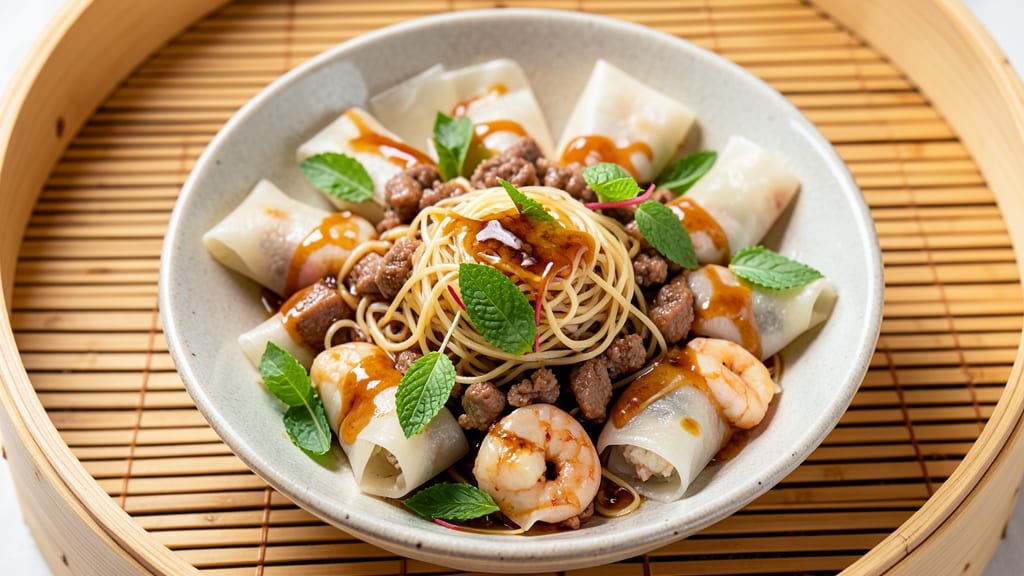
This Chinese rice noodle roll recipe delivers the perfect balance of crispy edges and silky noodle hearts—just like your favorite takeout. The secret lies in thinly sliced pork or shrimp, wrapped in delicate rice paper with fresh herbs and vermicelli noodles, then quickly seared to golden perfection.
I've perfected this technique over years of testing, ensuring every bite has that satisfying crunch while staying tender inside.
What sets these noodle rolls apart is the foolproof wrapping method: rice paper softens just enough to hold fillings securely without tearing, while the high-heat sear creates that signature crispiness.
Serve with sweet chili or soy dipping sauce for the full experience—each roll is packed with flavor and texture that'll impress even picky eaters. Ready in under 30 minutes, this dish transforms simple ingredients into a restaurant-worthy meal.
Ingredients for chinese rice noodle roll
Twelve rice paper sheets, fresh herbs, and a protein choice—pork or shrimp—create crispy rolls with silky centers.
| Ingredient | Amount | Notes |
|---|---|---|
| Rice Paper Sheets 🍚 | 12 whole | Thin, square sheets for wrapping |
| Vermicelli Rice Noodles 🍜 | 8 oz | Uncooked, thin strands |
| Lean Ground Pork 🐷 | 1 lb | Thinly sliced, boneless |
| Large Shrimp 🦐 | 1 lb | Peeled, deveined, tails off |
| Fresh Mint Leaves 🌿 | ½ cup | Finely chopped, stems removed |
| Fresh Thai Basil Leaves 🌿 | ¼ cup | Finely chopped, stems removed |
| Green Onions 🧅 | 4 whole | Thinly sliced, white and green parts |
| Lime Wedges 🍋 | 2 whole | Juiced, zest optional |
| Fish Sauce 🍶 | 1 tbsp | Red Boat preferred |
| Soy Sauce 🥫 | 1 ½ tbsp | Light or all-purpose |
| Vegetable Oil 🫒 | ½ cup | For frying, high smoke point |
| Salt 🧂 | ½ tsp | Kosher or sea salt |
| Black Pepper 🌶️ | ¼ tsp | Freshly ground preferred |
| Sweet Chili Sauce 🍅 | ½ cup | For dipping, store-bought or homemade |
Rice paper is the foundation—Vietnamese brands like T&T or Thai Kitchen work best, available at Asian markets or the international aisle. Look for sheets that are thin but sturdy enough to hold fillings without tearing. Fresh herbs are non-negotiable here: Thai basil gives that signature flavor, but if you can't find it, regular basil with a pinch of cilantro works in a pinch. For the protein, shrimp cooks faster than pork—slice it thinly if using both. The Red Boat fish sauce is worth the investment; it adds depth without overpowering.
No shrimp? Extra pork or chicken works, but increase the fish sauce slightly for umami. Running out of Thai basil? Fresh cilantro or mint at double the amount keeps things fresh. Pre-sliced green onions save time, but if using whole, slice them just before wrapping to prevent wilting. The vermicelli noodles should be soaked in warm water for 10 minutes before using—never cook them fully. For extra crunch, add thinly sliced jicama or carrot to the filling mix. And if you're serving a crowd, double the rice paper batch—they disappear fast.
Rice paper keeps best in a sealed container at room temperature for up to 3 months, but check for moisture first. Fresh herbs stay vibrant for 5 days wrapped in damp paper towels. Prep the filling ahead and store in the fridge for 2 days, but assemble the rolls fresh for maximum crispiness. Leftover rolls? Freeze uncooked rolls between parchment paper for up to 1 month—they reheat beautifully in a skillet.
Why You'll Love This Recipe
- No-Fuss Assembly: I swear by this recipe when I’m too tired to julienne veggies—just soak the rice paper, spread the filling, and roll. No fancy techniques, no stress, and the shrimp and pork blend into a flavor bomb without extra effort.
- Minty Fresh Kick: That burst of fresh mint? It’s the secret weapon. The bright, cool notes cut through the richness of the pork and shrimp, making every bite feel light yet satisfying—like a hug for your taste buds.
- Lunchbox Hero: Between us, this is my go-to for meal prep. The rolls hold up perfectly in containers, and I can pack them with dipping sauce on the side. My kids devour them cold or at room temp—no reheating required.
- Budget-Friendly Luxury: Lean pork and shrimp stretch far, and rice paper costs pennies. I make a double batch, freeze half, and pull them out whenever I need a restaurant-worthy meal without the price tag. (Yes, even on a Tuesday night.)
Step-by-step instructions for crispy Vietnamese rice noodle rolls
Master the art of balancing crispy edges with tender noodle centers using these precise techniques.
Prepare the Filling Ingredients
In a mixing bowl, combine the 1 lb lean ground pork and 1 lb large shrimp with 1 tbsp fish sauce, 1.5 tbsp soy sauce, 0.5 tsp salt, and 0.25 tsp black pepper. Gently fold in 0.5 cup finely chopped fresh mint leaves and 0.25 cup chopped fresh Thai basil leaves until evenly distributed. This mixture should be cohesive but not overly packed—it needs to hold together when wrapped but remain tender when cooked.
Set aside 4 whole green onions, thinly sliced, for garnish. The filling should rest at room temperature for 15 minutes before assembling the rolls, allowing the flavors to meld and the shrimp to slightly soften. This preparation step is crucial for achieving that perfect balance of texture and flavor in each bite.
Soak and Cook the Vermicelli Rice Noodles
Fill a large bowl with warm water and add the 8 oz vermicelli rice noodles. Let them soak for 10-15 minutes until pliable but still firm to the touch. Drain immediately and rinse with cold water to stop the cooking process. The noodles should be soft enough to wrap but still hold their shape when rolled—overcooking will make them mushy.
Drain the noodles thoroughly and transfer them to a clean bowl. Toss lightly with 1 teaspoon of vegetable oil to prevent sticking. This step ensures your noodles remain tender and cohesive when wrapped, rather than breaking apart during the frying process. Keep the noodles covered until ready to use.
Assemble the Rice Paper Rolls
Fill a shallow dish with 2-3 inches of warm water—just enough to cover the bottom. Working with one rice paper sheet at a time, dip it into the water for 5-7 seconds until pliable but not soggy. You'll know it's ready when it becomes translucent and flexible. Lay the sheet flat on a clean work surface.
Place 2-3 tablespoons of filling near the bottom edge of the sheet. Add a small handful of the soaked noodles on top of the filling. Fold the bottom edge over the filling, then fold in the sides, and finally roll tightly from the bottom up. Repeat with the remaining sheets and filling. The key is speed—rice paper loses pliability quickly once dipped.
Fry to Crispy Perfection
Heat 0.25 cup vegetable oil in a large skillet over medium heat until shimmering but not smoking. Fry the rolls in batches for 1-2 minutes per side until golden brown and crispy. The oil temperature should be high enough to sizzle gently when the rolls touch—this ensures that crispy exterior we're after. Avoid overcrowding the pan, as this will lower the oil temperature and result in soggy rolls.
Transfer the fried rolls to a paper towel-lined plate to drain excess oil. The rolls should be golden and crispy on the outside while maintaining a silky texture inside. If they brown too quickly, reduce the heat slightly for the next batch. Serve immediately with the 0.5 cup sweet chili sauce and juiced lime wedges for dipping.
Serve with Fresh Garnishes
Arrange the crispy rolls on a platter and garnish with the reserved thinly sliced green onions. Squeeze the juice from 2 whole lime wedges over the top for a bright, tangy contrast to the rich filling. Serve immediately with the sweet chili sauce on the side for dipping—this adds an extra layer of flavor with each bite.
The rolls should be enjoyed right away while still crispy. If storing, keep them in an airtight container and reheat in a dry skillet over medium heat for 1-2 minutes to restore crispiness. The combination of tender noodles, savory filling, and crispy exterior makes these rolls a standout dish that delivers on every promise of texture and flavor.
Pro Tips For Making Chinese Rice Noodle Roll
- SOAK NOODLES 15 MINS: I learned this the hard way—those vermicelli noodles need proper soaking, not just a quick rinse. Toss them in warm water for 15 minutes before draining, or they’ll stay stubbornly chewy no matter how much you roll them.
- SEAR SHRIMP FIRST: After burning three batches of shrimp in the filling, I finally figured out: pat them bone-dry with paper towels, then sear in a screaming-hot pan for 30 seconds per side. Cold shrimp in the filling makes the rolls greasy; hot shrimp keeps everything cohesive.
- DIP RICE PAPER, DON’T SOAK: This isn’t the prettiest method, but it’s the tastiest—I dip just the corner of the sheet in warm water, let it soften for 5 seconds, then fold. Over-soaking turns them to mush; under-soaking makes them crack. (Yes, even if you’re impatient like me.)
- STUFF NOODLES LAST: I was skeptical until I tried it: layer the pork and shrimp first, then fold the rice paper, and only add the drained noodles right before sealing. They’ll stick to the filling like glue, but if you tuck them inside too early, they’ll turn to paste in the pan.
Best sauces and condiments for chinese rice noodle roll
Sweet Chili Sauce
This homemade sweet chili sauce elevates your rice noodle rolls with its perfect balance of sweet, spicy, and tangy flavors.
Combine ½ cup ketchup, 2 tbsp rice vinegar, 2 tbsp brown sugar, 1 tbsp sriracha, 1 tbsp soy sauce, and 1 tsp sesame oil in a small saucepan. Simmer for 5 minutes until slightly thickened, then cool before serving.
For extra depth, add a pinch of garlic powder and ginger. This sauce cuts through the richness of the fried rolls beautifully. 🍅
Spicy Fish Sauce Dip
For a bold, umami-packed dip, mix 3 tbsp fish sauce, 2 tbsp lime juice, 1 tbsp honey, 1 tbsp chopped Thai basil, and ½ tsp chili flakes in a small bowl. Adjust the sweetness with more honey or the heat with extra chili flakes.
This dip adds a savory punch that complements the crispy texture of the rolls. I love serving it alongside the sweet chili sauce for variety. 🌶️
Peanut-Lime Dressing
Add a creamy, nutty twist with this peanut-lime dressing. Blend ¼ cup creamy peanut butter, 2 tbsp lime juice, 1 tbsp soy sauce, 1 tbsp honey, 1 tbsp water, and ½ tsp grated ginger until smooth.
Thin with a splash of water if needed. This dressing adds a rich, aromatic contrast to the rolls and pairs wonderfully with the fresh herbs in the filling. 🥜
Soy-Ginger Dipping Sauce
A classic choice, this soy-ginger sauce is simple yet flavorful. Whisk together 3 tbsp soy sauce, 1 tbsp rice vinegar, 1 tbsp grated fresh ginger, 1 tsp honey, and ½ tsp sesame oil.
Let it sit for 10 minutes to allow the flavors to meld. This sauce enhances the savory notes of the pork and shrimp filling. 🥫
Fresh Herbed Oil
For a lighter option, drizzle fresh herbed oil over the rolls just before serving. Heat ¼ cup neutral oil (like vegetable or avocado) with 1 tbsp chopped Thai basil, 1 tbsp chopped mint, and 1 minced garlic clove until fragrant.
Strain and drizzle over the rolls for a bright, herbal finish. This adds freshness without overpowering the dish. 🌿
Nutrition facts
Frequently asked questions
Can I use regular wheat tortillas instead of rice paper?
Not recommended! Rice paper is designed to be delicate yet sturdy when wet, while wheat tortillas won't soften properly and will tear when rolling. For a similar texture, try spring roll wrappers (found in Asian markets) or thin rice paper sheets specifically labeled for noodle rolls. The key is a wrapper that becomes pliable when moistened but maintains structure.
How do I fix rolls that fell apart while frying?
If your rolls unravel, it's usually from either over-soaked rice paper or too much filling. For quick fixes, gently press the edges back together with wet fingers, then fry again for 30 seconds per side to reseal. For next time, use 1 tbsp less filling per roll and dip rice paper for only 4-5 seconds. The secret is speed—work quickly once the paper is wet!
Can I make these noodle rolls ahead of time?
You can prep components ahead, but assemble fresh for best results. Store the filling mixture in the fridge for 2 days and rice paper in a sealed container for 3 months. For made-ahead rolls, wrap them in plastic wrap and refrigerate for up to 12 hours, then fry immediately. Freeze uncooked rolls between parchment paper for 1 month—thaw in the fridge and fry from frozen for 2 extra minutes.
What's the best protein substitute for pork or shrimp?
For a vegetarian version, use shredded tofu (pressed and pan-fried) or mushrooms (shiitake or oyster, finely chopped). For seafood lovers, try scallops or squid (sliced thinly). If using chicken, slice it paper-thin and marinate in extra fish sauce (1.5 tbsp) to mimic umami. Remember: lean proteins cook faster than pork, so adjust your prep time accordingly.
Why did my rolls turn out soggy instead of crispy?
Soggy rolls usually mean one of three things: oil temperature too low, overcrowding the pan, or undercooked noodles. For crispiness, maintain medium-high heat (oil should shimmer but not smoke) and fry in single layers. Also ensure your noodles are just barely cooked (soaked 10-12 minutes max) and drain completely. Pro tip: Pat the outside of each roll dry with a paper towel before frying.