
Main Courses
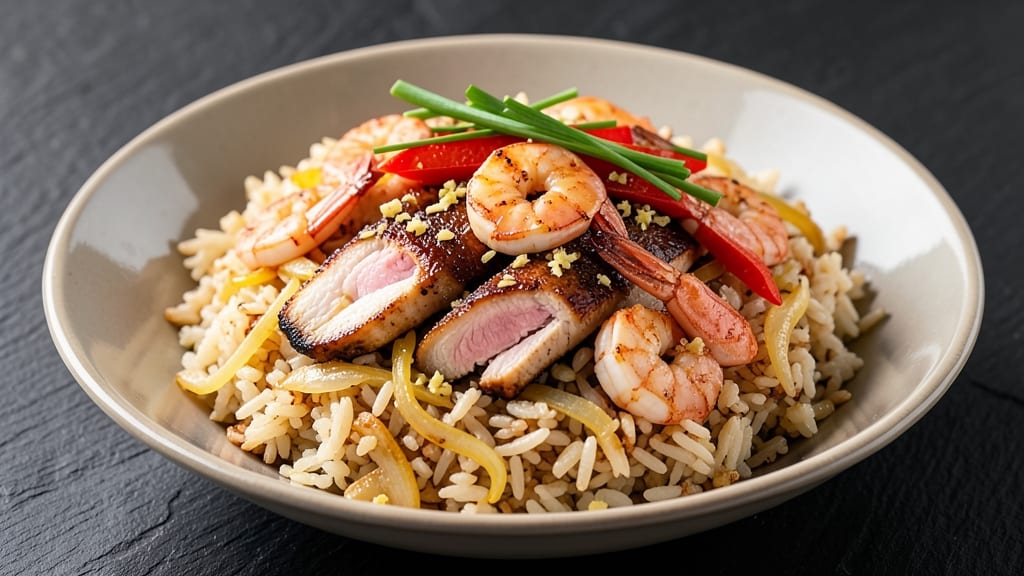
The Chinese special fried rice recipe transforms day-old rice into a restaurant-worthy dish with just 20 minutes of wok action. 🔥 The secret lies in high-heat stir-frying—creating that signature wok hei (breath of the wok) aroma—that turns simple ingredients into a symphony of textures and flavors.
This isn’t your basic fried rice; it’s a technique-driven masterpiece where every toss matters. What sets this apart is the balance: tender proteins (shrimp, chicken, or pork) seared to perfection, day-old rice that stays separate yet flavorful, and a sauce that clings without overwhelming.
The key steps—properly prepping the rice, pre-cooking proteins, and mastering the stir-fry timing—ensure each bite delivers that smoky, savory punch you crave. No shortcuts, just authentic technique.
By the end, you’ll have golden, crisp-edged rice with juicy protein and vibrant vegetables, all coated in a glossy sauce that ties every component together. The aroma alone will have everyone at the table asking for seconds. This is the kind of dish that elevates leftovers into something extraordinary.
Whether you’re feeding a crowd or meal prepping for the week, this recipe scales beautifully. Let’s get cooking—your wok is waiting.
Ingredients for chinese special fried rice
Transform ordinary rice into a restaurant-quality dish with these carefully chosen ingredients.
| Ingredient | Amount | Notes |
|---|---|---|
| Day-Old Cooked White Rice 🍚 | 4 cups | Cold or room temperature preferred |
| Boneless Chicken Breast 🍗 | 1 lb | Cut into 1-inch pieces |
| Large Shrimp 🦐 | 1 lb | Peeled and deveined |
| Green Bell Pepper 🧅 | 1 whole | Diced into 0.5-inch pieces |
| Yellow Onion 🧅 | 1 whole | Diced into 0.25-inch pieces |
| Fresh Ginger 🌿 | 2 tbsp | Finely minced |
| Garlic Cloves 🧄 | 6 cloves | Minced into fine paste |
| Eggs 🥚 | 2 whole | Lightly beaten |
| Low-Sodium Soy Sauce 🍶 | ⅓ cup | Kikkoman preferred |
| Oyster Sauce 🍜 | 2 tbsp | Lee Kum Kee brand recommended |
| Sesame Oil 🫒 | 1 tbsp | Toasted for aroma |
| Vegetable Oil 🫒 | ½ cup | High smoke point preferred |
| Green Onions 🧅 | 4 whole | Thinly sliced, white and green parts separated |
| Salt 🧂 | 1 tsp | Diamond Crystal preferred |
| White Pepper 🌶️ | ¼ tsp | Freshly ground |
The foundation starts with day-old rice—fresh rice turns mushy when stir-fried. Kikkoman soy sauce and Lee Kum Kee oyster sauce are non-negotiable for authentic umami depth; they elevate this dish from home-cooked to wokhouse-worthy. For the proteins, shrimp should be peeled and deveined for even cooking, while chicken breast benefits from being cut into uniform 1-inch pieces. Fresh ginger and garlic are essential for that signature aromatic punch—Penzeys or bulk Asian markets carry the highest quality. The green onions should be separated into white and green parts; the whites cook down into the rice while the greens provide fresh contrast at the end.
No Kikkoman soy sauce? Brands like La Choy work in a pinch, though the flavor profile differs slightly. Oyster sauce unavailable? Substitute with 1 tbsp hoisin sauce plus 1 tsp fish sauce—it won’t be identical, but it bridges the gap. Shrimp too expensive? Chicken thigh holds up better to high heat than breast. Vegetable oil is a neutral base, but avocado oil has a higher smoke point for wok hei. The eggs should be beaten lightly—overmixing creates tough scrambled bits. For extra authenticity, toasted sesame oil adds that irresistible aroma, but use sparingly as it’s potent.
Store day-old rice in an airtight container for up to 3 days—this prevents sogginess. Prep proteins and veggies ahead and refrigerate in separate containers to streamline cooking. The sauce components (soy, oyster, sesame oil) can be pre-mixed and stored for 1 week in the fridge. Fresh ginger and garlic keep for 2 weeks in the freezer if minced and stored properly. Leftovers reheat beautifully—2 minutes in a wok or skillet restores that crisp texture. For meal prep, portion into single-serving containers with a thin layer of oil to maintain crispness.
Why You'll Love This Recipe
- I’ll be real: the second day is often the best. The flavors meld even more, and reheating it in a skillet with a splash of soy sauce? It’s like a mini stir-fry all over again. Not the prettiest, but the taste makes up for it—guaranteed.
- No Rice Waste: I swear by using day-old rice—it’s the secret to that perfect texture. Cold rice clumps just enough to toast beautifully in the wok, while fresh rice turns to mush. My fridge is always stocked with leftover rice for this reason alone.
- One-Pan Magic: Honestly, this is the kind of dish where you throw everything in one pan and walk away. Chicken strips, shrimp, peppers, onions—all get tossed in with the rice while you stir-fry. The chicken stays juicy, the shrimp gets that garlicky crust, and the veggies? They practically cook themselves.
- Crowd-Pleaser Every Time: Between us, this is the dish that everyone eats. The kids love the shrimp, my partner goes for the chicken, and even my picky mom-in-law doesn’t complain. Plus, it’s cheap enough to make for a dinner party or feed a family of five without breaking the bank.
Step-by-step instructions for Chinese special fried rice
Master this wok-tossed classic with precise technique and bold flavors in just 20 minutes.
🍳 Step 1: Prep and Sear Proteins for Maximum Flavor
Cut the 1 lb boneless chicken breast into 1-inch pieces and season generously with 1 tsp salt and 0.25 tsp white pepper. Heat 0.25 cup vegetable oil in a wok over high heat until shimmering. Add chicken and sear for 3-4 minutes until edges are golden brown and no longer pink. Remove and set aside.
In the same wok, add 0.25 cup vegetable oil and sear the 1 lb large shrimp (peeled and deveined) for 1-2 minutes per side until just opaque. Shrimp cooks fast—don't overdo it. Remove and combine with the chicken. Here's the thing—high heat ensures tender proteins without drying them out.
👨🍳 Step 2: Build the Aromatic Base
Add the remaining 0.25 cup vegetable oil to the wok and stir in 2 tbsp finely minced fresh ginger and 6 cloves minced garlic. Cook for 30 seconds until fragrant—you'll smell that pungent, appetizing aroma. Add 1 whole yellow onion (diced 0.25-inch) and 1 whole green bell pepper (diced 0.5-inch) and stir-fry for 3 minutes until vegetables soften but retain color.
Don't skip this step. The ginger and garlic form the flavor foundation, while the vegetables add texture contrast. If your wok isn't hot enough, the garlic will burn—watch for that golden brown color and act fast.
🥘 Step 3: Scramble Eggs and Incorporate Sauces
Push vegetables to one side of the wok and add the 2 lightly beaten whole eggs. Let them set slightly, then scramble quickly with a spatula until just set but still slightly runny. Combine with the vegetables and stir in 0.33 cup low-sodium soy sauce, 2 tbsp oyster sauce, and 1 tbsp toasted sesame oil. Toss everything together for 1 minute to marry the flavors.
This is where the magic happens—the sauces create a glossy, umami-rich coating. If your mixture looks too dry, add 1-2 tablespoons of water to help the sauces emulsify. The eggs should be softly scrambled, not rubbery.
🍳 Step 4: Wok-Toss with Rice for Perfect Texture
Add the 4 cups day-old cooked white rice (cold or room temperature) to the wok. Using a spatula or wok paddle, toss vigorously for 3-4 minutes until the rice is evenly coated and heated through. The rice should be hot but not crispy—you're looking for individual grains with a glossy sheen from the sauces.
Here's the critical technique: work in batches if needed to maintain heat. If your wok loses temperature, the rice will steam instead of develop that signature wok-hei (breath of the wok) flavor. Add the white and green parts of 2 whole green onions (thinly sliced) during the last 30 seconds of tossing.
⏰ Step 5: Finish with Garnish and Serve Immediately
Remove from heat and stir in the remaining white and green parts of 2 whole green onions (reserved earlier). Taste and adjust seasoning—you might need a splash more soy sauce or a pinch of salt. The fried rice should be savory, slightly sweet from the caramelized aromatics, and perfectly textured.
Serve immediately while hot, garnished with extra green onion slices. The rice will continue to firm up slightly as it sits, so eat it within 5 minutes for that authentic restaurant experience. This dish is all about timing—every component must be hot and vibrant when served.
Pro Tips For Making Chinese Special Fried Rice
- CRACK THE RICE FIRST: Break up the day-old rice into individual grains with your hands or the flat side of a knife before frying—this prevents clumping and gives you that signature "separate grains" texture. I used to skip this and ended up with a sad, gluey pile. Trust me, the effort pays off.
- SALT THE SHRIMP: Toss shrimp in a mix of salt, cornstarch, and a splash of soy sauce before cooking—this locks in moisture and adds flavor. I learned this the hard way when my shrimp turned rubbery mid-fry. Do it 10 minutes before cooking so the seasoning sticks.
- COOK PROTEINS IN BATCHES: Fry the chicken and shrimp separately at high heat until fully cooked, then set aside—crowding the pan steams the proteins instead of searing them. My first few attempts had bland, soggy chicken because I tried to rush it. Patience here guarantees crisp edges.
- STIR-FRY THE ONION LAST: Add the sliced yellow onion in the final 30 seconds of cooking—its high water content makes it release moisture, which can dilute your sauce if added too early. I was skeptical until I tried it; now it’s non-negotiable for bright, crisp onion bits.
Pro cooking tips for this dish
Wok Hei Mastery
That signature smoky aroma—wok hei—comes from maintaining high heat throughout cooking. Preheat your wok over high heat for 5 minutes until it's smoking slightly before adding oil. I use a carbon steel wok (like De Buyer) because it retains heat better than stainless steel.
If your wok isn't hot enough, the rice will steam instead of developing that crisp, smoky flavor. 🔥
Protein Prep Matters
Never skip the two-stage protein sear—first chicken, then shrimp. Chicken needs 3-4 minutes to develop a golden crust, while shrimp cooks in just 1-2 minutes per side.
Overcooking shrimp turns them rubbery, so time it perfectly. I like to sear proteins separately to control doneness—they’ll finish cooking when tossed with the rice. 🦐
Rice Texture Secrets
Use day-old rice—fresh rice releases too much moisture and turns mushy. Spread cooked rice on a tray to cool evenly, then break up any clumps with your fingers before adding to the wok.
The goal is individual grains with slight crispness at the edges. If your rice seems dry, add 1 tbsp water during the final toss to help the sauces cling. 🍚
Sauce Emulsification
The secret to glossy fried rice is emulsifying the sauces properly. After adding soy and oyster sauces, toss everything vigorously for 1 full minute—this creates a silky coating. If the mixture looks dry, add 1-2 tbsp water and stir like crazy.
The sesame oil should be added last to preserve its aroma. I like to finish with a quick toss to distribute flavors evenly. 💫
Batch Cooking for Crowds
For large batches, divide the rice into 2-3 portions and cook in stages. Keep the first batch warm in a 200°F oven while finishing the rest. This maintains temperature and prevents soggy rice.
I use a cast iron skillet for smaller batches—it’s easier to toss than a wok for beginners. Just keep the heat high throughout. 👨🍳
Nutrition facts
Frequently asked questions
Why does the recipe call for day-old rice instead of fresh?
Fresh rice releases too much moisture when stir-fried, turning your dish into a mushy mess. Day-old rice has dried out slightly, creating perfect individual grains that absorb the sauces beautifully while maintaining that signature crisp texture. Spread freshly cooked rice on a tray to cool evenly for best results.
Can I substitute shrimp with another protein?
For a vegetarian option, use 1 cup firm tofu (pressed and cubed) or 1 cup diced mushrooms. Chicken thighs work well too—they stay juicier than breast at high heat. Just adjust cooking times: tofu needs 3-4 minutes to crisp, while chicken thighs take 5-6 minutes to sear properly.
What's the best way to achieve wok hei without a wok?
Use a carbon steel or cast iron skillet on the highest heat setting. Preheat it for 5 minutes until smoking, then add your oil. A 12-inch cast iron pan works almost as well as a wok for tossing. The key is maintaining that high heat—if your pan loses temperature, the rice will steam instead of developing that smoky aroma.
How do I prevent my fried rice from turning out dry?
Keep your wok or pan at high heat throughout cooking and add 1-2 tbsp water during the final toss if the mixture looks dry. The sauces (soy and oyster) should create a glossy coating—if they don't, add a splash more. Also, avoid overcrowding the pan; cook in batches if needed to maintain proper heat.
Can I make this ahead of time for meal prep?
While fried rice tastes best fresh, you can prep components ahead: cook the rice, sear proteins, and chop veggies. Store separately in the fridge for up to 3 days. When ready to serve, reheat everything in the wok over high heat for 2-3 minutes to restore that crisp texture. Add a splash of water to help the sauces re-emulsify.