
Main Courses
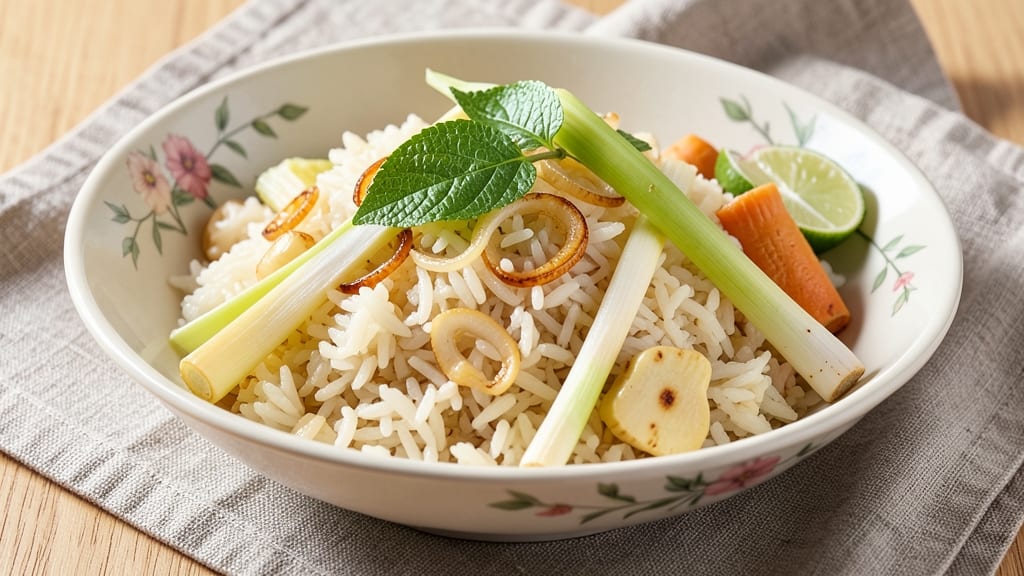
This Cambodian rice recipe brings the heart of Southeast Asian cuisine to your table with fragrant jasmine rice infused with lemongrass and kaffir lime leaves. 🌟 The dish centers around perfectly steamed rice, paired with a rich, aromatic kroeung spice paste that forms the foundation for both sides and broth.
What makes this recipe special is its balance of tradition and simplicity—every bite delivers the essence of Cambodian home cooking without requiring specialized ingredients.
The secret lies in the rice itself: long-grain jasmine rice steamed to perfection, then lightly infused with citrus and herbs for an unmistakable aroma.
Alongside the rice, you'll prepare two classic sides—bai sach chrouk (grilled pork with pickled vegetables) and a creamy amok curry—each contributing layers of flavor that transform this into a complete meal.
The dish is designed to be adaptable, allowing for vegetarian versions or adjustments to spice levels while maintaining authenticity.
What you'll achieve is a restaurant-quality Cambodian feast that's both comforting and impressive. The rice remains tender and fragrant, the kroeung spice paste adds depth to every component, and the combination of textures—crispy, creamy, and tender—creates a harmonious balance.
Perfect for family dinners or special occasions, this recipe delivers the soul of Cambodian cuisine in a way that feels both familiar and exciting.
Whether you're serving it as a main course or sharing it with friends, this dish highlights how rice can be the star of a meal. The instructions are designed to guide you through each step with confidence, ensuring you achieve authentic results.
Let's bring the flavors of Cambodia to your kitchen today.
Ingredients for cambodian rice
Fragrant jasmine rice meets Cambodian spices—simple ingredients, bold flavors, and restaurant-quality aroma.
| Ingredient | Amount | Notes |
|---|---|---|
| Long-Grain Jasmine Rice 🍚 | 2 cups | Unrinsed, high-quality grains preferred |
| Fresh Lemongrass 🌿 | 1 whole | Tender inner stalks only, bruised |
| Kaffir Lime Leaves 🍋 | 2 whole | Fresh, stems removed |
| Fresh Galangal 🌶️ | 2 inches | Peeled, thinly sliced (about 0.5 oz) |
| Fresh Turmeric 🌿 | 1 ½ inches | Peeled, thinly sliced (about 0.5 oz) |
| Shallots 🧅 | 4 whole | Peeled, finely minced |
| Garlic Cloves 🧄 | 6 cloves | Peeled, minced |
| Red Chili Peppers 🌶️ | 2 whole | Bird's eye or Thai, seeded |
| Coconut Milk 🥥 | 1 can | Full-fat, 13.5 oz can |
| Fish Sauce 🍶 | 1 tbsp | Red Boat preferred |
| Palm Sugar 🍯 | 2 tbsp | Or substitute brown sugar |
| Ground White Pepper 🌶️ | ½ tsp | Freshly ground preferred |
| Salt 🧂 | 1 tsp | Diamond Crystal preferred |
| Fresh Cilantro 🌿 | ¼ cup | Chopped, for garnish |
| Lime Wedges 🍋 | 2 whole | For serving |
The rice is the star, so grab Thai jasmine rice if you can—it's more fragrant than regular long-grain. Costco or Asian markets usually carry it in bulk. Lemongrass and kaffir lime leaves are non-negotiable for that authentic aroma, but if you can't find them, double the lime zest and lemongrass paste from a tube. For galangal and turmeric, Asian grocery stores have the freshest cuts—look for vibrant, unbruised roots. The shallots should be sweet and firm, not shriveled. If you're making this for a crowd, buy a whole stalk of lemongrass and freeze half for next time.
No kaffir lime leaves? Substitute 1 tbsp lime zest plus 1 tbsp lime juice—it won't be identical, but close. Running short on galangal? Ginger at half the amount works in a pinch, though it's not the same. The chili peppers can be adjusted—remove seeds for less heat. For the coconut milk, full-fat is a must—light versions water down the flavor. Palm sugar is ideal, but brown sugar works perfectly. If you're vegetarian, skip the fish sauce and use soy sauce or mushroom sauce instead. The fish sauce adds depth, but it's not the end of the world without it.
This rice keeps beautifully—3-4 days in an airtight container in the fridge. Reheat gently with a splash of water to restore moisture. For extra flavor, steam with a cinnamon stick or bay leaf. The kroeung spice paste freezes well for up to 3 months, so make a double batch if you're hosting. Store the lime wedges in a sealed bag in the fridge—they'll stay fresh for up to 2 weeks. Garnish with cilantro right before serving, as it wilts quickly when exposed to heat.
Why You'll Love This Recipe
- Minimal Chopping Required: I swear by this—just slice a few stalks of lemongrass and tear those kaffir lime leaves. No dice, no fuss, just the essential aromatics that make everything sing. (And if you’re lazy like me, frozen galangal works just fine.)
- Citrusy, Herby Magic: That first whiff of turmeric and galangal simmering with rice? It’s like a warm hug for your taste buds. The lemongrass lingers, bright and zesty, while the lime leaves add this secret depth—like a whisper of Southeast Asia in every bite.
- Weeknight Workhorse: Serve it plain with a fried egg and chili sauce for breakfast, pile it high with grilled fish for dinner, or turn it into a quick lunch with leftover curry. Honestly, I’ve eaten this for three meals in a row and never gotten tired of it.
- Leftovers That Don’t Suffer: Between us, this rice improves overnight. The flavors meld even more, and reheating it is just a splash of water and a quick steam. I make a big batch on Sundays—because who wants to cook rice five nights a week?—and it’s still delicious by Thursday.
Step-by-step instructions for fragrant Cambodian jasmine rice
This aromatic rice transforms ordinary grains into a fragrant centerpiece—let's build flavor layer by layer.
🍳 Step 1: Toast the Aromatics for Deep Flavor
In a medium saucepan, combine the 2 inches fresh galangal, 1.5 inches fresh turmeric, 4 whole shallots, and 6 cloves garlic cloves. Toast over medium heat for 3-4 minutes until the shallots turn golden and release their sweet aroma. You'll smell the earthy galangal and citrusy turmeric—this is where the magic begins.
Add the 2 whole red chili peppers (seeds removed) and cook for another 30 seconds until fragrant but not charred. The peppers will add subtle heat without overpowering. Immediately remove from heat and set aside—these aromatics will infuse the rice with complex layers of flavor.
👨🍳 Step 2: Build the Herb-Coconut Base
In the same pan, pour in the 1 can coconut milk and scrape up any browned bits from the bottom. Add 1 tbsp fish sauce and 2 tbsp palm sugar, stirring until the sugar dissolves completely. Bring to a gentle simmer for 2 minutes until the mixture thickens slightly and the coconut aroma intensifies.
Add the toasted aromatics back to the pan along with the 1 whole fresh lemongrass (bruised) and 2 whole kaffir lime leaves. Simmer for another 1 minute—you should see the lemongrass and lime leaves release their citrusy oils. Remove from heat and stir in 0.5 tsp ground white pepper and 1 tsp salt.
🥘 Step 3: Cook the Jasmine Rice to Perfection
Add the 2 cups long-grain jasmine rice to the coconut mixture, stirring gently to coat each grain. The rice will absorb the coconut milk immediately—this is what creates that signature Cambodian texture. Bring to a boil over medium-high heat, then reduce to low heat and cover tightly with a lid.
Simmer for 15 minutes without lifting the lid. The rice should cook gently in its own steam, absorbing all the coconut and herb flavors. After 15 minutes, check for doneness—gently stir with a fork. The rice should be tender but still slightly firm in the center (it will finish cooking while resting).
⏰ Step 4: Rest and Garnish for Maximum Flavor
Remove from heat and let the rice sit covered for 10 minutes. This resting period allows the steam to redistribute and the flavors to meld completely. The rice should be tender with a slight bite, and the coconut aroma should be intoxicating.
Gently fold in the 0.25 cup fresh cilantro and serve immediately with the 2 whole lime wedges on the side. Each grain should be fragrant with coconut, lemongrass, and subtle galangal notes—this is the essence of Cambodian rice at its finest.
Pro Tips For Making Cambodian Rice
- CHAR THE GALANGAL: I learned this the hard way—peeling galangal wrong turns it into mush. Use a sharp knife to slice off the tough outer skin first, then scrape out the pale inner flesh with the blade. (Yes, it looks like you’re carving a turtle, but the texture stays firm.)
- TOAST THE TURMERIC: Skip the pre-ground stuff—fresh turmeric needs a quick sear. Heat a dry pan over medium and toast the whole root (peeled) for 3-4 minutes until fragrant. Grate it fresh right after; it’ll add depth the powder can’t match.
- STEAM THE LEMONGRASS: Don’t just toss chopped lemongrass into the pot. Bruise the stalks first by lightly smashing them with the flat side of a knife. This releases oils that infuse the rice better—no need to overthink it, just a few sharp taps.
- RICE TO WATER RATIO: Cambodian rice absorbs differently than basmati. Use a 1:1.25 ratio (rice to water) and let it sit covered for 10 minutes off the heat after boiling. The steam does the work—no need to stir or peek. (I know, I know, but trust the process.)
Perfect pairings for this dish
Side Dish Harmony
Pair this fragrant rice with bai sach chrouk—grilled pork marinated in fish sauce, garlic, and palm sugar—served with pickled vegetables for tangy contrast. The smoky, caramelized pork complements the coconut rice beautifully.
For a vegetarian option, try kroeung machu (spicy green beans) sautéed with the same aromatic paste used in the rice. 🌿
Broth-Based Pairings
A steaming bowl of kari (Cambodian fish or chicken curry) makes an ideal companion, using the same kroeung spice paste for continuity. The creamy coconut broth balances the rice’s subtle heat, while the fish sauce adds depth.
For a lighter option, serve with a tom yum-style soup featuring lemongrass and lime leaves—echoing the rice’s citrusy notes. 🍲
Traditional Garnishes
Finish the plate with crispy fried shallots (store-bought or homemade) for crunch and lime wedges to brighten each bite. A sprinkle of toasted sesame seeds adds nutty warmth. For extra flair, drizzle with chili oil or serve with a side of pickled radish to cut through the richness. 🍋
Drink Pairings
Sip on sraa—Cambodia’s national cocktail—made with rice wine, lime, and soda water for a refreshing contrast. For non-alcoholic options, iced lemongrass tea (steeped with kaffir lime leaves) mirrors the rice’s herbal notes. A light coconut water also complements the dish’s tropical flavors. 🍹
Modern Adaptations
For a fusion twist, serve the rice with grilled shrimp skewers and a mango-avocado salad for a fresh, vibrant side. The sweetness of the fruit balances the spice, while the shrimp adds protein.
For a heartier meal, pair with crispy pork belly and a side of steamed bok choy for a balanced, restaurant-worthy spread. 🥗
Nutrition facts
Frequently asked questions
What makes Cambodian rice different from Thai or Vietnamese rice?
The key difference lies in the kroeung spice paste and coconut milk infusion. Unlike Thai rice (often steamed with just pandan leaves), Cambodian rice gets its signature aroma from galangal, turmeric, lemongrass, and kaffir lime leaves simmered in coconut milk. Vietnamese rice tends to be simpler, often just steamed with a touch of salt. The Cambodian version has a richer, more complex flavor profile from the aromatic herbs and coconut base.
Can I make this recipe without fresh galangal or kaffir lime leaves?
Yes, but you'll need substitutions. For galangal, use 1 tsp ginger + 0.5 tsp turmeric (though it won't be identical). For kaffir lime leaves, substitute 1 tbsp lime zest + 1 tbsp lime juice + 1 cinnamon stick. The flavor won't be exactly the same, but these alternatives will still give you that citrusy, aromatic depth that's essential to Cambodian rice.
How do I adjust the spice level for children or sensitive eaters?
Remove all seeds from the red chili peppers before cooking to reduce heat. For extra mildness, skip the chili entirely and add 0.5 tsp more palm sugar to balance the dish. The coconut milk and lemongrass will still provide that fragrant Cambodian character without any spiciness. Always taste as you go—you can adjust the heat at the end by adding more sugar or a splash of coconut milk.
What's the best way to store leftover Cambodian rice?
Store in an airtight container in the fridge for up to 4 days. To reheat, sprinkle a few drops of water over the rice, cover with a damp paper towel, and heat in the microwave for 1-2 minutes on medium power. For best texture, avoid reheating more than once. The rice keeps its fragrant aroma when stored properly, though the coconut flavor may mellow slightly over time.
Can I make this rice in a rice cooker?
Use the same method but adjust the liquid ratio. For 2 cups rice, use 1.5 cups coconut milk mixture (instead of 2 cups water). Toast your aromatics separately, then mix with the rice and coconut milk in the rice cooker. Cook on the white rice setting, then let it rest for 10 minutes after cooking. The rice cooker will distribute the coconut flavor evenly throughout each grain.